
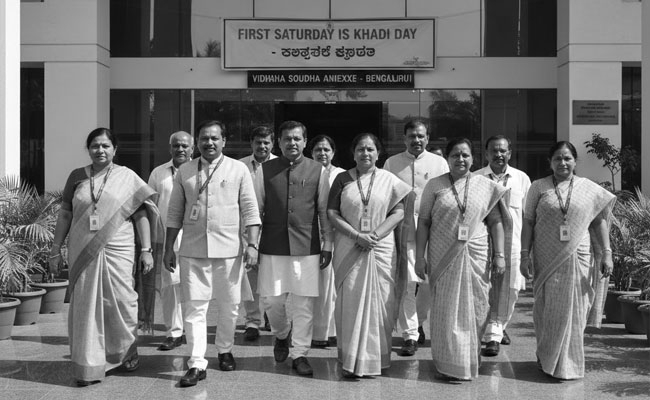
Karnataka’s Khadi push reconnects public service with India’s cultural roots
The Karnataka government’s decision to encourage its officers and employees to wear Khadi on the first Saturday of every month is more than a dress-related advisory; it is a symbolic reaffirmation of India’s cultural roots and freedom-era values. By linking everyday public service with a fabric that played a defining role in the country’s independence movement, the state has taken a quiet yet meaningful step towards reconnecting governance with tradition, self-reliance and national identity.
Khadi is not merely a textile. It represents resistance, self-respect and economic empowerment, especially of rural artisans and small producers. By voluntarily adopting Khadi as part of official work culture, government employees are being invited to participate in this legacy in a practical, visible way. The initiative also extends to national occasions such as Independence Day and Republic Day, reinforcing the idea that public institutions should reflect the ethos of the nation they serve.
What makes Karnataka’s move noteworthy is its structured and inclusive approach. The decision applies across government departments, aided institutions, corporations and universities, while remaining voluntary rather than coercive. The state has also backed the initiative with tangible support by offering additional discounts through government-run Khadi outlets, making it easier for employees to participate. This balance between symbolism and practicality strengthens the credibility of the effort.
While India has seen sporadic attempts to promote Khadi in the past ranging from appeals by the Khadi and Village Industries Commission to local advisories by municipal bodies and universities these initiatives have largely remained fragmented or limited in scope. Karnataka’s decision stands out because it institutionalises Khadi promotion at the state level and integrates it into the routine functioning of government, rather than confining it to special occasions or symbolic gestures.
The broader significance of this initiative lies in its potential ripple effect. If adopted by other states, similar measures could provide sustained demand for Khadi and handloom products, directly benefiting weavers and artisans while reinforcing the idea of “Vocal for Local” through everyday practice. In an era where fast fashion dominates and traditional crafts struggle for relevance, such policy-backed cultural nudges can play an important role in preserving heritage without imposing rigid mandates.
Karnataka’s example demonstrates that respecting tradition does not require grand declarations, but consistent, thoughtful action. By normalising Khadi in public life, the state has offered a model that blends cultural pride with economic support. If other states follow suit, this initiative could evolve from a regional experiment into a nationwide movement, one that honours the past while strengthening the foundations of self-reliant governance.