
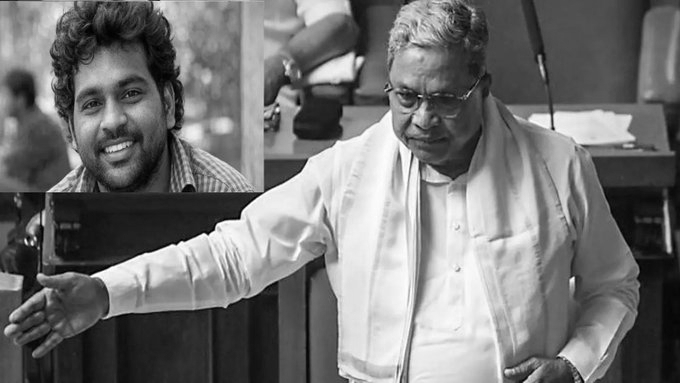
Karnataka to Enact Rohith Vemula Bill to Curb Caste Discrimination on Campuses
Karnataka Chief Minister Siddaramaiah on Friday announced that the state government will enact the Rohith Vemula Bill to prevent caste-based discrimination and atrocities against students in higher educational institutions across the state.
Presenting the state budget , Siddaramaiah said the proposed legislation will apply to all government, private and deemed universities , aiming to ensure a safe and inclusive environment for students, particularly those from Scheduled Castes, Scheduled Tribes and other marginalized communities.
The bill is named after Rohith Vemula , a Dalit scholar whose death by suicide in 2016 after alleged caste discrimination at the University of Hyderabad sparked nationwide protests and a wider debate on discrimination in higher education institutions.
Last year, Congress leader Rahul Gandhi had written to Siddaramaiah urging the state government to introduce legislation in Vemula’s name to address caste-based discrimination on campuses. The draft Rohith Vemula Bill was discussed during a Cabinet meeting on February 26 and is expected to be finalised after incorporating inputs from the Home Department before being placed before the Cabinet again.
The Chief Minister also announced that student union elections will be reinstated in colleges and universities across the state to encourage leadership, responsibility and democratic values among students.
In another major initiative, the University of Visvesvaraya College of Engineering (UVCE) will be developed on the model of the Indian Institutes of Technology, with a total investment of ₹500 crore. The government has already allocated ₹100 crore and assured another ₹100 crore in the current financial year.
Siddaramaiah also highlighted the Karnataka Higher Education Transformation Project , being implemented at a cost of ₹2,500 crore with assistance from the Asian Development Bank. The project aims to strengthen government first-grade colleges and polytechnics, improve research outcomes and establish Centres of Excellence to promote entrepreneurship and start-up culture among students.
Under the initiative, 40 government colleges and 11 polytechnics will be developed as model institutions, while nine Centres of Excellence will be established.
The government will also introduce 15 high-demand courses , including Artificial Intelligence, Machine Learning, Cloud Computing, Mining Engineering and Automation Engineering, in 11 government polytechnics and a government engineering college in Chitradurga.
Among welfare measures, female guest lecturers working in government first-grade colleges, polytechnics and engineering colleges will be eligible for 90-day maternity leave from the next academic year. The government will also soon complete recruitment for 2,000 teaching posts in government institutions, while 1,000 additional posts in public universities will be filled in phases.
The budget further announced skill development and vocational training for 3,000 women STEM graduates in partnership with AnitaB.org India, at a cost of ₹13.5 crore, aimed at strengthening women’s participation in the technology sector.