
Karnataka Sets Up DNA Centre to Identify Residents Missing in Nepal-Tibet Floods
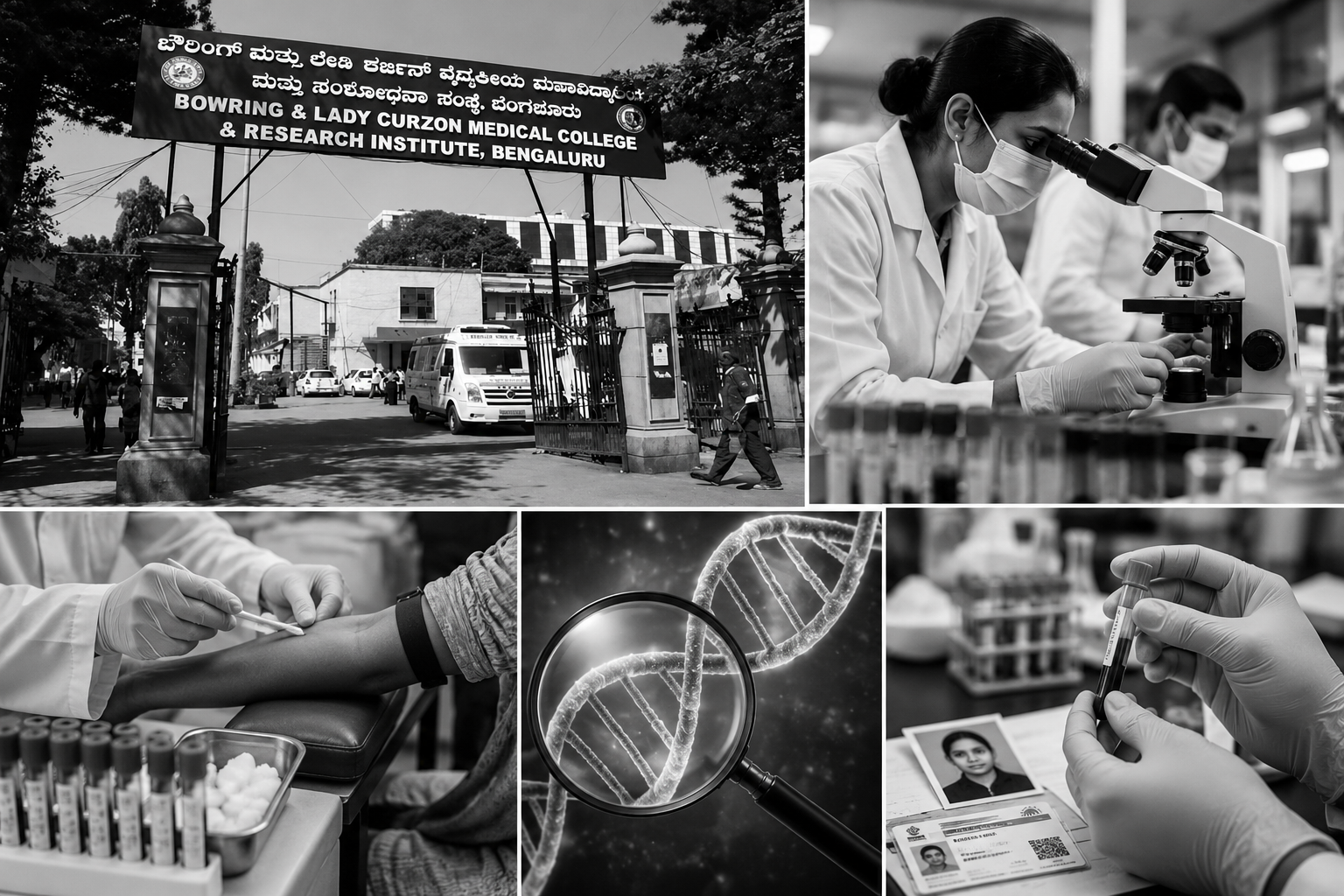
The Karnataka government has designated Bengaluru’s Bowring and Lady Curzon Hospital as the nodal centre for collecting DNA samples from first-degree relatives of state residents who remain missing after the devastating flash floods along the Nepal-Tibet border. The move is aimed at helping identify unidentified bodies recovered in Nepal and facilitating the repatriation of mortal remains to families.
The Karnataka State Disaster Management Authority (KSDMA) issued the order on September 4 following communication from the Indian Embassy in Kathmandu regarding the identification and repatriation of foreign nationals’ remains. Dr Nagesh Kuppast, Professor and Head of Forensic Medicine, has been appointed nodal officer, while Dr Vadiraj B. Pokkan, Resident Medical Officer, will assist with coordination. Relatives providing samples must carry a recent passport-size photograph, Aadhaar or another government-issued ID, and documents proving their relationship with the missing person.
After verification by authorities, samples will be sent to the State Forensic Science Laboratory (FSL) for DNA profiling and comparison with profiles prepared from unidentified remains in Nepal. The process is particularly important as many recovered bodies cannot be identified through photographs or personal records alone.
The initiative comes as the disaster continues to leave a vast humanitarian and forensic challenge. The August 26 flash floods, triggered by a glacial collapse and associated flooding, devastated parts of Nepal near the Tibet border, with hydropower facilities among the worst-hit locations. Nepal’s latest figures put the death toll at 1,344, with around 4,887 people still missing. Tibet has separately reported 31 deaths and 531 missing.
For Karnataka, 13 residents remained untraced as of August 31. Across India, the Ministry of External Affairs said 275 Indian nationals remained missing and 166 had been rescued. Another 1,907 Indians safely crossed into Nepal from China, while India has deployed 54 personnel, including 30 tunnel-rescue experts, 19 forensic specialists and a five-member medical team, besides sending about 95 tonnes of relief material.
Rescue operations are still producing breakthroughs. On September 5, Chinese national Lu Haitao was rescued alive after 10 days inside a 225-metre tunnel at the Upper Trishuli-1 Hydropower Project, highlighting the continuing possibility of finding survivors even as forensic teams work to identify victims.
For families in Karnataka, the DNA centre provides a direct link to Nepal’s identification effort and could offer crucial answers about relatives whose whereabouts remain unknown.