
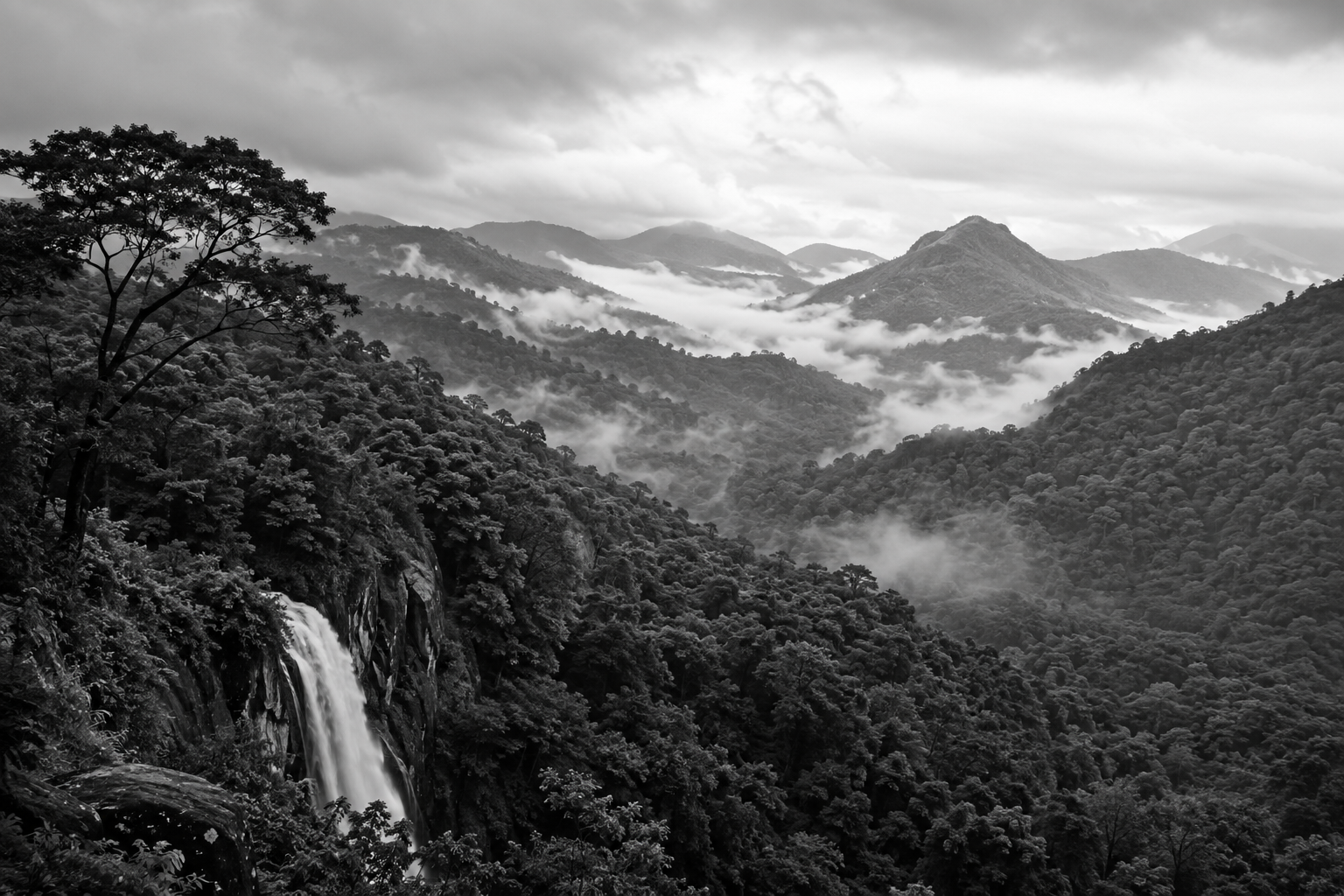
Karnataka Reviews Centre’s Proposal to Declare 20,668 Sq Km of Western Ghats ESA
The Karnataka government is examining the Centre’s latest proposal to designate 20,668 sq km of the Western Ghats across 10 districts as an Eco-Sensitive Area (ESA), reviving a more than decade-old debate over how India should protect one of its most important ecological landscapes while safeguarding the livelihoods and development needs of communities living within it.
Forest, Ecology and Environment Minister Ramalinga Reddy, in a written reply to MLAs Araga Jnanendra and T D Raje Gowda, said Karnataka has 60 days from the July 27, 2026 draft notification to submit its objections and suggestions. The seventh draft was issued after six earlier notifications expired without a final agreement between the Centre and the Western Ghats states.
The proposed ESA covers Belagavi, Chamarajanagar, Chikkamagaluru, Kodagu, Hassan, Uttara Kannada, Dakshina Kannada, Mysuru, Shivamogga and Udupi, with 1,449 villages across 39 taluks included in Karnataka. Across six states, the Centre has proposed 56,825.7 sq km as ESA, with Karnataka accounting for the largest share at 20,668 sq km, followed by Maharashtra (17,340 sq km), Kerala (9,993.7 sq km), Tamil Nadu (6,914 sq km), Goa (1,461 sq km) and Gujarat (449 sq km).
The proposal is rooted in the Kasturirangan Committee’s recommendations, which sought to protect ecologically important natural landscapes while distinguishing them from areas dominated by agriculture, plantations and settlements. The process dates back to 2014 and has passed through six draft notifications. The current proposal, therefore, is not a newly identified 20,668-sq-km area but another attempt to finalise a long-pending conservation framework.
The draft seeks to prohibit or regulate activities including mining, quarrying, sand mining, certain industries, thermal power projects and large construction and township developments. However, agriculture and plantation activities are not automatically prohibited. Reddy has said the proposal would not affect routine livelihoods or require the displacement of residents.
The environmental significance extends beyond Karnataka. ESA status could help prevent deforestation and forest fragmentation, protect biodiversity and wildlife corridors, conserve watersheds, reduce soil erosion and preserve carbon stored in mature forests. It would not create 20,668 sq km of new forest, but could help retain existing green cover and encourage ecological regeneration.
Karnataka has consistently opposed the Kasturirangan framework, arguing that additional restrictions could affect livelihoods and development. The State Cabinet has rejected the recommendations, while Malnad communities have also raised concerns.
The Centre and Karnataka now face a delicate balancing act between ecological protection and local development. With the 60-day consultation window underway, the state’s objections and the Centre’s response will determine whether the seventh draft finally progresses towards a final Western Ghats ESA notification or meets the fate of its predecessors.