
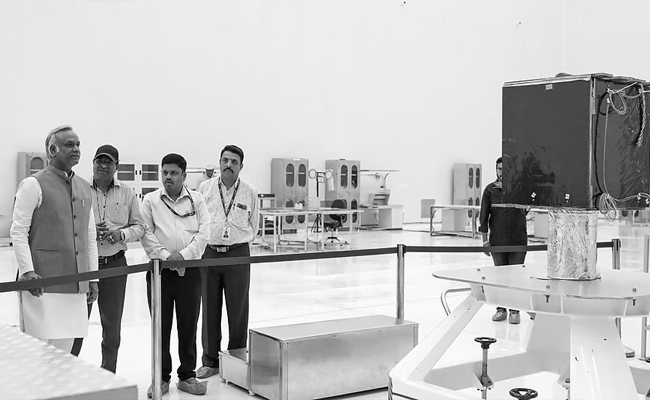
Karnataka Launches India’s First SpaceTech CoE to Power Private Space Ecosystem
In a strategic move to strengthen India’s position in the global space race, the Karnataka government has launched the country’s first state-led Centre of Excellence (CoE) for Space Technology in Bengaluru. Developed through the Karnataka Innovation and Technology Society (KITS) in collaboration with the Satcom Industry Association India (SIA-India) , the initiative marks a decisive shift toward building a robust, private-sector-driven space ecosystem .
The Centre goes beyond conventional research facilities by functioning as a comprehensive innovation hub that integrates research, prototyping, testing infrastructure, startup incubation, and skill development . It is designed to support the entire space value chain upstream (satellite manufacturing), downstream (data applications), and auxiliary industries ensuring that innovation translates into commercially viable solutions .
A major focus of the CoE is to accelerate startup-led growth in the NewSpace era , where private companies increasingly complement government agencies. Startups will gain access to shared infrastructure, funding support, mentorship, and global partnerships , enabling them to develop technologies in areas such as satellite systems, AI-driven space data analytics, propulsion, and microgravity research .
Importantly, the initiative introduces a strong talent development pipeline . Through industry-aligned training programs, certifications, and project-based learning , the Centre is expected to create opportunities similar to internships, fellowships, and hands-on research exposure for students and young professionals. This is critical as India scales its space ambitions and requires a highly skilled workforce across engineering, data science, and aerospace domains .
The CoE also reflects a broader policy shift following the Indian Space Policy 2023, which encourages private participation and public-private partnerships in space activities. By fostering collaboration between academia, startups, and industry, the Centre aims to unlock new applications in agriculture, climate monitoring, disaster management, healthcare, and connectivity , expanding the societal impact of space technologies.
The initiative is set to complement, not replace, the Indian Space Research Organisation by strengthening the broader ecosystem around it. As ISRO increasingly partners with private players and focuses on advanced missions, the CoE will build a network of startups, suppliers, and skilled professionals to support satellite manufacturing and applications, easing operational pressure on the agency. Karnataka’s plans for a satellite constellation for societal use further reflect a shift toward citizen-centric space solutions. With Bengaluru already a major aerospace hub, the Centre reinforces the state’s leadership in space innovation, marking a transition from isolated research to a collaborative, commercial ecosystem aligned with the rapidly expanding global space economy.