
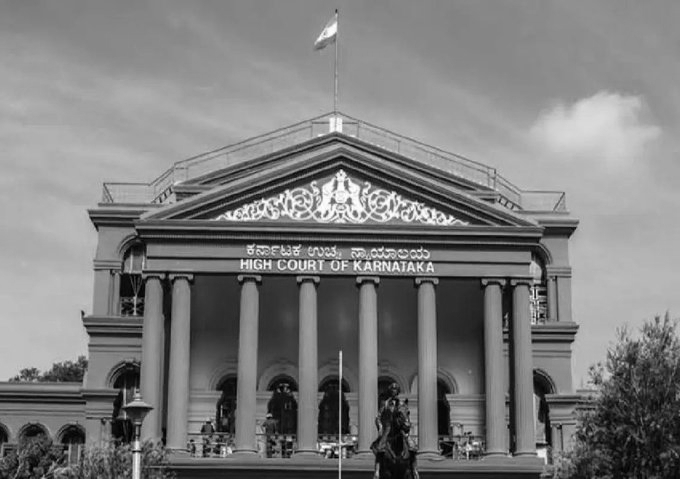
Karnataka HC Strikes Down 17% SC, 7% ST Quotas Over 50% Ceiling
The Karnataka High Court on Monday struck down provisions of a 2022 state law that increased reservation for Scheduled Castes (SCs) from 15 per cent to 17 per cent and for Scheduled Tribes (STs) from 3 per cent to 7 per cent, ruling that the enhanced quotas violated the 50 per cent reservation ceiling.
A bench comprising Chief Justice Vibhu Bakhru and Justice K S Hemalekha held that Section 3 of the Karnataka Scheduled Castes and Scheduled Tribes Reservation Act, 2022, was unconstitutional insofar as it took the aggregate reservation beyond 50 per cent. The court also struck down Section 4, which provided for enhanced SC/ST reservation in state government services, holding that it violated Articles 14 and 16 of the Constitution.
The verdict followed two petitions challenging the law, which increased the overall reservation for SCs, STs and Other Backward Classes (OBCs) from 50 per cent to 56 per cent. The 50 per cent ceiling was laid down by the Supreme Court in its landmark 1992 Indra Sawhney judgment and subsequently upheld in several decisions.
The legislation was enacted under the BJP government led by then Chief Minister Basavaraj Bommai. It received the governor's assent on January 11, 2023, and was published in the Karnataka Gazette the following day.
Reacting to the verdict, Deputy Chief Minister G Parameshwara described it as a serious development with far-reaching implications for social justice, education and public employment in the state.
While expressing respect for the judiciary, he questioned the political responsibility of the previous BJP government and the Centre's response to the issue.
Parameshwara urged Prime Minister Narendra Modi and the Union government to review the reservation ceiling, pursue appropriate constitutional and legislative measures, and examine Karnataka's request to include the legislation in the Ninth Schedule.
He said the state government would explore all available legal remedies, including an appeal before the Supreme Court, while seeking to protect ongoing recruitment and educational opportunities in accordance with the law.