
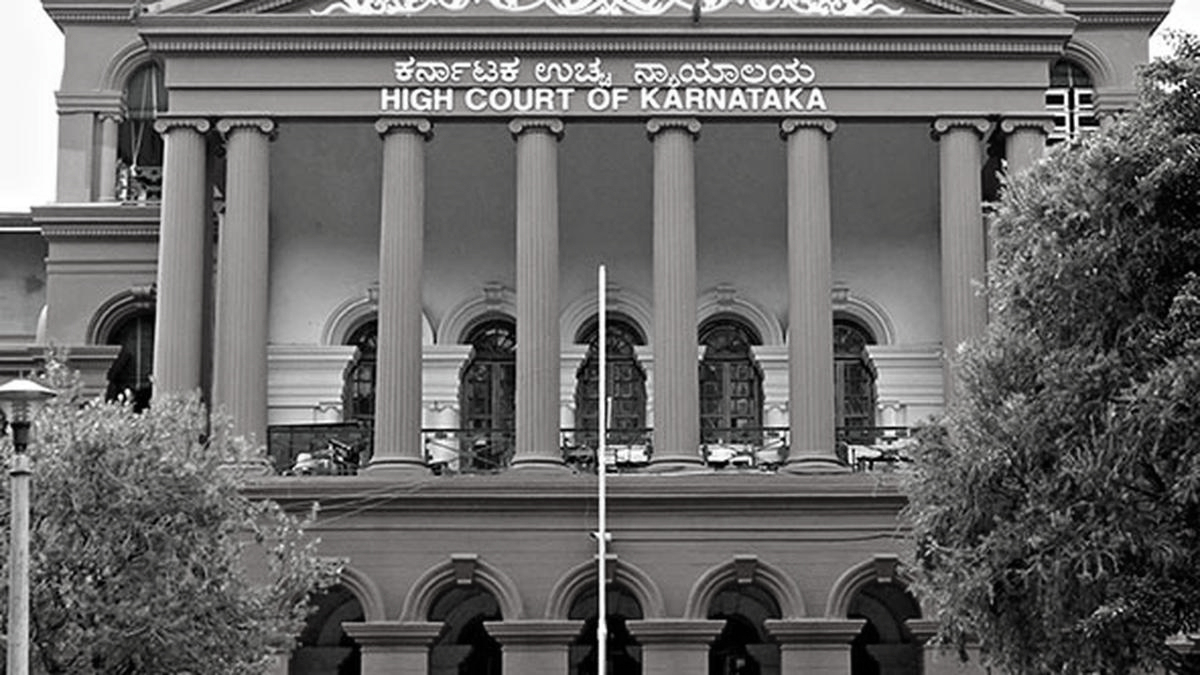
Karnataka HC questions state’s backward classes survey
The Karnataka High Court recently took up petitions challenging the state government’s decision to let the Karnataka State Backward Classes Commission carry out a Socio-Economic and Educational Survey. The survey began on September 22 and is scheduled to continue until October 7. The matter is attracting attention because of concerns over privacy, legality, and the way caste data is being collected.
A division bench, led by Chief Justice Vibhu Bakhru and Justice C M Joshi, asked the state to clarify its position. The judges raised a fundamental question: if every resident is identified and their caste is noted, how is this different from a census? This question set the tone for the legal arguments that followed.
Senior advocate Abhishek Manu Singhvi appeared for the state and explained that the survey is not a “caste survey” as some critics claim. He said it is primarily a socio-economic and educational study designed to collect statistical data that can help the government plan welfare schemes. Singhvi emphasized that good policy-making is impossible without accurate information. “How can one give rational advice or make rational policy decisions without proper data?” he asked. He also pointed out that participation in the survey is voluntary, unlike the mandatory provisions of the Census Act, and argued that collecting data does not violate privacy on its own unless the law enabling the survey is invalid.
On the other side, several senior advocates spoke for the petitioners, raising legal, practical, and privacy concerns. Senior Advocate Prabhuling K Navadgi pointed out that the state had made Aadhaar numbers and mobile numbers mandatory for participation, raising questions about whether the government had the constitutional authority to conduct such a survey. He cited Articles 342 and 342A of the Constitution, which limit the state’s power to list backward classes without a proper legal framework.
Senior Advocate Jayakumar Patil argued that the Karnataka Backward Classes Commission Act does not provide any mechanism for a state-wide survey. He called the exercise a “parallel census,” which he said falls exclusively under the Union government’s authority, and claimed it might be used to determine caste populations for electoral purposes.
Other advocates highlighted issues with the survey process itself. Ashok Haranahalli said the survey was arbitrary, lacked prior research, and could lead to duplication or inaccurate data. He also raised concerns about privacy risks due to the digital collection of information. Senior Advocate Vivek Subba Reddy called the survey unscientific and chaotic, noting that it grouped castes in ways that did not respect traditional structures and warned that sensitive data could be misused. Senior Advocate Sriranga S added that the survey was being carried out in undue haste and asked the court to stay the process until the issues are examined in detail.
The hearing is expected to continue on Wednesday, as the court seeks to balance the government’s need for data with citizens’ rights and constitutional limits. The case is significant because it touches on sensitive issues of privacy, caste, and the scope of state power in conducting surveys of its population.