
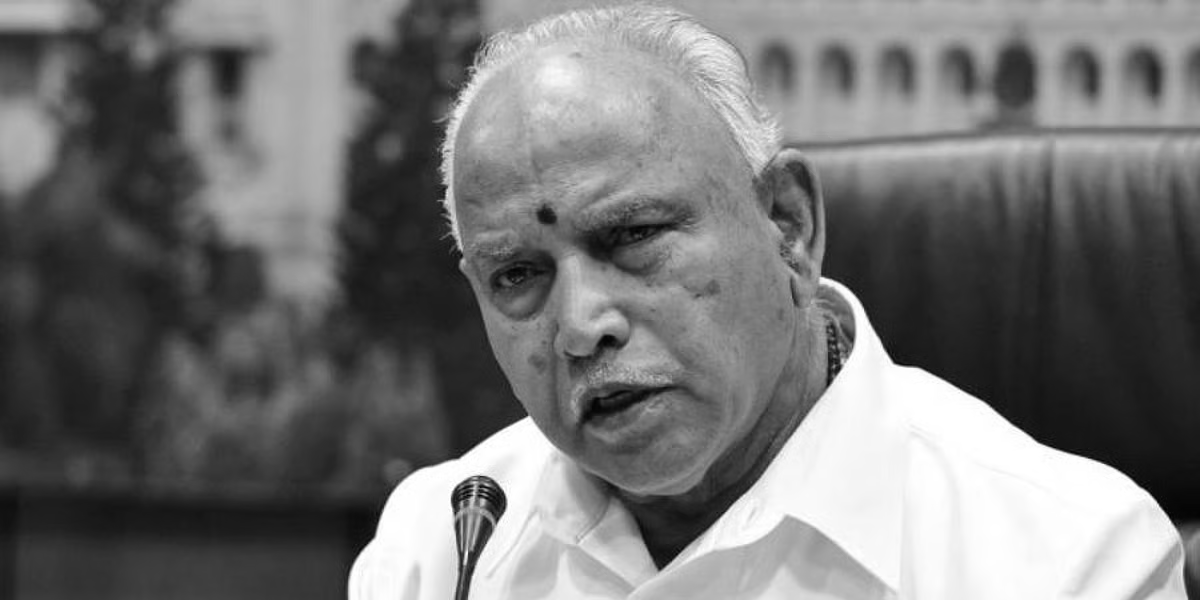
Karnataka HC declines to quash POCSO case against former CM Yediyurappa
The Karnataka High Court on Thursday refused to quash the Protection of Children from Sexual Offences (POCSO) Act case, filed in March 2024, against former Chief Minister and senior BJP leader B. S. Yediyurappa, thereby paving the way for the trial to proceed.
Justice M. I. Arun, hearing Yediyurappa’s petition, upheld the trial court’s February 28 order taking cognizance of the alleged offence and issuing summons to the veteran leader. However, the court provided partial relief, directing that Yediyurappa’s personal appearance should not be insisted upon unless necessary during the course of the trial. It added that any exemption plea filed by him must be considered favourably, unless his presence is deemed essential. The court also clarified that Yediyurappa remains free to seek discharge before the trial court.
The ruling comes months after a series of legal proceedings over the validity of the trial court’s cognizance orders. In February this year, the High Court had set aside an earlier cognizance order, observing that there had been no proper application of mind by the Special Court, but allowed the investigation and the CID’s final report to stand. Following that order, the Special Court for POCSO cases passed a fresh cognizance order on February 28, which was subsequently stayed until Thursday’s decision.
The case originates from a complaint filed by a woman, who alleged that Yediyurappa sexually assaulted her 17-year-old daughter at his residence in Bengaluru’s Dollar’s Colony in February 2024. According to the complaint, the mother and daughter had gone to meet the former Chief Minister to seek help in a personal matter when the alleged assault occurred.
The Sadashivanagar Police initially registered an FIR on March 14, 2024, under the POCSO Act and relevant sections of the Indian Penal Code. The case was later transferred to the Criminal Investigation Department (CID) for further investigation. The CID re-registered the FIR and subsequently filed a chargesheet against Yediyurappa.
Senior Advocate C. V. Nagesh, appearing for Yediyurappa, contended that the case was politically motivated and lacked credibility. He pointed out that the complainant and her daughter had met the Bengaluru Police Commissioner multiple times in February 2024, yet no allegations were raised during those meetings. He also cited witness statements suggesting that no untoward incident occurred during the meeting in question.
Nagesh argued that the Special Court acted mechanically in issuing the cognizance order without proper evaluation of the available material and urged the High Court to quash the proceedings, terming them baseless and driven by ulterior motives.
Opposing this, Special Public Prosecutor Professor Ravivarma Kumar maintained that the Special Court had duly applied its mind and considered the victim’s statement before taking cognizance. He argued that the trial court’s order was well-reasoned and reflected a proper judicial approach.
In its order, the High Court refused to interfere with the trial court’s cognizance order, noting that the case should proceed in due course. The bench emphasized that the former Chief Minister’s presence need not be insisted upon unless the trial court finds it necessary.
The court’s decision ensures that the charges under the POCSO Act will be examined at trial, while leaving open the possibility for Yediyurappa to seek discharge if the evidence does not substantiate the allegations.
The case, which has drawn significant political and public attention in Karnataka, marks another chapter in the legal scrutiny surrounding one of the state’s most influential political figures.