
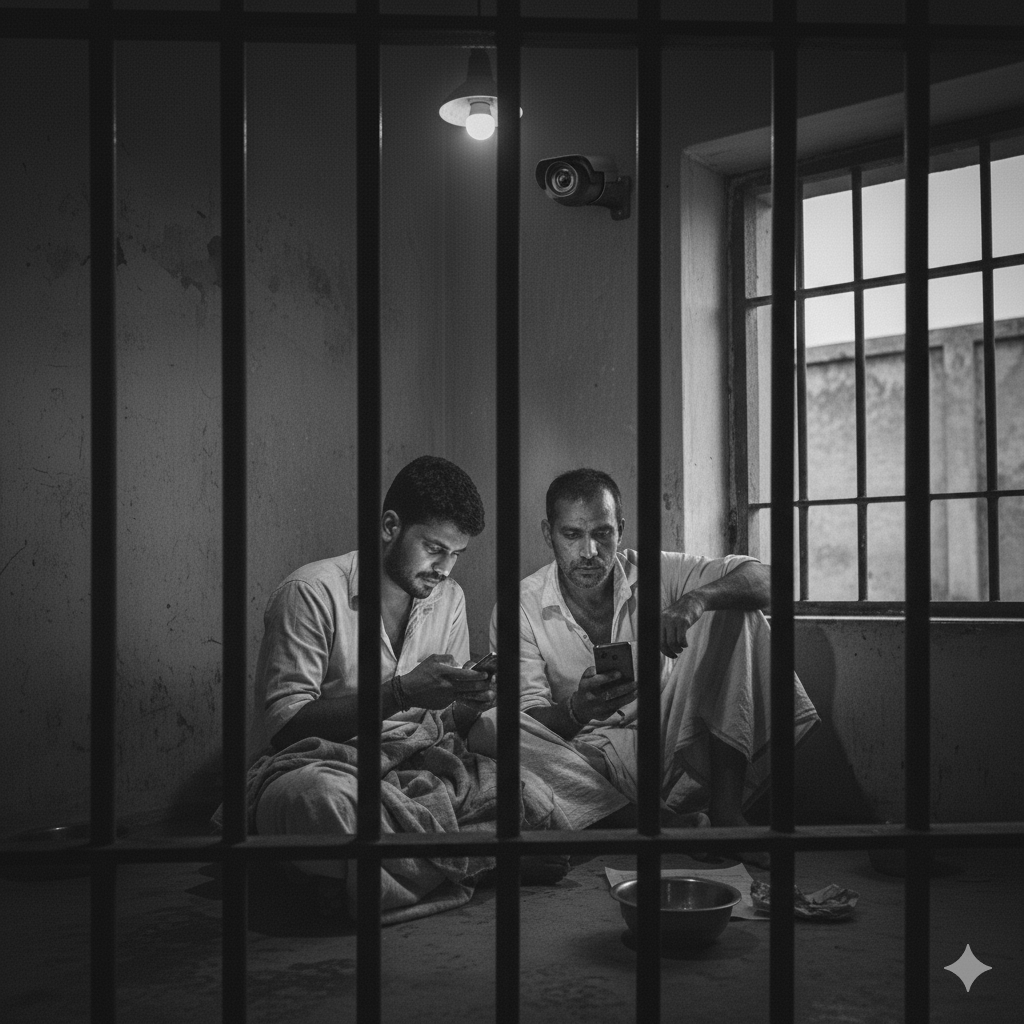
Karnataka dismisses jail officials over ‘VVIP treatment’ at Bengaluru prison
Karnataka Home Minister G. Parameshwara on Monday announced strict action against prison officials following an inquiry into reports of “VVIP-style treatment” at Parappana Agrahara Central Jail. Jail Superintendent Imamsab Myageri and ASP Ashok Bhajantri have been dismissed, while Chief Superintendent K. Suresh has been transferred. For the first time, an IPS officer has been appointed to head Bengaluru Central Jail. A high-power committee has also been formed to review prison operations across the state and recommend measures to strengthen monitoring and accountability.
Parameshwara acknowledged that some of the viral videos showing inmates using mobile phones and private televisions dated back to 2023, but stressed that they reveal a serious breakdown in supervision. The visuals reportedly included death-row convict Umesh Reddy, gold smuggling convict Tarun Raj, and an ISIS operative extradited from Dubai. The minister said immediate action would be taken and assured tighter monitoring in the future.
Former IPS officer and ex-Tihar Jail Director-General Kiran Bedi reacted sharply to the incident, noting that video evidence makes investigations almost self-evident. She emphasized that influential inmates should be removed from prisons promptly, warning that leaving them in place allows continued misuse of privileges and undermines discipline.
The lapses at Bengaluru Central Jail reflect systemic issues across India. According to NCRB’s Prison Statistics India 2023 , the country has 1,319 jails housing over 5.54 lakh inmates against a sanctioned capacity of 4.25 lakh, resulting in about 130% occupancy. Nearly 77% of inmates are undertrials, and around 30% of prison staff positions remain vacant.
Similar violations have been reported in other states. Tihar Jail in Delhi faced cases of mobile phone use and VIP treatment in 2023–24, prompting suspensions. Tamil Nadu seized 34 mobile phones in 2024, and several warders were suspended. Punjab recovered over 1,200 phones in 2024 and installed 4G-blocking jammers. Uttar Pradesh launched pilot drone surveillance projects in 2025, while Kerala established a Central Prison Command Centre linking all jail cameras to the Director-General’s office.
Several states have started modernizing their prison systems. Karnataka placed its central jail under IPS-level control and began building a digital monitoring hub. Delhi completed the first phase of AI-assisted CCTV coverage. Tamil Nadu introduced full-body scanners and electronic visitor logs. Punjab reduced gang-related phone misuse, and Kerala reported no major smuggling incidents since implementing its monitoring system. Nationally, over 60% of central prisons are now covered by digital CCTV networks, and 40% of states have launched live-monitoring dashboards under the Union Ministry of Home Affairs’ E-Prisons Project.
Investigations across India have repeatedly highlighted common administrative gaps, including smuggling of mobile phones, cash, or drugs; insufficient real-time monitoring; staff shortages; collusion or corruption among personnel; overcrowding; weak internal vigilance; and preferential treatment for high-profile inmates. To prevent such violations, reforms under the Model Prison Manual 2023 and Modernisation of Prisons Scheme (2022–26) include AI-based CCTV systems, signal jammers, body scanners, filling of vacant posts, surprise inspections, digital audits, video hearings for undertrials, independent Prison Oversight Boards, and expansion of the E-Prisons digital record system.
Experts believe that technological upgrades and tighter supervision have begun improving prison management, but overcrowding and staff shortages remain major obstacles. The Bengaluru Central Jail inquiry is expected to serve as a test case for enforcing stronger accountability mechanisms and replicating effective monitoring models across India.