
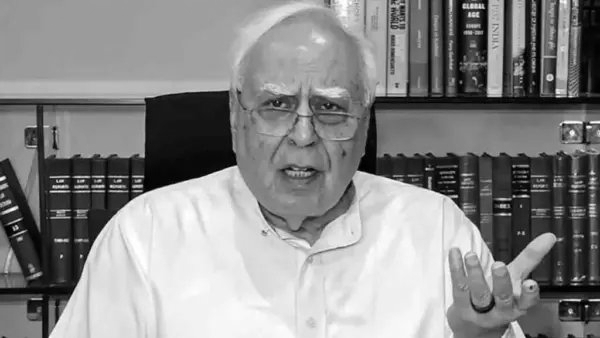
Kapil Sibal Slams ‘One Nation, One Election’, Warns of ‘One Voice’ Politics
Independent Rajya Sabha MP and senior advocate Kapil Sibal on Wednesday criticised the Modi government’s ‘One Nation, One Election’ proposal, arguing that simultaneous polls could overshadow state-specific issues and aspirations.
Sibal said India’s diversity made the idea of imposing uniformity across elections, examinations, language, food and other areas problematic. “Uniformity by itself is incompatible with nature, and it is incompatible with human nature,” he said at a press conference.
Questioning the rationale behind simultaneous elections, Sibal said each state has different problems, priorities and aspirations that require separate political attention. He cited Uttar Pradesh, which is scheduled for Assembly elections in 2027, saying that under a simultaneous-election framework, its government’s term could end in 2029, potentially forcing another poll within two years. He questioned how state governments could make and fulfil long-term promises to voters if their terms were shortened or altered to align with parliamentary elections.
Sibal also argued that the existing electoral framework was linked to the constitutional principle of fixed terms, allowing governments to demonstrate their performance before seeking another mandate. He rejected the argument that simultaneous elections were necessary primarily to reduce expenditure, pointing to the large sums spent on political and personal campaigns.
Warning about the possible impact on state politics, Sibal said the “dreams of the people” in states could be drowned out by parliamentary election campaigns, with the prime minister’s voice dominating the political discourse. He also raised concerns over Special Intensive Revision (SIR) deletions in West Bengal and the condition of schools in Rajasthan.
Turning to the judiciary, Sibal referred to letters reportedly written by Supreme Court Justice Sandeep Mehta to Chief Justice of India Surya Kant regarding the transfer of Rajasthan High Court Acting Chief Justice Sanjeev Prakash Sharma. Sibal questioned the continued use of the “master of the roster” system and suggested that case allocation could instead be handled through an algorithm to improve transparency and reduce suspicion. He warned that a lack of transparency could undermine public confidence in the judiciary.