
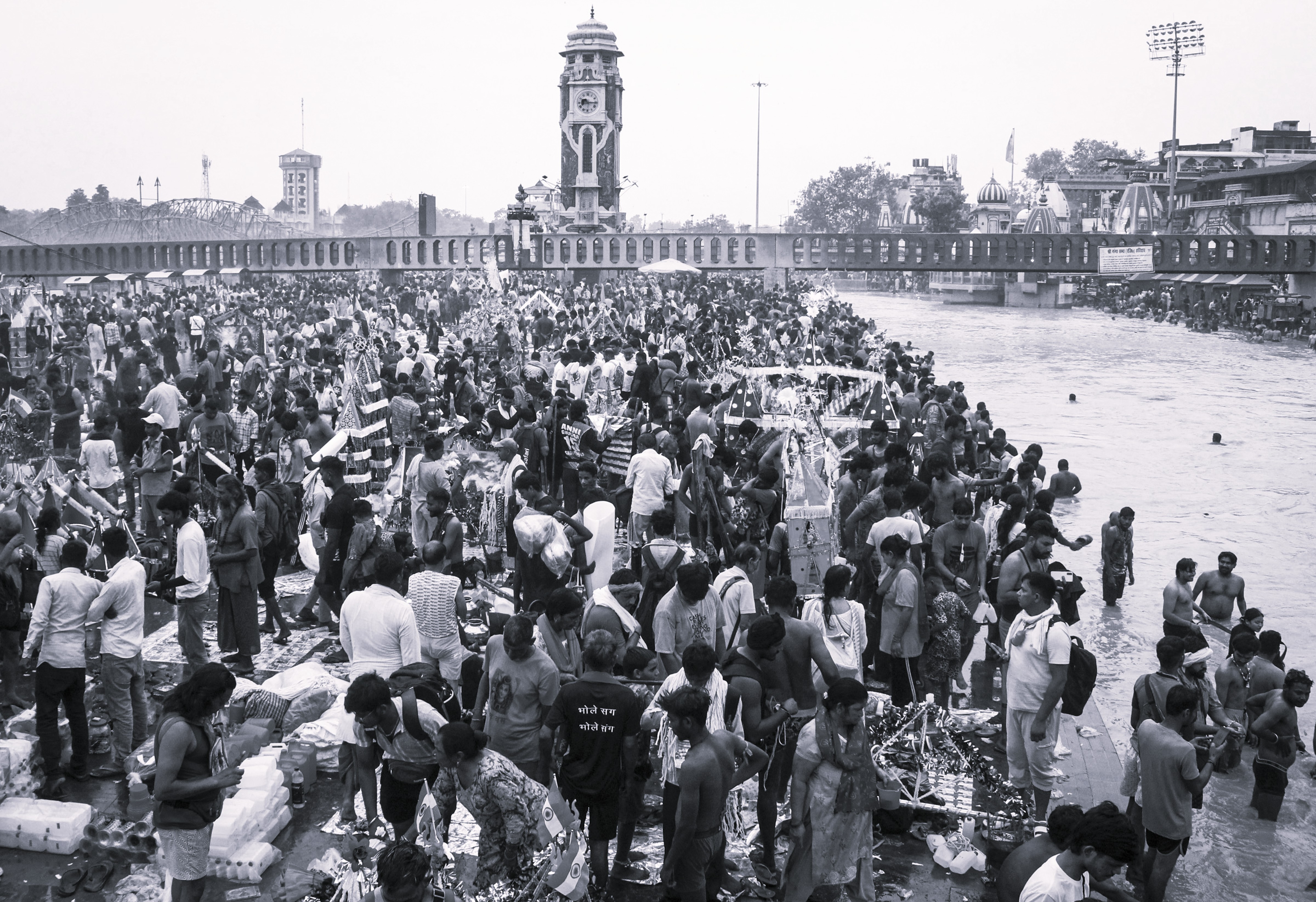
Kanwar Yatra: Millions Walk in Faith, Discipline and the Spirit of 'Bol Bam'
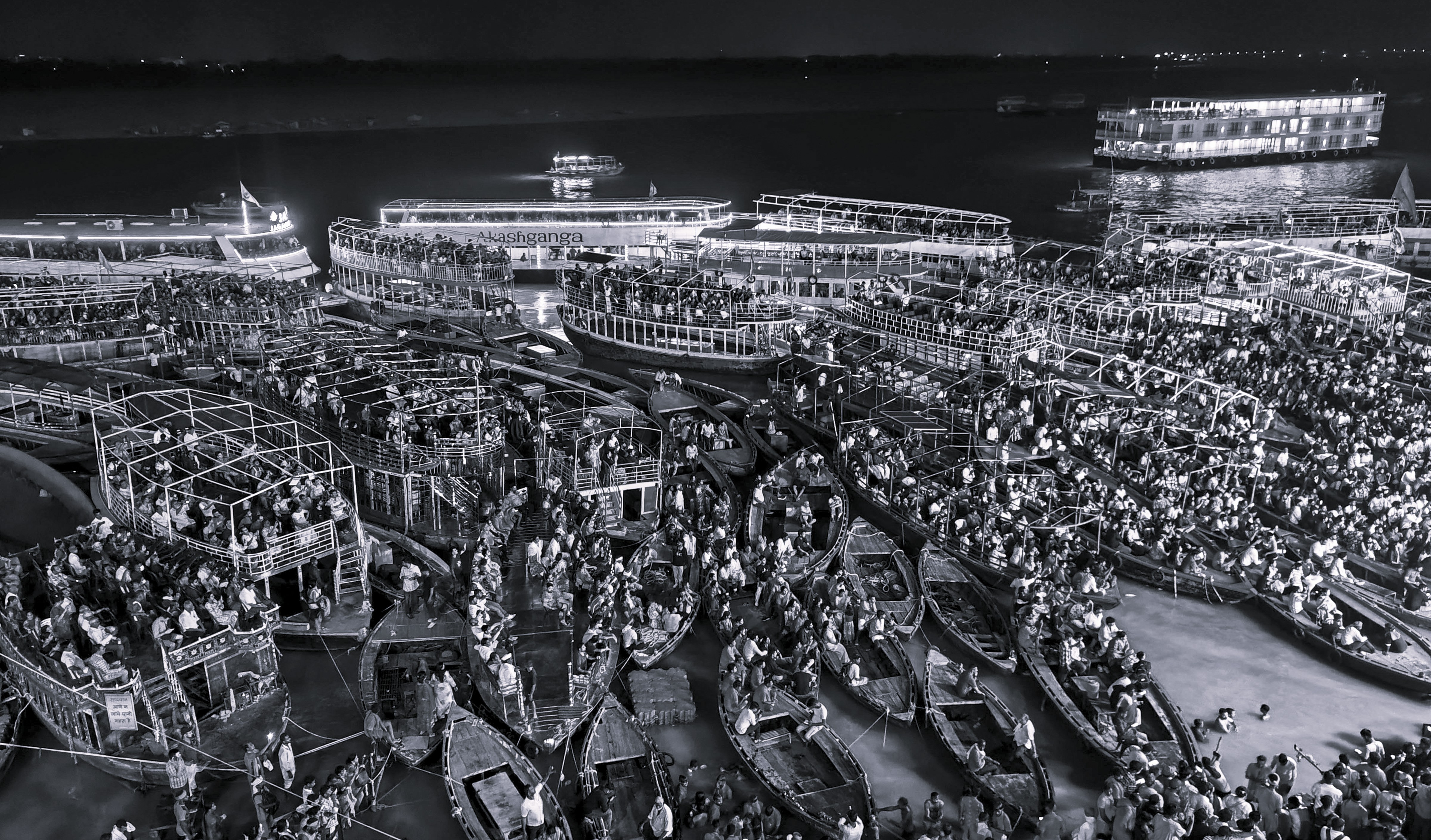
The first Monday of the holy month of Shravan has once again brought the Kanwar Yatra into national focus, with lakhs of devotees converging on Shiva temples across northern India to perform Jalabhishek. As the influx of Kanwariyas carrying sacred Gangajal from Haridwar continues to rise, Uttar Pradesh has launched one of its largest annual security and logistical operations to ensure the pilgrimage proceeds peacefully.
Ahead of the first Shravan Monday, security has been significantly intensified at prominent Shiva temples in Muzaffarnagar, a key transit district on the Haridwar-Western Uttar Pradesh Kanwar route. Deputy Inspector General (Saharanpur Range) Abhishek Singh said Anti-Romeo squads have been deployed to safeguard women devotees. Authorities have also arranged separate queues for women, installed anti-slip mats, erected barricades, and deployed additional police personnel to manage the expected rush.
District authorities have ordered all schools and colleges in Muzaffarnagar to remain closed from August 3 to August 10, while meat shops and restaurants along designated Kanwar routes will remain shut until August 12. Traffic diversions, enhanced surveillance and crowd-control measures have also been implemented across the district as the pilgrimage gains momentum. The Kanwar Yatra, which began on July 30 with the commencement of Shravan, will conclude on August 11.
An Ancient Tradition Rooted in Hindu Mythology
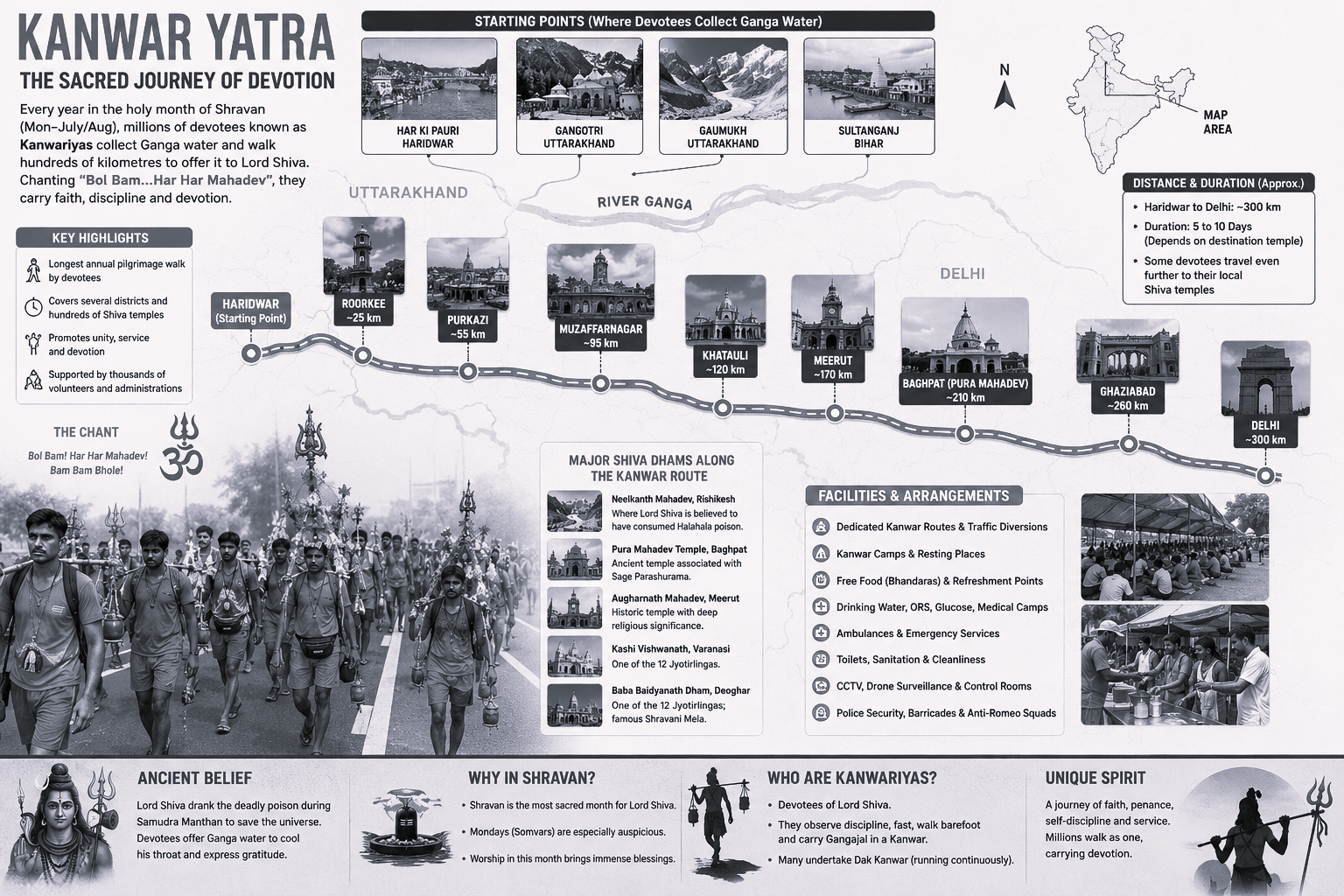
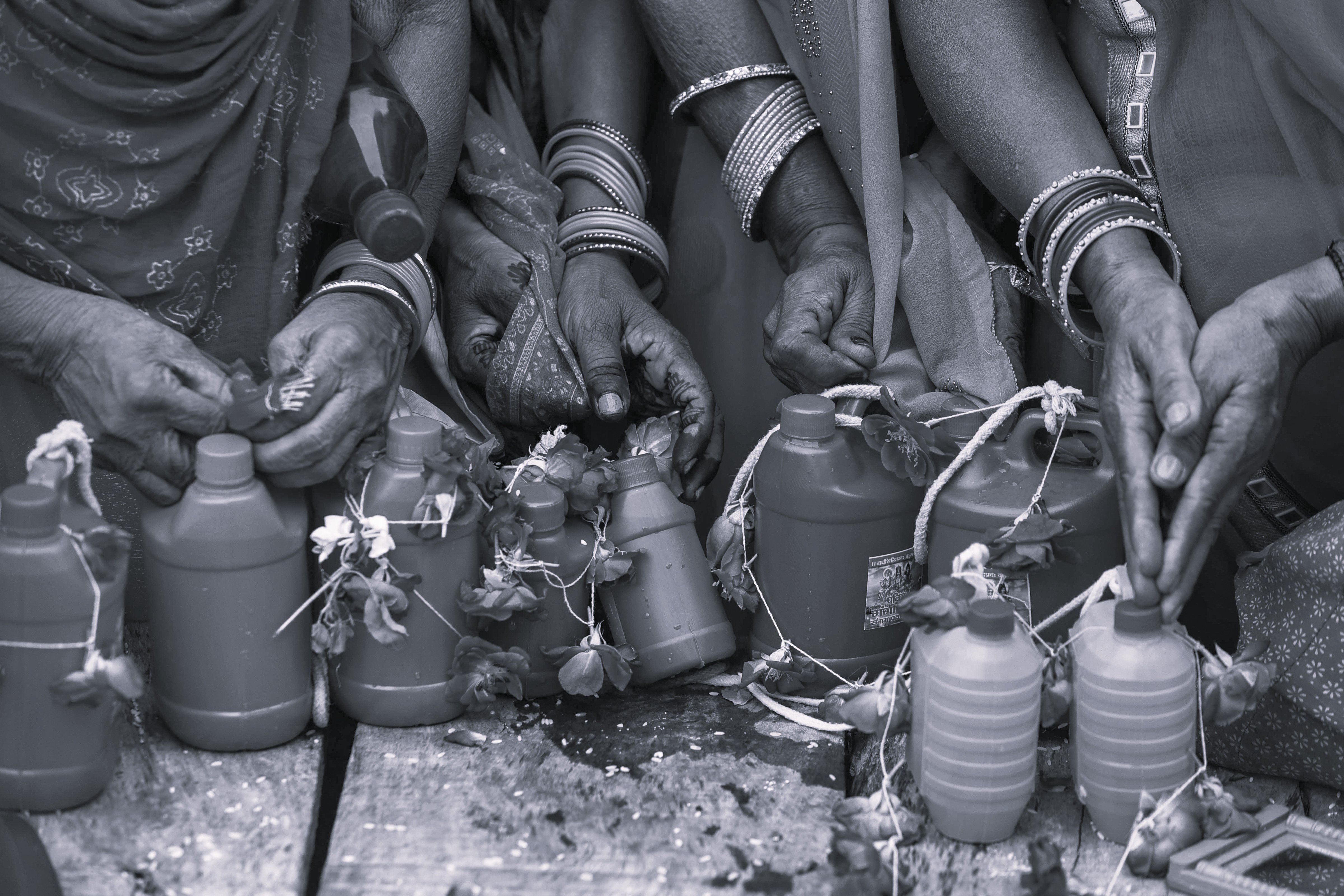
The Kanwar Yatra is regarded as one of the world's largest annual religious pilgrimages, attracting millions of devotees every year. During the sacred month of Shravan (Sawan), devotees of Lord Shiva, known as Kanwariyas, collect holy Ganga water from sacred sites such as Haridwar, Gangotri, Gaumukh, and other ghats before carrying it often barefoot for hundreds of kilometres to perform Jalabhishek on a Shivling.
The pilgrimage draws its deepest significance from the Samudra Manthan legend. Hindu scriptures narrate that when the Devas and Asuras churned the cosmic ocean, a deadly poison called Halahala emerged. To save the universe, Lord Shiva consumed the poison and held it in his throat, turning it blue and earning the name Neelkanth. Devotees believe offering sacred Ganga water helps cool Lord Shiva's throat and expresses gratitude for his sacrifice.
Another popular legend associates the yatra with Ravana, one of Lord Shiva's greatest devotees, who is believed to have carried Ganga water in a bamboo yoke similar to today's kanwar to worship Shiva. The pilgrimage is also linked to King Bhagiratha, whose penance brought the River Ganga from heaven to earth. Since mythology holds that Lord Shiva received the mighty river in his matted locks before allowing it to flow onto Earth, offering Gangajal to Shiva symbolizes the union of the two sacred forces.
The month of Shravan itself holds special importance in Hindu tradition, with Mondays ( Somvars) considered especially auspicious for worshipping Lord Shiva. Many devotees undertake the pilgrimage to fulfil a vow ( mannat), seek blessings for prosperity and good health, or express gratitude for answered prayers.
The Meaning Behind 'Bol Bam'
The Kanwar Yatra is synonymous with the chant "Bol Bam", which echoes across highways and temple towns throughout Shravan.
The phrase simply means "Chant the name of Lord Shiva." Here, "Bol" means say or chant, while "Bam" is derived from "Bam Bhole" or "Bholenath", affectionate names for Lord Shiva. As pilgrims walk long distances, chants such as "Bol Bam," "Har Har Mahadev," and "Bam Bam Bhole" foster devotion, strengthen morale and create a powerful sense of unity among millions of Kanwariyas.
Not a Journey to One Temple
Contrary to a common misconception, the Kanwar Yatra does not culminate at a single shrine. Pilgrims collect Gangajal from sacred locations and carry it to Shiva temples of their choice, often those linked to family tradition or personal vows.
One of the most prominent destinations in western Uttar Pradesh is Pura Mahadev Temple in Baghpat district, located near Muzaffarnagar. Although Muzaffarnagar dominates the headlines because it is a major transit hub, the temple itself lies in Pura village, Baghpat, on the banks of the Hindon River.
The ancient shrine is believed by devotees to be associated with Sage Parashurama and houses an ancient Shivling revered by pilgrims. It hosts one of the largest Shravani Melas in western Uttar Pradesh and remains open throughout the year for worship, unlike Himalayan temples that close during winter. During Shravan and Mahashivratri, however, it witnesses an enormous surge in devotees.
The temple's Chief Priest (Mukhya Pujari) is Pandit Jay Bhagwan Sharma, who has officiated ceremonies during visits by senior government leaders and continues to oversee major religious rituals at the shrine.
Major Sacred Destinations Along the Pilgrimage
While Har Ki Pauri in Haridwar serves as the principal starting point for most Kanwariyas, several important Shiva shrines are closely associated with the pilgrimage. These include Neelkanth Mahadev Temple near Rishikesh, Pura Mahadev Temple in Baghpat, Augharnath Mahadev Temple in Meerut, Kashi Vishwanath Temple in Varanasi, and Baba Baidyanath Dham in Deoghar, Jharkhand. Devotees ultimately carry Gangajal to the temple where they have taken a vow or traditionally worship.
A Massive Administrative Exercise
Although the Uttar Pradesh government has not announced a single consolidated budget exclusively for the Kanwar Yatra, the pilgrimage is supported through allocations made by multiple departments, including the Home Department, Police Department, Public Works Department, Health Department, Urban Local Bodies, Disaster Management authorities, and district administrations.
The scale of preparations reflects the enormity of the event. The state has deployed around 35,000 civil police personnel, 151 companies of the Provincial Armed Constabulary (PAC) and 11 companies of paramilitary forces, supported by intelligence agencies, bomb disposal squads, anti-sabotage teams and traffic police.
Authorities have established integrated control rooms, installed CCTV cameras, deployed drone surveillance, and strengthened monitoring at sensitive locations. Dedicated Kanwar routes and exclusive pilgrim lanes have been created on major highways, while heavy vehicles are diverted through alternate routes to ensure uninterrupted movement of devotees.
Pilgrim-Centric Facilities
Beyond security, the Kanwar Yatra is sustained by an extensive support network that transforms the pilgrimage route into a temporary spiritual corridor.
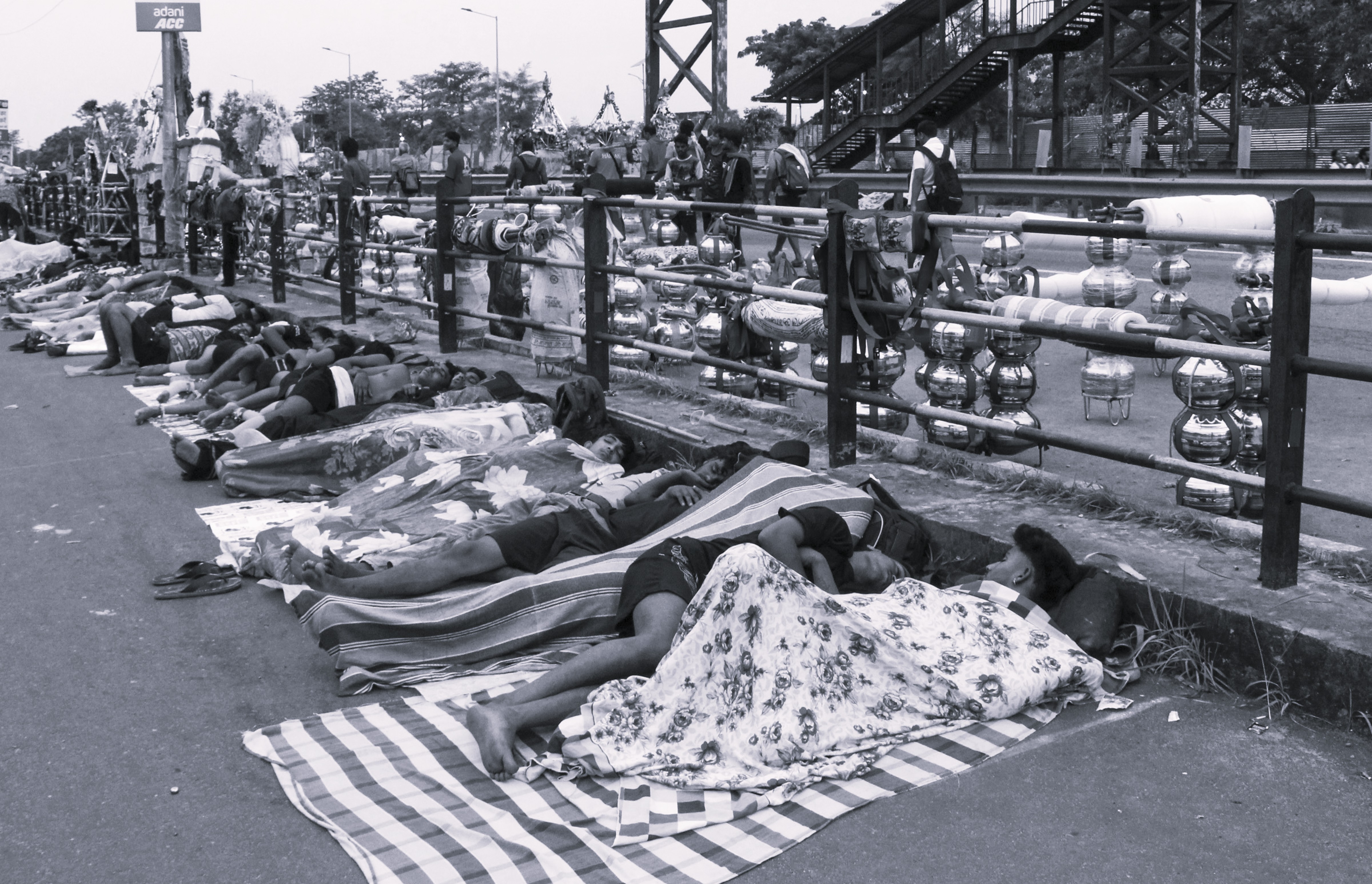
Thousands of Kanwar Shivirs (pilgrim camps) established by religious organisations, NGOs, temples and local communities provide overnight accommodation, resting spaces and information centres. Along the route, volunteers organise Bhandaras, serving free meals, fruits, tea, milk, sweets and refreshments around the clock.
Authorities and voluntary organisations have also installed drinking water kiosks, RO water plants, ORS and glucose distribution points, mobile toilets, sanitation facilities, street lighting and public announcement systems. Medical camps, ambulances, mobile health units, first-aid centres, Quick Response Teams, fire services and disaster management personnel remain on standby throughout the pilgrimage.
Special arrangements have also been made for Dak Kanwars devotees who complete the journey without stopping through regulated movement and dedicated lanes wherever feasible.
Faith Meets Public Administration
With millions of devotees expected to participate across northern India, the Kanwar Yatra has evolved into one of the country's largest annual public management exercises. Governments provide security, transport regulation, medical assistance and civic infrastructure, while thousands of volunteers and community organisations offer free food, shelter and hospitality to pilgrims.
Blending ancient mythology, centuries-old traditions, community service, and modern administrative planning, the Kanwar Yatra continues to stand as one of India's most remarkable expressions of collective faith, where devotion and public administration work hand in hand to support one of the world's largest religious pilgrimages.
If you'd like, I can also adapt this into a 900-word Sunday feature or a newspaper-style 700-word special with stronger narrative flow and feature-style subheads.