
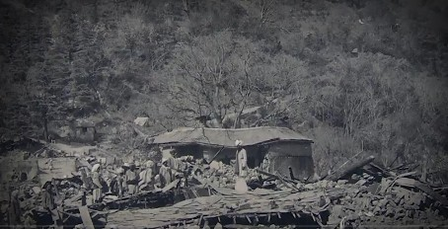
Kangra earthquake of 1905 remains stark reminder of Himalayan seismic risk
The devastating 1905 Kangra earthquake continues to be remembered as one of the deadliest natural disasters in India, underscoring the persistent seismic vulnerability of the Himalayan region.
Striking in the early hours of April 4, 1905, the powerful earthquake estimated at a magnitude of nearly 8.0 ravaged large parts of the Kangra Valley in present-day Himachal Pradesh. The sudden tremor flattened towns and villages, leaving an estimated 20,000 people dead and causing widespread destruction of property and infrastructure.
Historical accounts indicate that nearly one lakh buildings were reduced to rubble, while over 50,000 cattle perished in the disaster. Key urban centres, including Dharamshala and surrounding regions, bore the brunt of the impact, with traditional masonry structures collapsing under the force of the quake.
The earthquake also severely disrupted communication and transport networks, hampering rescue and relief efforts at a time when disaster response systems were limited. Survivors were left grappling with homelessness, food shortages, and the threat of disease in the aftermath.
Seismologists attribute the disaster to tectonic activity along the Himalayan fault lines, where the Indian plate continues to collide with the Eurasian plate. The region remains one of the most earthquake-prone zones globally.
More than a century later, the legacy of the tragedy continues to inform disaster preparedness and building practices. Experts warn that accumulated tectonic stress in the Himalayan arc poses the risk of future high-magnitude earthquakes, reinforcing the need for sustained vigilance and resilience planning.