
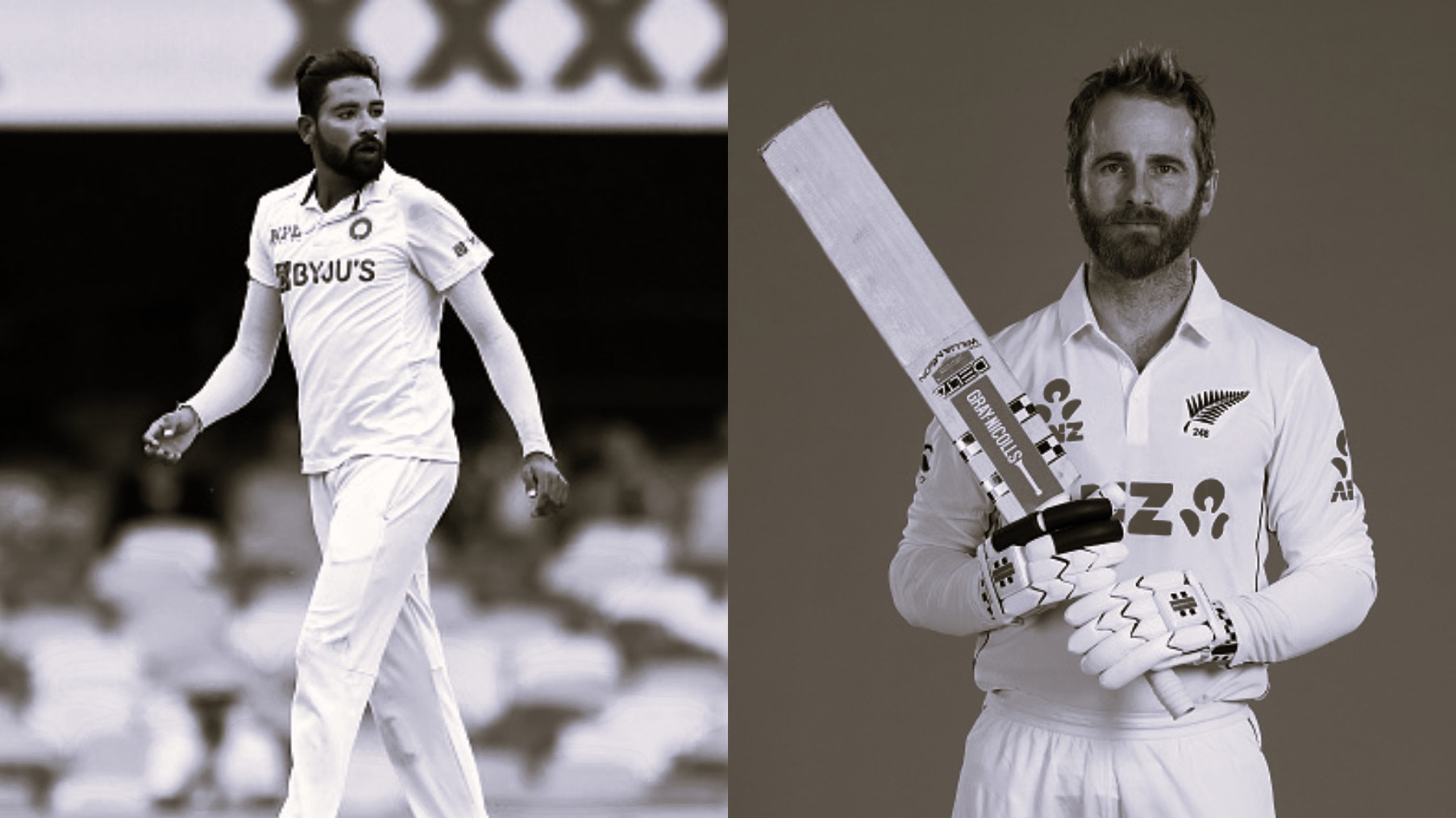
Kane Williamson Praises Siraj’s Leadership and Team Spirit
Former New Zealand captain Kane Williamson lauded India pacer Mohammed Siraj for his team-first attitude and leadership qualities, describing him as a player whose commitment inspires those around him.
Speaking at the CEAT Cricket Awards on Tuesday, Williamson said Siraj has been a key figure in India’s pace attack, especially at a time when Jasprit Bumrah’s workload management remains a central talking point.
“Siraj’s relentless commitment to putting the team first and his eagerness to take the ball, even when the game isn’t moving, truly sets him apart,” Williamson said. “He always wants to be the one who changes the game by bowling long spells. That attitude is contagious and shows strong leadership.”
Siraj, who claimed four wickets in the first innings of the Ahmedabad Test to power India to an innings victory over the West Indies, also played a vital role in India’s drawn Test series in England earlier this year.
Williamson, who first noticed Siraj during his early days with Sunrisers Hyderabad in the IPL, compared him to former New Zealand pacer Neil Wagner renowned for his tireless efforts in Test cricket.
“In New Zealand, we had a similar presence in Neil Wagner, who never backed down from challenges and often steadied the team’s nerves. Mohammed Siraj embodies that same spirit,” Williamson said.
The veteran batter, who led New Zealand to victory in the inaugural World Test Championship (2019–21), also expressed concern about the future of the game’s longest format. He stressed that Test cricket cannot thrive if only the “Big Three” India, Australia, and England continue to dominate.
“If only three teams are regularly playing the format, it will struggle to survive,” Williamson said. “While we enjoy those series, they don’t fully support Test cricket’s global growth. There are ongoing discussions to sustain the format, but many nations are under strain.”
Addressing talks around a two-tier Test system, Williamson cautioned that such a structure must ensure lower-ranked teams have opportunities to grow. “The concern is how second-tier teams will improve and work their way up. Every nation must come together to keep the format alive,” he added.
Turning to India’s young leadership, Williamson praised Shubman Gill, who recently took charge as India’s ODI and Test captain. “Leadership demands a lot of energy and clear focus on priorities,” he said. “You can’t do it forever eventually, it’s about transition and passing the baton.”
He added, “Shubman has excellent leadership qualities. We saw him handle a young team in tough English conditions, which showed great maturity. He’ll enjoy the responsibility, though it comes with ups and downs.”
On his own career, Williamson said he now holds a “casual contract” with New Zealand Cricket, balancing professional commitments with family priorities. “Life changes, and so do priorities. My decisions now involve broader considerations beyond cricket,” he said. “It’s about working together and addressing challenges as they arise that’s part of the privilege of being in the game.”