
Kadapa district collector urges farmers to curb excessive fertilizer use
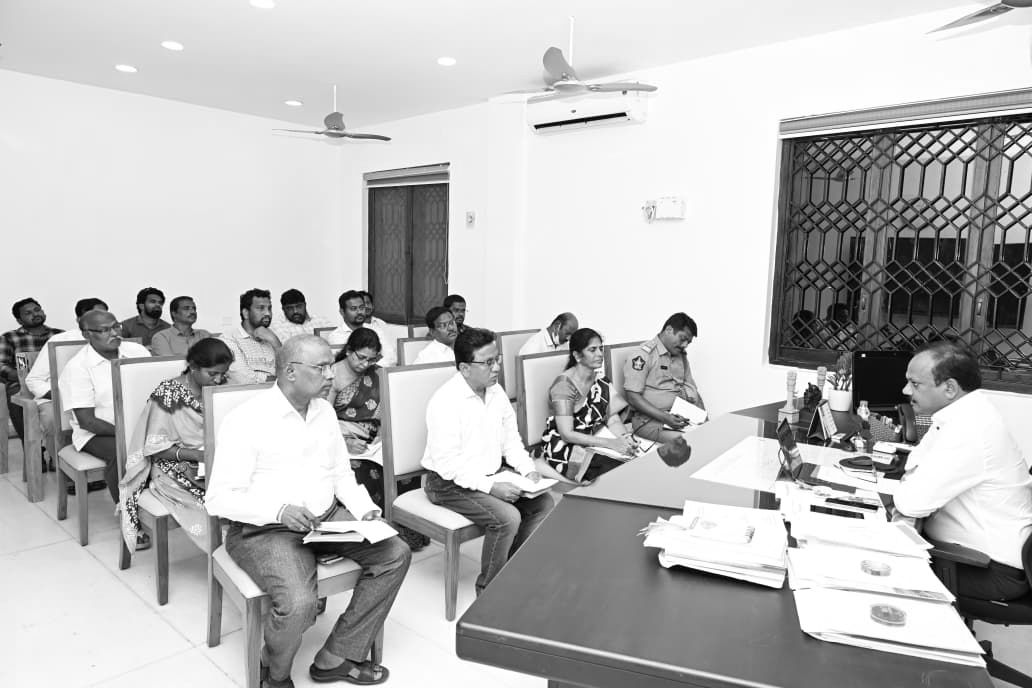
Kadapa District Collector Dr. Sridhar Cherukuri has called for urgent action to reduce the excessive use of chemical fertilizers in the district and promote sustainable agricultural practices. During a District-Level Bhumata Protection Committee meeting held on Wednesday night at the Collector’s Camp Office, Dr. Cherukuri emphasized the need for awareness campaigns to educate farmers about soil health and natural farming methods.
The meeting was chaired by the District Collector, with the Zilla Parishad CEO serving as co-chairman. Other attendees included the District Agricultural Officer, District Superintendent of Police, District Cooperative Department Officer, a Krishi Vigyan Kendra (KVK) scientist, and representatives of fertilizer companies.
Focus on natural farming and soil health
Speaking at the meeting, Dr. Cherukuri stressed that promoting natural farming and expanding the area under eco-friendly agricultural practices should be a key agenda of the Bhumata Protection Committee. He instructed that five progressive farmers be included as members of the committee to provide practical guidance.
He also directed the formation of divisional and village-level committees to conduct meetings and educate farmers on measures required for Bhumata (soil) protection, emphasizing that these committees should be established without delay.
Identifying high fertilizer usage villages
The District Collector instructed officials to 100 identify villages where chemical fertilizer use is particularly high. Farmers in these areas are to be provided with expert guidance on balanced fertilization, modern agricultural practices, and soil health improvement. He highlighted that overuse of fertilizers, particularly urea, Di-Ammonium Phosphate (DAP), and Muriate of Potash (MOP),can degrade soil health, reduce organic matter, and impact long-term productivity.
Regulation of fertilizer sales
Dr. Cherukuri instructed fertilizer company representatives and dealers not to sell fertilizers above MRP and to assist in raising awareness among farmers about responsible fertilizer use. He suggested organizing meetings at divisional and village levels to gather farmer feedback and formulate action plans accordingly.
Soil testing and awareness programs
To support balanced nutrient management, the Collector emphasized the importance of soil testing, which measures pH levels, NPK content (nitrogen, phosphorus, potassium), and micronutrients like zinc, iron, boron, and manganese. This data allows farmers to apply fertilizers in precise quantities, reducing wastage and preventing soil degradation.
The Andhra Pradesh government provides soil health cards to farmers under the National Soil Health Card Scheme, often supplemented with mobile soil testing units operated by the Rythu Sadhikara Samstha (RySS) and Krishi Vigyan Kendras. These mobile labs visit villages to test soil samples and provide immediate guidance, while digital apps allow farmers to access soil test results and fertilizer recommendations.
Sustainable alternatives to chemical fertilizers and pesticides
The District Collector encouraged farmers to adopt eco-friendly alternatives:
• Compost / Organic Manure: Improves soil structure, water retention, and microbial activity, making it the best long-term option for sustainable agriculture.
• Biofertilizers: Microorganisms like Rhizobium and Azospirillum enhance nutrient availability and soil fertility when used alongside compost.
• Eco-friendly pest control: Alternatives to chemical pesticides, including Neem oil, Trichoderma, Bacillus thuringiensis (Bt), and pheromone traps, can control pests while protecting the environment.
A comparative study indicates that while chemical fertilizers offer immediate crop growth, compost and biofertilizers ensure long-term soil health and sustainability, making integrated nutrient management the most effective approach.
Coordinated efforts for Bhumata protection
Bhumata Protection, which literally means “Soil Protection,” refers to the systematic efforts to preserve and enhance soil health to ensure long-term agricultural productivity. It focuses on preventing soil degradation caused by excessive use of chemical fertilizers, pesticides, and unsustainable farming practices, while maintaining fertility through organic matter, biofertilizers, and compost. Key measures include promoting balanced nutrient application based on soil testing and Soil Health Cards, educating farmers through awareness campaigns and mobile soil testing units, and encouraging eco-friendly pest control methods. Overall, Bhumata Protection aims to safeguard the soil as a vital natural resource, support sustainable farming, and ensure environmental and agricultural sustainability for the future.
Dr. Cherukuri instructed all relevant departments to work in coordination to design plans aimed at Bhumata protection, including soil fertility management, rational fertilizer use, and natural farming promotion. He emphasized that farmer education and community involvement are critical to achieving sustainable agricultural growth in the district.
The kadapa district administration plans to strengthen awareness campaigns, expand natural farming areas, and monitor fertilizer and pesticide usage closely. The initiative aims to ensure that farmers maintain high productivity without compromising soil health, securing both the present and future of agriculture in the region.