
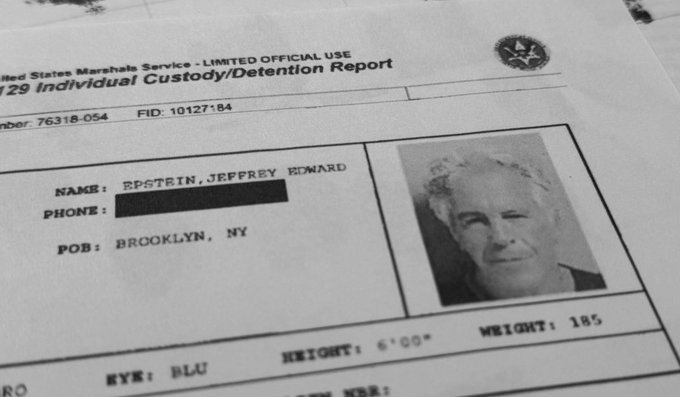
Justice Department withdraws Epstein files after victim data exposed, survivors demand accountability
The U.S. Department of Justice announced Monday that it had removed several thousand documents and media files related to disgraced financier Jeffrey Epstein after discovering that some materials may have inadvertently contained victim-identifying information . The releases, part of a broader disclosure of records tied to federal investigations, have sparked criticism from survivors, their lawyers, and lawmakers over the handling of sensitive content.
In a letter to the New York federal judges overseeing the sex-trafficking prosecutions of Epstein and his associate Ghislaine Maxwell , U.S. Attorney Jay Clayton acknowledged the errors and outlined steps the department is taking to correct them. Clayton wrote that the department had “taken down nearly all materials identified by victims or their lawyers, and a substantial number of documents identified independently by the Department.” He said the issues stemmed from “technical or human error” during the redaction process.
Clayton added that the Justice Department has “iteratively revised its protocols for addressing flagging documents” after victims and their attorneys requested changes to the review and redaction procedures. He explained that when a victim flags a concern, “documents are promptly pulled down from the public website … then evaluated before a redacted version of the document can be reposted, ideally within 24 to 36 hours.” Clayton also stressed that the department is not relying solely on victims to find problematic files, saying teams worked through the weekend running supplemental searches to identify missed redactions.
Deputy Attorney General Todd Blanche , speaking in interviews, acknowledged that there have been “sporadic errors” in redaction but defended the department’s actions. “ Every time we hear from a victim or their lawyer that they believe that their name was not properly redacted, we immediately rectified that ,” Blanche said, adding that the issues affected about 0.001 percent of all materials released .
Blanche also addressed concerns over the remaining files . He stated that the internal review of the Epstein files is over , and aside from a very small number of documents still pending judicial approval , the Justice Department does not plan to continue releasing large additional batches of files. Survivors and some members of Congress have disputed this, noting that only about half of the identified materials - roughly 3 million of an estimated 6 million pages - have been publicly released, and demanding further transparency.
Critics have voiced frustration over the limited protections afforded by redactions. Survivors’ lawyers argued, “what’s the point of this review if the files have already been released?” They also noted that some supposedly redacted information can be revealed with simple technical techniques , meaning the department has failed to fully protect victim privacy . Survivors themselves expressed outrage: “We trusted the Justice Department to shield us from further harm, but our identities are still at risk. The redactions are weak, and anyone can piece together information with basic methods,” said one survivor. Another added, “This is retraumatizing the very people who were supposed to protect us made it worse. How can they claim transparency when our safety isn’t guaranteed?”
Survivors also demanded accountability for those who enabled Epstein. “Every abuser and enabler must be exposed. Hiding names of co-conspirators or wealthy associates only prolongs our trauma and shields them from justice,” they said.
The Justice Department has released over 3 million pages , 2,000 videos, and 180,000 images under the Epstein Files Transparency Act , though only about half of the estimated 6 million pages have gone public. Lawmakers and survivors criticized the release, with some Democrats calling it a “full-blown cover-up.” Redaction errors have already affected court proceedings, including the trial of Tal, Oren, and Alon Alexander - three American brothers and former luxury real estate brokers facing federal sex-trafficking and assault charges - whose documents linked them to Epstein. Survivors’ lawyers are urging independent oversight to ensure victim identities are fully protected. The department temporarily took down parts of its Epstein files portal while coordinating the review, insisting it remains committed to transparency and victim privacy .