
June 1–October 31 Duty Waiver on Cotton Imports Aims to Ease Textile Industry Costs
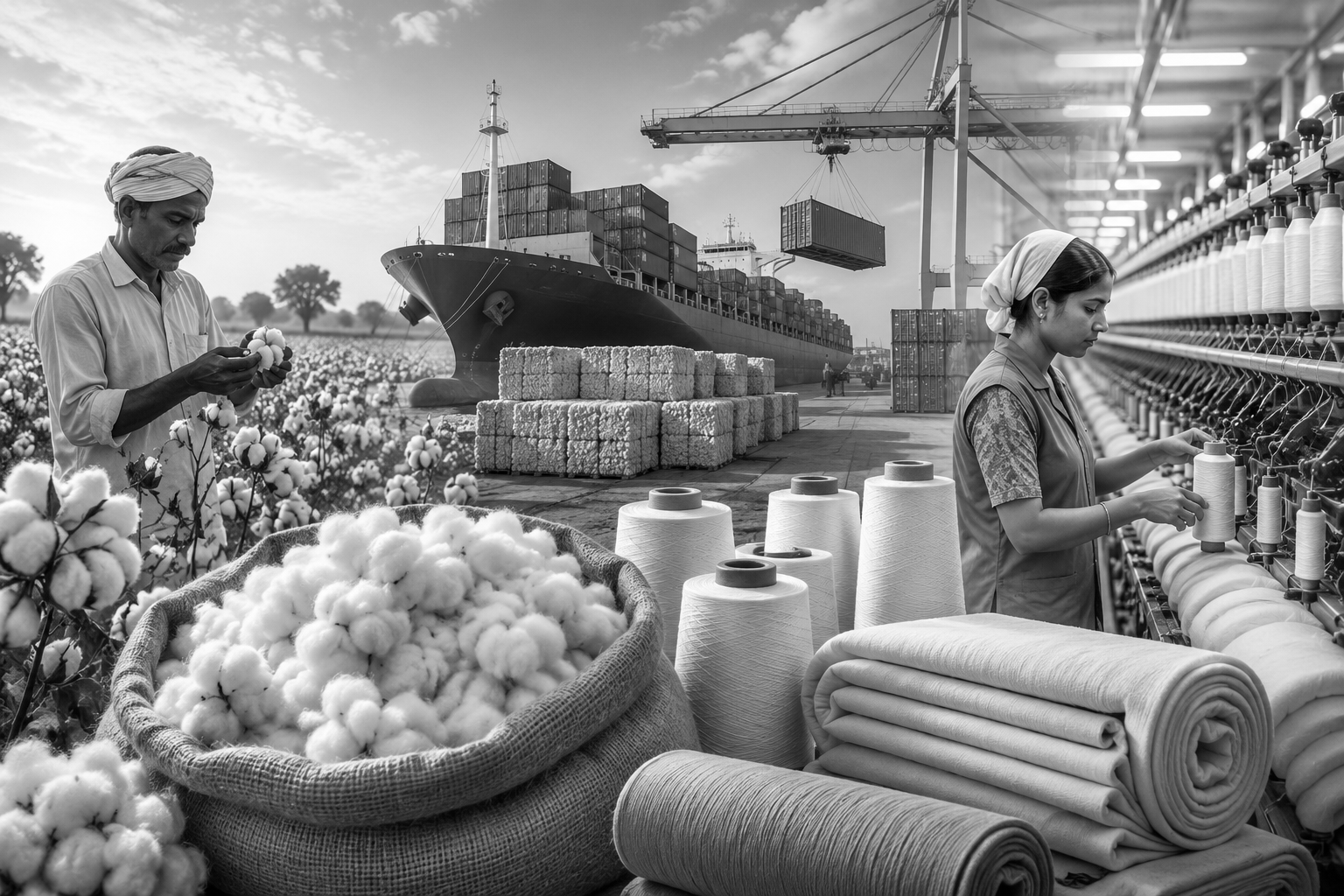
In a significant policy move aimed at supporting India's textile sector while protecting farmer interests, the Government of India has announced a temporary exemption on customs duties for cotton imports from June 1 to October 31, 2026 . The decision, announced by the Ministry of Textiles , is intended to ensure adequate cotton availability during the off-season, reduce input costs for manufacturers and strengthen the competitiveness of Indian textile exports.
The duty waiver comes amid growing concerns within the textile industry over rising cotton prices and tightening domestic supplies. Industry bodies had repeatedly urged the Centre to remove the existing 11% import duty , arguing that higher raw material costs were affecting production, profitability and export competitiveness.
According to the government, the temporary exemption has been carefully designed to benefit the entire cotton value chain. The measure is expected to support micro, small and medium enterprises (MSMEs) , improve access to raw materials and help stabilize market conditions without adversely affecting farmers.
The decision is particularly important for India's vast textile and apparel sector, which supports more than 45 million jobs and remains a key contributor to the country's exports. India's textile and apparel exports were estimated at around $37.8 billion in 2025 , with cotton-based products accounting for a substantial share of overseas shipments.
Industry representatives have pointed to a widening gap between cotton demand and supply, coupled with concerns over productivity, quality and the availability of specific cotton varieties required by export-oriented manufacturers. Rising yarn prices in major textile hubs have also added pressure on garment exporters and small-scale units.
The government has restricted the exemption to the cotton off-season, a period when domestic supplies are relatively limited. By ending the waiver before fresh crop arrivals gather pace, policymakers aim to prevent any significant impact on prices received by Indian cotton growers during the main marketing season.
The move also reflects India's efforts to maintain its edge against textile-exporting nations such as Bangladesh , Vietnam , China and Turkey , where manufacturers often benefit from lower raw material costs. Analysts view the temporary duty waiver as a balanced intervention that seeks to support industry growth, exports and employment while safeguarding farmer interests.