
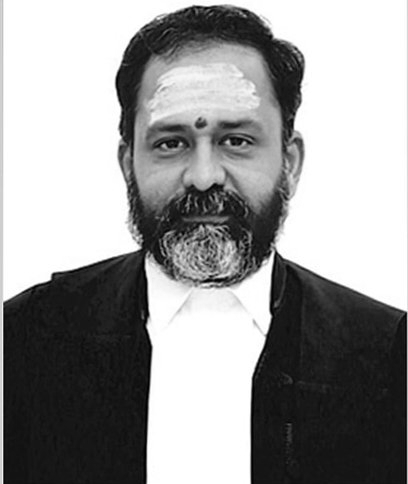
Judicial errors corrected by appeals, not politics: Ex-Judges
Thirty-six former judges on Saturday strongly criticised the Opposition’s move to initiate impeachment proceedings against Madras High Court judge Justice G R Swaminathan, warning that such an attempt undermines the foundations of democracy and the independence of the judiciary.
In a joint statement, the former judges said the impeachment notice against Justice Swaminathan was a “brazen attempt to browbeat judges” whose rulings do not conform to certain political or ideological expectations. They urged Members of Parliament across party lines, members of the Bar, civil society and citizens to unequivocally denounce the move and ensure it is halted at the outset.
Justice Swaminathan, in an order dated December 1, held that the Arulmighu Subramania Swamy Temple was duty-bound to light a lamp at the Deepathoon site, in addition to the customary lighting near the Uchi Pillaiyar Mandapam. The single-judge bench clarified that the practice would not encroach upon the rights of the adjacent dargah or the Muslim community.
The ruling triggered a political controversy, and on December 9, several Opposition MPs, led by the DMK, submitted a notice to Lok Sabha Speaker Om Birla seeking the judge’s removal.
Taking serious exception to this move, the former judges stressed that disagreements over factual findings or legal reasoning in a judgment cannot form the basis for impeachment. They underlined that factual disputes are addressed through established judicial remedies such as appeals or review proceedings, not through punitive constitutional measures against judges.
“If such an attempt is permitted to proceed, it would cut at the very roots of our democracy and the independence of the judiciary,” the statement said, adding that judges are answerable only to their oath and the Constitution of India, not to partisan political pressures or ideological intimidation.
The judges further emphasised that impeachment is constitutionally intended to deal with proved judicial misconduct or incapacity, and not with unpopular, contested or politically inconvenient judgments. Judicial decisions, they said, must be tested through appellate scrutiny and legal critique, not by threats of removal.
The statement noted that the present move was not an isolated incident but part of a deeply troubling pattern in recent constitutional history. It cited the 2018 attempt to impeach then Chief Justice of India Dipak Misra, sustained public campaigns against former CJIs Ranjan Gogoi, S A Bobde and D Y Chandrachud, and criticism directed at incumbent Chief Justice Justice Surya Kant whenever judicial outcomes displeased political constituencies.
“This is not principled criticism of judicial decisions,” the statement said, adding that the weaponisation of impeachment and public vilification as tools of pressure strikes at the heart of judicial independence and constitutional democracy.
The statement was signed by former Supreme Court judge Justice Krishn Murari, along with several former chief justices and judges of various high courts.