
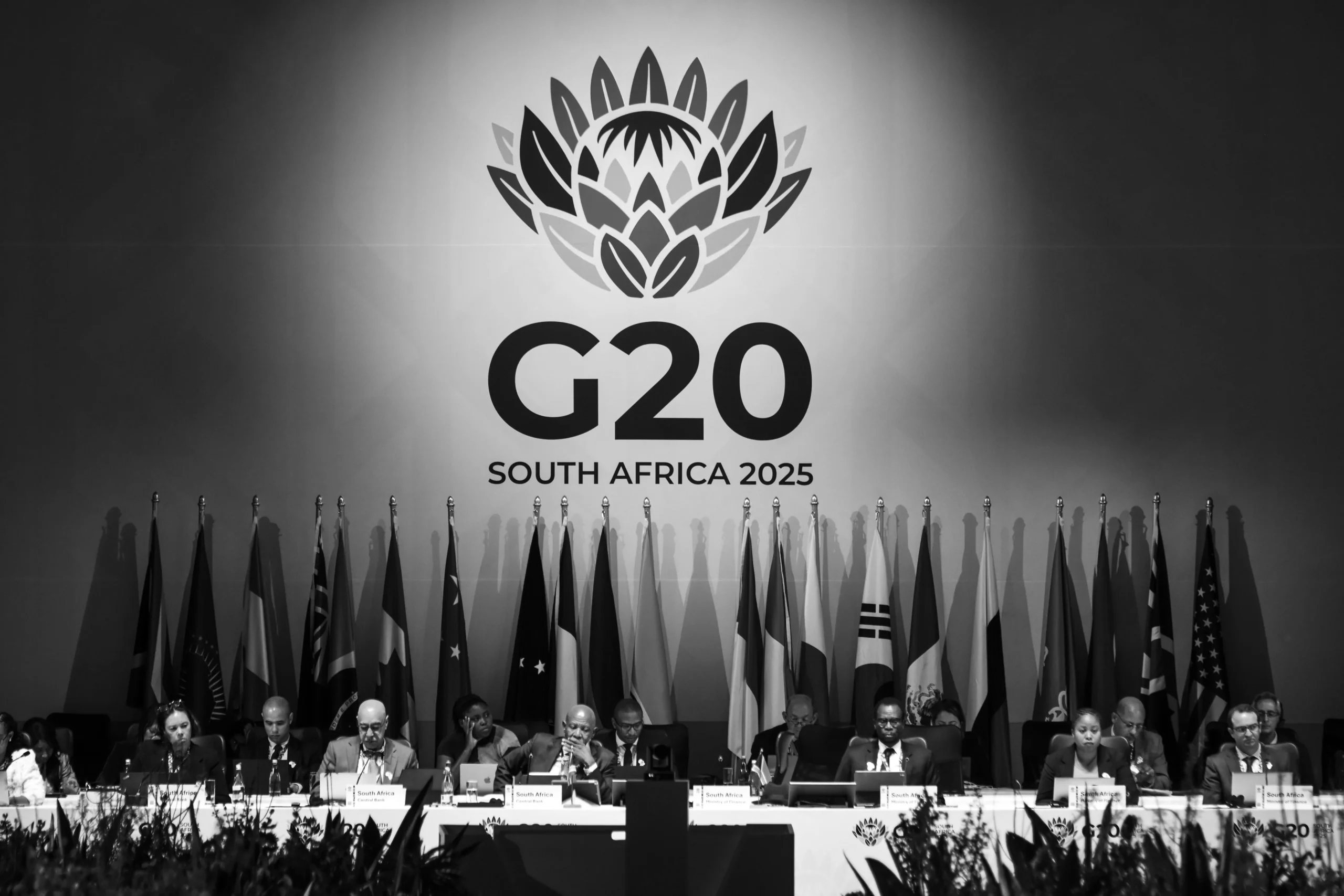
Johannesburg G20 summit faces hurdles as US boycott may hit South Africa long-term
South Africa has insisted that the upcoming G20 Leaders’ Summit in Johannesburg will proceed smoothly despite the dramatic withdrawal of the United States. But foreign policy experts caution that Washington’s boycott rooted in long-standing political tensions -- could have longer-term consequences for Pretoria’s diplomatic influence and multilateral standing.
US President Donald Trump announced earlier this week that his administration would not participate in the November 22–23 summit, alleging that the South African government was enabling “white farmer genocide” and illegally expropriating land. The claims, repeatedly dismissed by South Africa and independent researchers, echo similar accusations Trump made in 2018, when he directed US officials to investigate farm attacks after commentary from conservative media outlets.
The white African agricultural groups have rejected the claims of a “genocide” against them, arguing that the allegations are misleading and do not reflect the reality on the ground. While acknowledging that farm attacks and land disputes do occur in South Africa, these groups insist that labeling the situation as genocide exaggerates the issue and misrepresents the facts. By rejecting this narrative, they align with the South African government’s position that there is no systematic, state-backed campaign targeting white farmers. Their stance is aimed at countering misinformation and ensuring that the international community does not misinterpret isolated violent incidents as a coordinated effort to eliminate a particular community.
“President Trump has decided not to come, and he has withdrawn all US representatives. But we have always said boycott politics does not work,” Ramaphosa said at a public event. “We will go ahead and take critical decisions that matter to the world.”
However, analysts say the US absence is not merely symbolic. Washington remains a cornerstone of global economic governance and a major financial contributor to international institutions. Its boycott, they argue, sends a worrying message about the future cohesion of the G20.
Dr Nampula Mphahlele, a researcher in South African foreign policy, told The Star that the implications go beyond the summit itself. “The US finances many of the world’s biggest initiatives from climate change programmes to the operations of the UN and the World Trade Organization. If Washington is boycotting the G20, it raises questions about the strength of multilateralism and how the forum will function going forward,” she said.
Mphahlele noted that while South Africa’s place in the G20 is not threatened, the boycott could affect its access to crucial smaller-format meetings. Many high-impact discussions such as those involving finance ministers, central bank governors, and specialist working groups take place by invitation. “If the US starts excluding South Africa from these spaces, Pretoria’s influence in shaping global policy will weaken,” she added.
The US withdrawal has been accompanied by similar decisions from Washington’s partners. Argentina’s president, for instance, has also opted out of attending the summit and will send a representative instead. Experts say this reflects a more subtle form of geopolitical signalling.
Dr Noluthando Phungula of the University of KwaZulu-Natal described this as an exercise of soft power. “Argentina is heavily reliant on US support through the IMF and bilateral channels. Aligning with Washington’s boycott is a way of maintaining political goodwill,” she said. “This shows how global alliances today are shaped not only by ideology but by economic dependence and strategic interests.”
The decision, according to Phungula, also underscores the divisions emerging within the Global South. Some countries, including South Africa, are asserting more independent foreign policies and deepening ties with BRICS partners China, Russia, India, and Brazil while others lean toward Western economic support. “This fragmentation means developing nations are no longer acting as a unified bloc,” she noted.
The boycott may also have broader consequences for South Africa’s diplomacy. Trump’s claims about white landowners have periodically surfaced in US–South Africa relations since 2018, creating diplomatic irritants and contributing to a cooling of ties. Analysts warn that renewed tension could accelerate Pretoria’s shift towards China, Russia, and other non-Western platforms, further weakening engagement with the US-led order.
Phungula said a prolonged rift would reduce South Africa’s ability to act as a bridge between Western and developing nations—an important aspect of its foreign policy identity. “The US remains one of the world’s largest economies. Its absence questions the legitimacy of the G20, and its deteriorating relationship with Pretoria will make it harder for South Africa to push for issues like climate finance, debt reform, and fairer global governance.”
South Africa is expected to hand over the rotating G20 Presidency to the United States at the close of this year’s summit. With no US delegation attending, Ramaphosa acknowledged the awkwardness but said a symbolic transition would still take place. “We do not want to hand the gavel to an empty chair,” he admitted, “but we will ensure the institution continues.”
Despite the diplomatic row with the US over Trump’s boycott of the G20 summit, President Cyril Ramaphosa emphasised that the US remains a key market and partner for South Africa. The upcoming Johannesburg G20 Summit, scheduled for November 22–23, will bring together nearly 40 Heads of State and Government to discuss critical issues such as global economic recovery, climate change, sustainable development, and international financial stability. Experts caution that if South Africa’s ties with the US remain strained, the country may become increasingly reliant on alternative multilateral forums like BRICS and face reduced influence in shaping global economic policies, even as it hosts the summit and seeks to advance its domestic and regional priorities.