
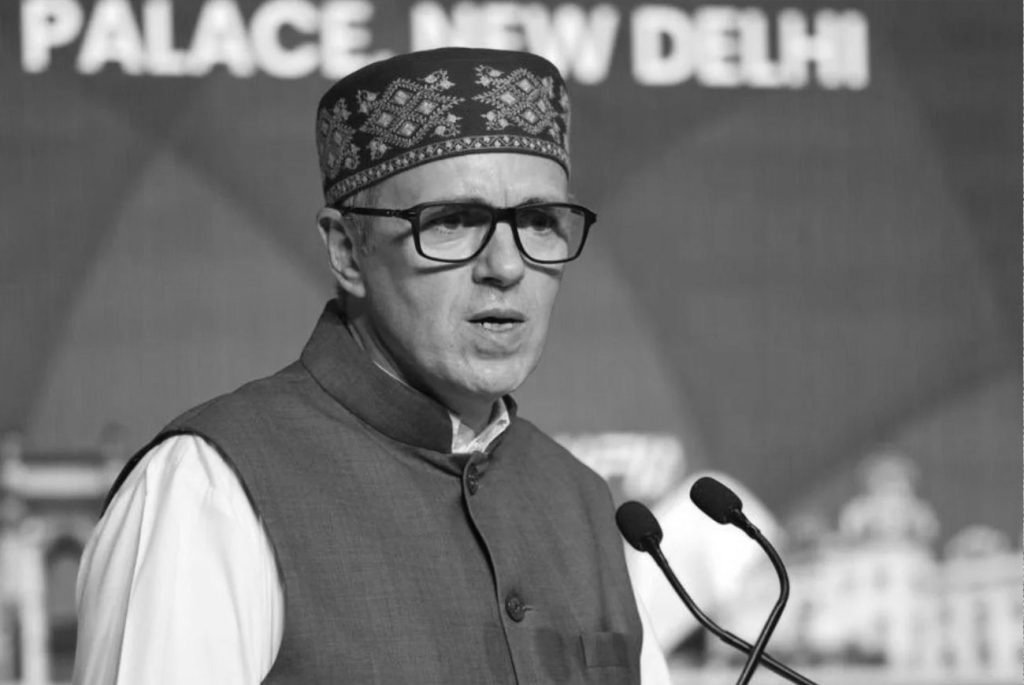
J&K Yet to Benefit from Indus Waters Treaty Suspension: Omar Abdullah
Jammu and Kashmir Chief Minister Omar Abdullah on Friday said the Union Territory has not yet gained tangible benefits from the abeyance of the Indus Waters Treaty (IWT) , but his government is working closely with the Centre to push for key projects that could address both water and power needs in the region.
Abdullah highlighted two priority initiatives: the Tulbul Navigation Project (Wullar Barrage) on the Jhelum river and the diversion of Chenab river water to improve supply for Jammu city. Following the Pahalgam terror attack in April last year, India suspended the IWT along with other measures against Pakistan. Under the treaty, India has exclusive rights to the eastern rivers, Sutlej, Beas, and Ravi, while the western rivers, Indus, Jhelum, and Chenab, were largely allocated to Pakistan. India, however, can use western river waters for domestic needs, irrigation, and hydroelectric power.
“Jammu and Kashmir should have seen benefits from the IWT abeyance, but so far none have materialised,” Abdullah said. He noted that ongoing power projects such as Ratle, Kiru, Kwar, and Pakal Dul remain unchanged in scope or capacity under the treaty provisions.
The chief minister explained how the UT could gain from new initiatives. The Tulbul Navigation Project would store additional water during normal flows, helping inland navigation, controlling sedimentation, and improving downstream hydroelectric power at projects like Lower Jhelum, Uri, and Uri-II. Diverting water from the Chenab to Jammu city could address long-standing drinking water shortages, while an enhanced canal network could increase water availability for irrigation, especially benefiting tail-end farmers. Over the long term, lifting restrictions under the IWT could also support new hydropower projects, enhancing energy generation and overall regional development.
On the power sector, Abdullah added that the IWT abeyance has not yet had a major impact. Any gains so far came through the Special Assistance to States for Capital Investment (SASCI) scheme , which eased funding challenges for equity shares in power projects, resulting in savings for the UT.
Looking ahead, Abdullah expressed hope that future policy changes regarding the IWT will yield broader benefits in both water management and energy generation for Jammu and Kashmir.