
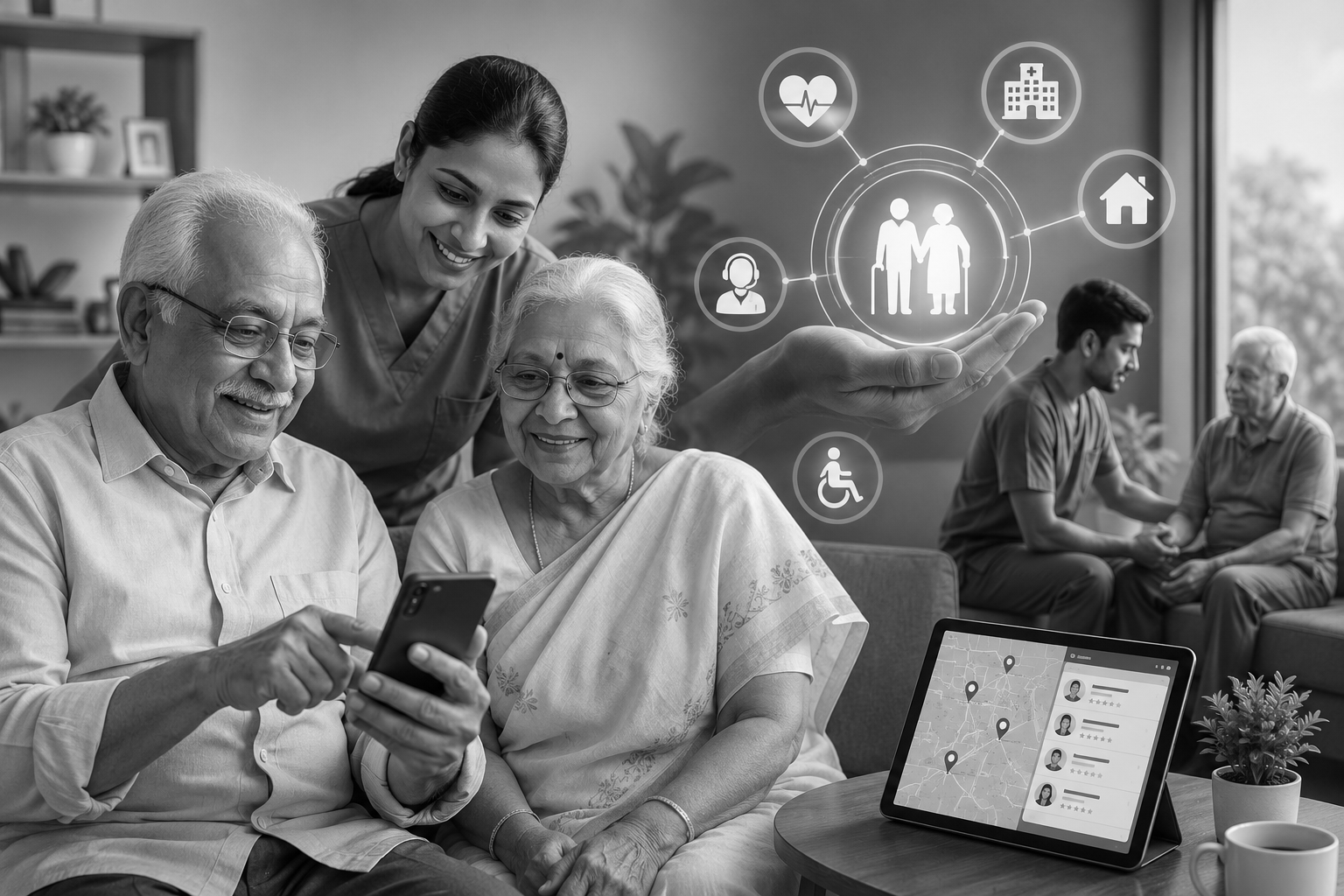
JEEVAN and SHATAYU Mark India’s Big Push Towards Technology-Driven Elderly Care
India’s rapidly ageing population is emerging as one of the country’s biggest social and healthcare challenges, forcing policymakers to rethink how welfare, healthcare and caregiving services are delivered to millions of senior citizens. Against this backdrop, the launch of the JEEVAN mobile application and SHATAYU caregiver dashboard by the Ministry of Social Justice and Empowerment represents a significant step towards building a digitally connected eldercare ecosystem in the country.
Unveiled by Union Minister Virendra Kumar during the National Workshop on “Creating a Well-Functioning Care Economy,” the two platforms aim to improve access to welfare schemes, emergency assistance, healthcare support and trained caregiving services for elderly citizens across India.
Rising Elderly Population Creates New Challenges
The launch comes at a time when India is witnessing a sharp demographic transition. Improvements in healthcare and life expectancy have increased the number of elderly citizens, but support systems for ageing populations have struggled to keep pace. Many senior citizens continue to face difficulties accessing healthcare facilities, welfare benefits, caregiving services and emotional support, especially in rural and semi-urban areas.
Government officials say the newly launched platforms are intended to bridge these gaps through technology-enabled support systems designed specifically for elderly users.
JEEVAN App Aims to Simplify Welfare Access
The JEEVAN application short for Joint Elderly Empowerment & Virtual Assistance Network has been developed as a dedicated digital platform for senior citizens. The application brings together information related to government welfare schemes, emergency assistance, healthcare support services and ministry-supported senior citizen homes under one digital interface.
Officials involved in the project said one of the primary objectives of JEEVAN is to simplify access to welfare services for elderly citizens who often struggle with fragmented government systems and digital complexity. The app has therefore been designed with a simplified layout, accessibility-friendly features and easy navigation tools keeping elderly users in mind.
For many senior citizens, particularly those living alone or away from family support systems, accessing information about pensions, healthcare facilities or emergency services can be a difficult process. Multiple portals, complicated documentation and limited digital literacy have often prevented elderly citizens from fully benefiting from available schemes.
By consolidating these services into a single platform, the government hopes JEEVAN can function as a digital support companion for senior citizens.
Building Awareness Around Existing Welfare Schemes
The platform is also expected to strengthen awareness regarding welfare programmes already available under the ministry and other government departments. Experts note that a major problem in elderly welfare is not merely the absence of schemes, but the lack of awareness and accessibility among intended beneficiaries.
India already runs several initiatives for senior citizens, including the Elderline helpline, old-age homes supported under the Integrated Programme for Senior Citizens, healthcare assistance programmes and pension schemes. However, access to these services often remains uneven across states and districts.
The JEEVAN platform seeks to address this issue by integrating information and support mechanisms into a centralised digital ecosystem.
SHATAYU Dashboard Focuses on Caregiver Support
Equally important is the launch of SHATAYU Senior Holistic Care Assistance and Training For Your Utility, a digital dashboard focused on India’s growing geriatric caregiving needs.
The dashboard provides district-wise and state-wise information regarding the availability of trained geriatric caregivers. Officials say the platform has been designed to help families and senior citizens identify caregiving support more efficiently and reduce the stress associated with locating reliable eldercare services.
India’s caregiving sector has long remained largely informal. In many households, elderly care responsibilities are managed by unpaid family members, domestic workers or untrained attendants. However, changing family structures, urban migration and rising healthcare needs have increased the demand for professional caregiving services.
The growing number of elderly citizens living independently has further intensified this demand.
Demand for Professional Elderly Care Rising
Medical experts point out that elderly care today extends beyond basic assistance. Senior citizens increasingly require specialised support related to chronic illnesses, mobility challenges, dementia care, rehabilitation and mental health support. Yet India continues to face a shortage of trained geriatric caregivers and organised support infrastructure.
The SHATAYU dashboard is expected to play a crucial role in addressing this gap by creating a more structured and visible caregiving network.
Officials believe the dashboard could eventually help formalise the eldercare workforce by improving caregiver identification, training visibility and service coordination. A more organised system could also enhance accountability and quality standards in caregiving services.
Care Economy Emerges as Major Policy Focus
The launch of JEEVAN and SHATAYU was part of a broader national discussion on developing India’s “ care economy ” a concept that includes childcare, eldercare, disability support, healthcare assistance and domestic caregiving services.
During the national workshop organised alongside the launch, policymakers, experts, state representatives and welfare officials discussed the urgent need for sustainable care infrastructure in India.
According to officials, the care economy includes both unpaid caregiving work within households and paid services delivered through formal and informal sectors. In India, caregiving responsibilities are still heavily dependent on family structures, particularly women, who often provide unpaid care for elderly relatives.
However, social and economic changes are reshaping traditional caregiving patterns. Urbanisation, smaller family units, migration for employment and rising healthcare costs are making institutional and professional caregiving support increasingly important.
Experts participating in the workshop highlighted that India must begin preparing for the long-term social and economic implications of an ageing society.
Technology Seen as Key to Future Eldercare
The use of technology in elderly care is also emerging as a key policy focus. Digital health records, telemedicine services, emergency response systems and caregiver databases are increasingly being viewed as essential tools for improving eldercare delivery.
Officials say the JEEVAN and SHATAYU platforms represent an attempt to integrate technology into welfare delivery while ensuring that services remain accessible and inclusive for elderly citizens.
At the same time, challenges remain.
Digital literacy among elderly citizens continues to be uneven, particularly in rural regions where smartphone access and internet connectivity may still be limited. Experts say awareness campaigns, community outreach programmes and local-level support systems will be critical to ensuring the success of the platforms.
Questions also remain regarding implementation capacity, coordination between states and regular updating of caregiver databases.
A Major Shift in India’s Eldercare Policy
Despite these challenges, welfare experts believe the launch marks one of the government’s most ambitious efforts so far to build an integrated eldercare support framework.
The initiative reflects a broader shift in public policy from viewing elderly welfare merely as a social assistance issue to recognising it as a critical component of healthcare planning, economic policy and social development.
As India moves towards becoming one of the world’s largest ageing societies in the coming decades, the need for efficient, accessible and technology-driven caregiving systems is expected to become increasingly urgent.
Through JEEVAN and SHATAYU , the government is attempting to lay the foundation for a future where elderly citizens are not only supported through welfare schemes, but are also connected to a broader ecosystem of healthcare, caregiving, emergency assistance and social inclusion.
Whether these platforms succeed in transforming elderly care delivery on the ground will depend on implementation, accessibility and public awareness. Yet the launch signals a growing recognition that elderly care can no longer remain a fragmented or secondary policy concern in a rapidly ageing India.