
Javed Akhtar Flags Education Inequality, Takes Swipe at Madrasas and Gurukuls
Renowned writer and poet Javed Akhtar on Saturday expressed concern over the growing inaccessibility of education for children from economically weaker sections, saying that rising costs and the closure of government schools were depriving poor families of opportunities.
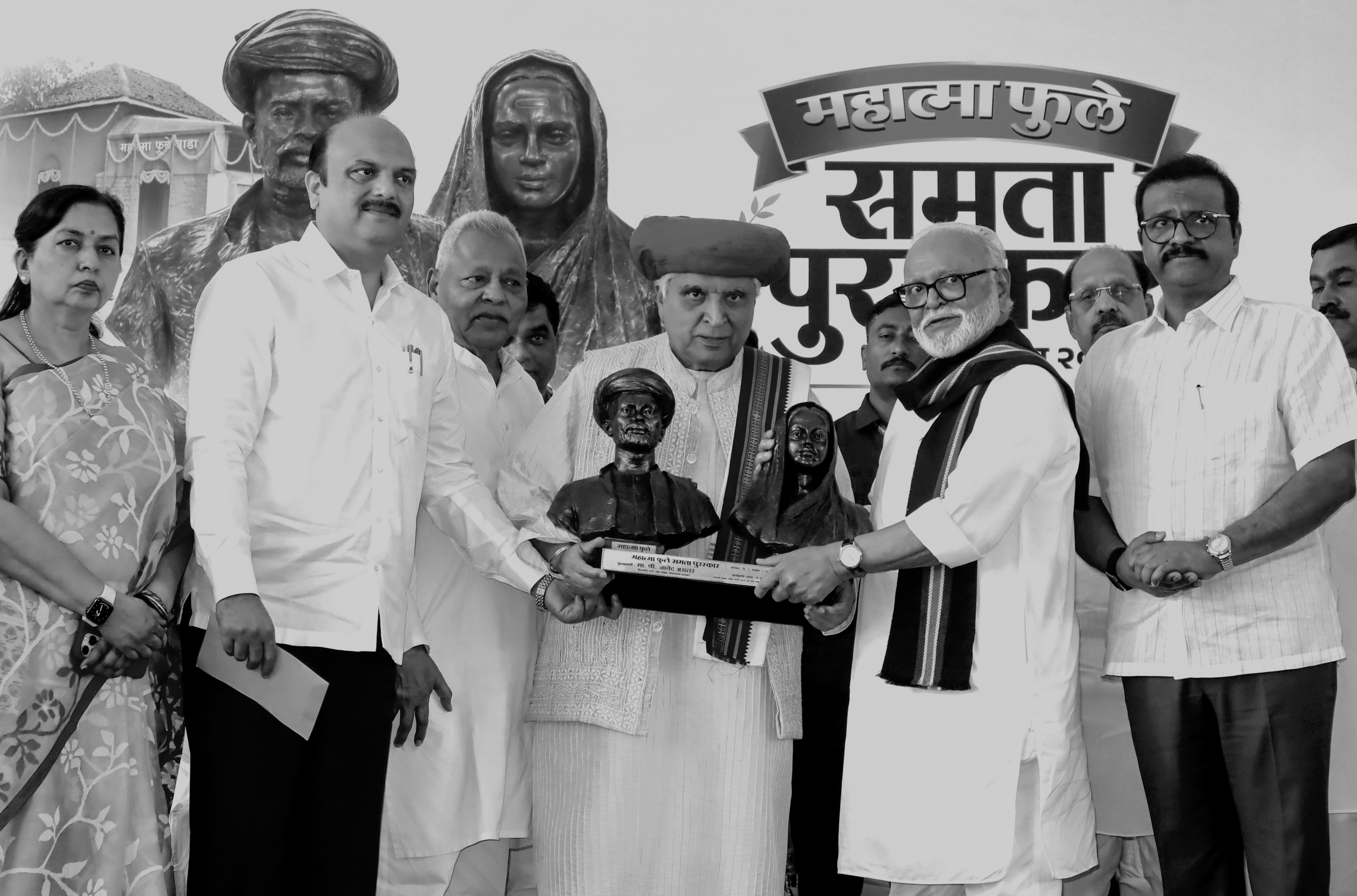
Speaking after receiving the Mahatma Phule Samata Award 2026 at an event organised by the Akhil Bharatiya Mahatma Phule Samata Parishad in Pune, Akhtar said India had immense talent but lacked equal educational opportunities.
He questioned why the government, which claims to provide food to 80-85 crore people, could not ensure education for an equivalent number of citizens.
"Is education less important than food? The stomach may be full, but the head will remain empty," he said, emphasising that education was a fundamental responsibility of the government.
Akhtar also made controversial remarks about traditional religious institutions, claiming that children graduating from madrasas and gurukuls would have their minds "filled with poison".
He criticised the closure of government schools, saying the institutions were established to provide affordable education to disadvantaged children. Their closure, he argued, was once again placing educational opportunities in the hands of privileged sections.
Linking India's historical technological limitations to caste discrimination, Akhtar said people engaged in physical labour were denied access to education, preventing innovations by blacksmiths, potters and farmers from emerging.
He also criticised the practice of branding those questioning examination irregularities as anti-national, advising young people not to be intimidated by such accusations.
Paying tribute to social reformers Mahatma Jyotiba Phule and Savitribai Phule, Akhtar said their contribution to educating disadvantaged communities was extraordinary.
He described their work as a lasting example of social reform and said their legacy deserved respect and recognition.