
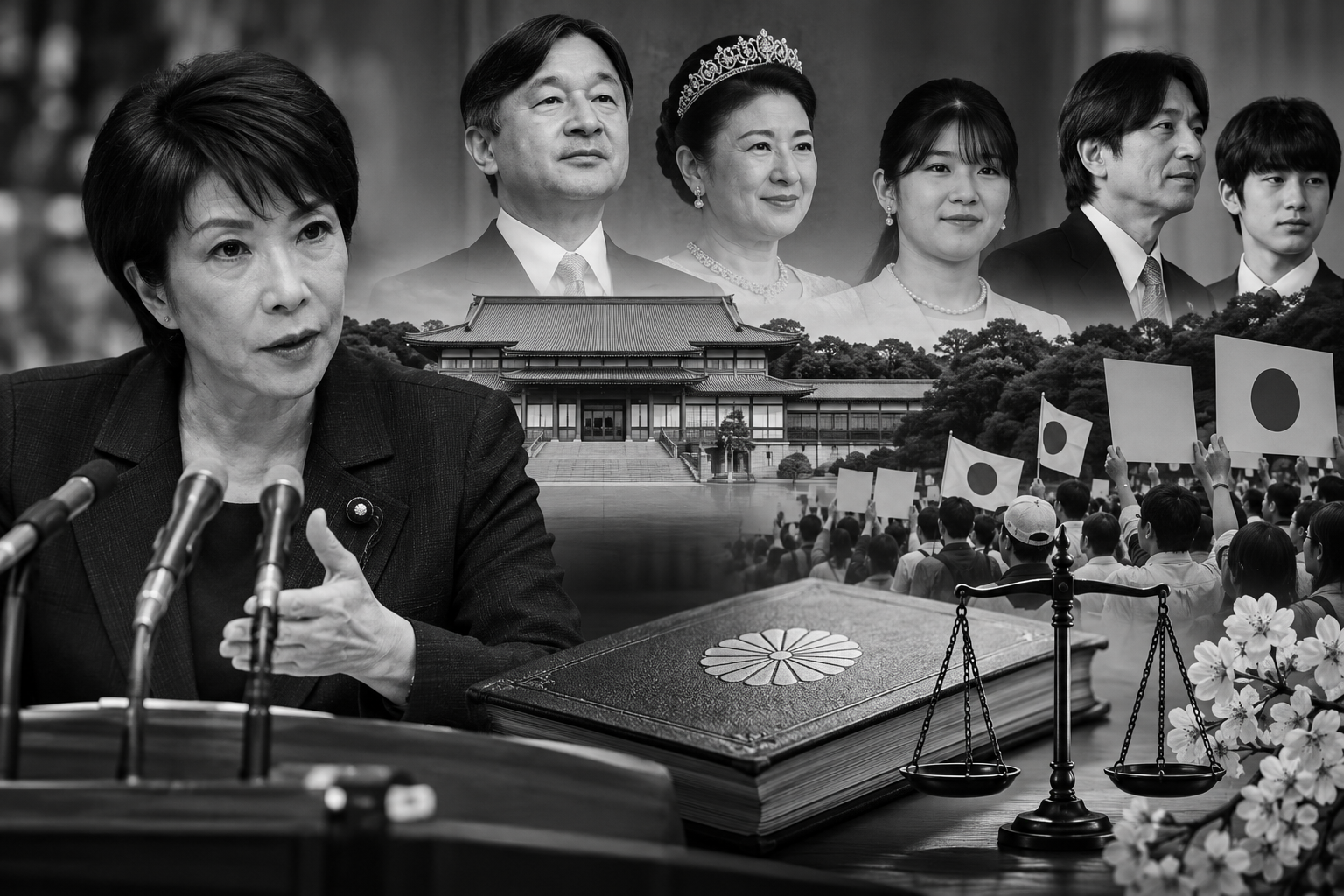
Japan’s Revised Imperial Law Takes Effect, Reinforcing Male-Only Succession
Japan’s revised Imperial House Law took effect on October 24, reinforcing male-only succession and reigniting debate over gender equality, royal traditions and the future of the world’s oldest hereditary monarchy. The changes aim to address the declining number of imperial family members but exclude Princess Aiko, Emperor Naruhito’s popular daughter, from succession.
The law, enacted by Japan’s parliament on July 17 and promulgated on July 24, introduces two major measures. It allows eligible unmarried men aged 15 and above, descended through the paternal line from former imperial family branches, to be adopted into the royal household. However, adopted men themselves cannot inherit the throne, although the law permits their male descendants to become eligible under the revised succession framework. No candidates have volunteered so far, raising questions about the plan’s practicality and transparency.
The adoption provision targets families from 11 branches that lost royal status in 1947 following postwar reforms. Four of those families reportedly remain, with their descendants separated from the current emperor’s line by at least 36 generations. The law also allows princesses to retain royal status after marrying commoners, reversing the previous requirement to leave the family. Their husbands and children, however, will not become royals, leaving questions about family life, official duties and civil rights. Eligible princesses can also voluntarily relinquish their status upon marriage under a transitional provision.
Princess Aiko, 24, remains excluded from succession, as do any children she may have. The throne’s current succession order places Crown Prince Akishino, followed by his son Prince Hisahito, and then Emperor Naruhito’s 90-year-old uncle. Japan has historically had eight female monarchs, but its modern succession law prohibits women from inheriting the throne.
Prime Minister Sanae Takaichi, a conservative supporter of male-line succession, defended the legislation as an urgent response to the shrinking royal household. The bill followed years of discussions, including a 2021 expert-panel report and ten parliamentary meetings. Opposition lawmakers criticised provisions concerning the succession rights of adopted members’ sons, saying the issue was not part of the earlier political consensus.
The changes have intensified public debate. Polls indicate substantial support for a female emperor, while hundreds of demonstrators marched in Tokyo earlier this month chanting, “Aiko-sama for crown prince!” Cartoonist Yoshinori Kobayashi has announced plans to challenge the law in court, arguing that it is unconstitutional.
The government says the reforms will help preserve the monarchy’s capacity to fulfil official duties. However, critics argue that the legislation postpones rather than resolves the central question of whether Japan should permit female or maternal-line succession.