
Japan makes history as Takaichi set to become the country's first woman prime minister
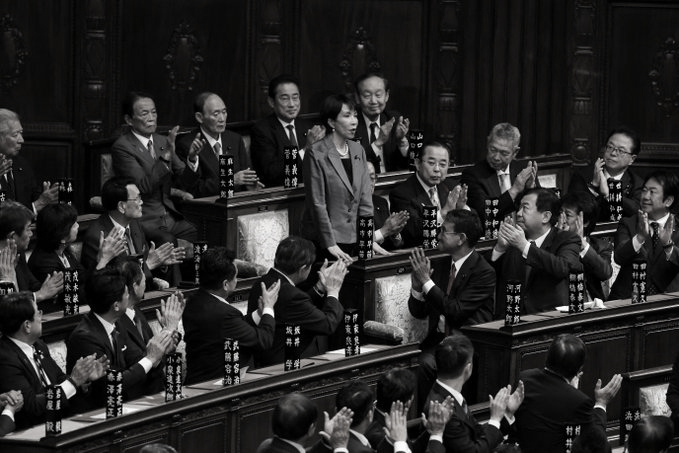
Sanae Takaichi, President of Japan’s ruling Liberal Democratic Party, was elected Prime Minister by parliament on Tuesday, becoming the country’s first-ever woman to hold the post since its first postwar election in 1947. For many Japanese, a female prime minister once seemed nearly impossible, making her victory a historic milestone.
Takaichi secured 237 out of 465 votes in the Lower House, defeating Constitutional Democratic Party leader Yoshihiko Noda, who received 149 votes. Her decisive first-round victory allowed her to avoid a runoff. She beat four male candidates this time, after having lost two previous LDP leadership elections in 2021 and 2024, demonstrating persistence and rising political influence.
At 64, Takaichi faces significant challenges, including reviving Japan’s sluggish economy and restoring unity within the LDP, which has been shaken by scandals and internal divisions. She is set to formally assume office after meeting Emperor Naruhito, a traditional step marking the official start of her premiership.
A protégé of the late former Prime Minister Shinzo Abe, Takaichi grew up in Yamatokōriyama, Nara Prefecture, the daughter of Daikyū Takaichi, who worked in the automobile industry, and Kazuko Takaichi, a police officer. In her youth, she pursued diverse interests, including playing drums in a heavy-metal band, scuba diving, driving, and working as a television host, before gradually entering politics.
First elected to the House of Representatives in 1993, she joined the LDP in 1996 and held multiple ministerial positions, including Minister for Internal Affairs and Communications and most recently Minister in charge of Economic Security, Science and Technology, and Intellectual Property, her last position before becoming Prime Minister. Takaichi is known for her conservative social views, opposing same-sex marriage and maintaining traditional perspectives on gender roles, even as her election marks a historic breakthrough for women in Japanese politics.
Her nationalist and security-focused stance includes strengthening Japan’s Self-Defense Forces and taking a more assertive role in the Indo-Pacific, which is expected to draw Japan closer to India in areas of defense and strategic cooperation. She also frequently visits the Yasukuni Shrine, a site honoring Japan’s war dead, reflecting her conservative and traditionalist political identity.
Takaichi reached a political agreement with Osaka Governor Hirofumi Yoshimura, leader of the Japan Innovation Party, focusing on reforms such as reducing parliamentary seats by 10 percent, overhauling social security, and promoting Osaka as a secondary capital. While she offered ministerial positions to the party, they chose not to join her Cabinet.
Her election is both a symbolic breakthrough for women in Japan and a continuation of conservative, nationalist leadership, reflecting the persistent male dominance in Japanese politics. She assumes office at a critical moment, tasked with reviving the economy, uniting the party, and asserting Japan’s role in regional security, while navigating mixed public perceptions at home and abroad.
In a message on X, Indian Prime Minister Narendra Modi extended his congratulations to Takaichi, stating, “Heartiest congratulations, Sanae Takaichi, on your election as the Prime Minister of Japan. I look forward to working closely with you to further strengthen the India-Japan Special Strategic and Global Partnership. Our deepening ties are vital for peace, stability, and prosperity across the Indo-Pacific and beyond.”
Following her election, Takaichi addressed the nation, emphasizing the importance of political stability. She stated, “Political stability is essential right now. Without stability, we cannot push measures for a strong economy or diplomacy.”
Takaichi's rise to the premiership follows the resignation of her predecessor, Fumio Kishida, who stepped down in August 2024 amid a series of political scandals. Kishida's administration was marred by a slush fund scandal involving unreported political donations, leading to a significant loss of public trust. Approval ratings for his government plummeted to record lows, and the Liberal Democratic Party (LDP) suffered significant electoral defeats. In his resignation statement, Kishida acknowledged the need to address the public's concerns and restore confidence in the party.
In a significant development, U.S. President Donald Trump confirmed plans to visit Japan from October 27 to 29, following his trip to Malaysia. During his visit, he is expected to meet with Prime Minister Takaichi to discuss strengthening the U.S.-Japan alliance, trade relations, and regional security issues. This visit marks a crucial opportunity for Takaichi to engage with a key international partner early in her tenure.