
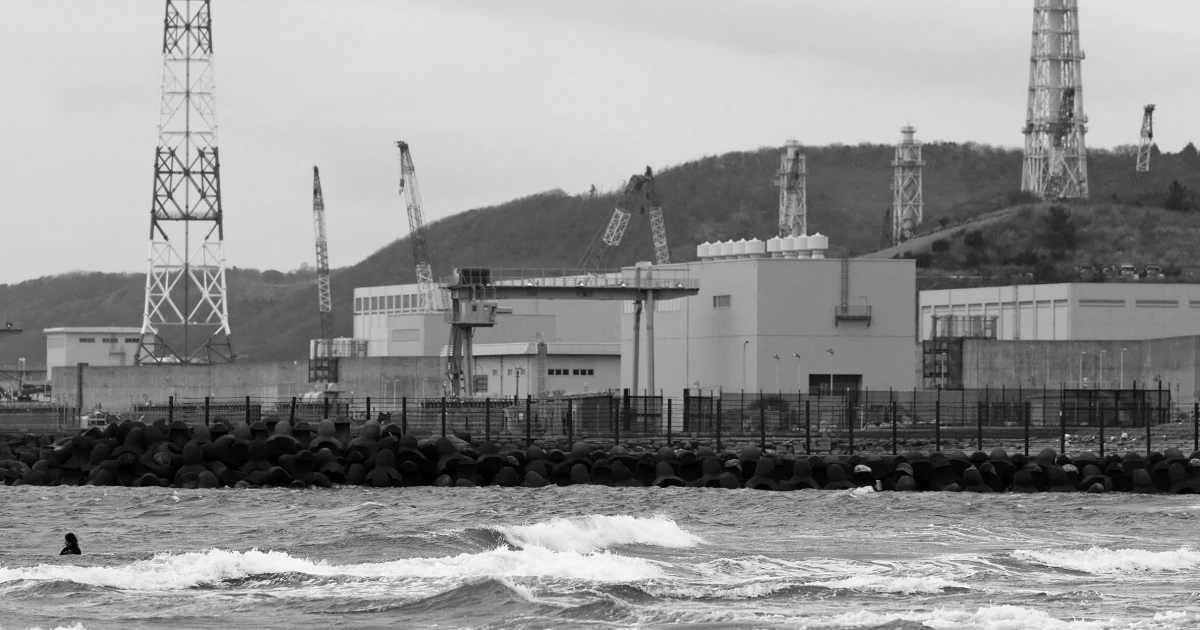
Japan clears restart of world’s largest Nuclear plant, marking major shift after Fukushima
Japan has taken a decisive step toward reviving nuclear power generation nearly 15 years after the Fukushima disaster reshaped the country’s energy policy. A regional assembly vote on Monday cleared the way for the restart of the Kashiwazaki-Kariwa nuclear power plant , the world’s largest by capacity, signaling a major shift in Japan’s post-Fukushima nuclear stance.
Public broadcaster NHK reported that Tokyo Electric Power Co. (TEPCO) is considering restarting the first of the plant’s seven reactors as early as January 20, 2026 Kashiwazaki-Kariwa, located in Niigata prefecture about 220 km northwest of Tokyo, has a total capacity of 8.2 gigawatts, enough to power several million homes. The initial restart would bring one 1.36-gigawatt unit online next year, with another unit of similar size planned around 2030.
The plant was among 54 nuclear reactors shut down nationwide following the March 2011 earthquake and tsunami that crippled the Fukushima Daiichi nuclear station. Triggered by a magnitude-9.0 earthquake and a massive tsunami, the disaster caused core meltdowns in three reactors and hydrogen explosions that tore through reactor buildings, releasing radioactive material into the environment.
The Fukushima accident forced the evacuation of around 160,000 people , many of whom were unable to return home for years. While no deaths were directly attributed to radiation exposure, the disaster led to long-term health fears, environmental contamination, psychological trauma, and one of the most extensive nuclear clean-up operations in history. Public trust in nuclear safety was severely shaken, prompting Japan to suspend nearly its entire nuclear fleet for more than a decade.
On Monday, Niigata’s prefectural assembly passed a vote of confidence in Governor Hideyo Hanazumi , who endorsed the Kashiwazaki-Kariwa restart last month. The vote effectively removed the final political obstacle for operations to resume at the plant, which is operated by TEPCO, the same utility that ran Fukushima Daiichi.
“This is a milestone, but not the end,” Hanazumi told reporters after the vote. “Ensuring the safety of Niigata residents is an ongoing responsibility.”
Despite legislative approval, the decision has exposed deep divisions within the local community. Lawmakers opposing the restart criticised the move as politically driven and disconnected from public sentiment, while around 300 protesters gathered outside the assembly building holding banners reading “No Nukes” and “Never Forget Fukushima.”
“I am truly angry from the bottom of my heart,” said Kenichiro Ishiyama, a 77-year-old Niigata resident attending the protest. “If an accident happens, it is local people who will suffer the consequences.”
Among the demonstrators was Ayako Oga, a farmer who relocated to Niigata after fleeing the Fukushima exclusion zone in 2011. She said she continues to suffer psychological effects from the disaster and fears a repeat of the past. “We know firsthand the risks of a nuclear accident,” Oga said. “In 2011, I never imagined TEPCO would operate a nuclear plant again. As a victim of the Fukushima accident, I hope no one in Japan or anywhere in the world ever has to endure such suffering again.”
TEPCO has pledged not to repeat the failures of Fukushima. “We remain firmly committed to ensuring that residents never experience an accident like that again,” said company spokesperson Masakatsu Takata, declining to comment on the exact restart timeline.
To win local support, TEPCO has also committed to investing 100 billion yen over the next decade in Niigata prefecture. However, skepticism remains strong. A prefectural survey released in October found that 60% of residents believe conditions for the restart have not been met, while nearly 70% expressed concern about TEPCO’s ability to safely operate the plant.
The restart comes as Japan grapples with rising energy costs and energy security concerns. The country currently relies on imported fossil fuels for roughly 60% to 70% of its electricity generation and spent more than 10 trillion yen last year on liquefied natural gas and coal imports. With electricity demand expected to rise due to the expansion of AI data centres, the government has set a target to double nuclear power’s share of the energy mix to 20% by 2040.
Prime Minister Sanae Takaichi, who assumed office two months ago, has backed nuclear restarts as part of efforts to stabilise energy supply and reduce dependence on imports. The trade ministry estimates that restarting just one Kashiwazaki-Kariwa reactor could boost electricity supply to the Tokyo region by 2%.
Market reaction was positive, with TEPCO shares closing 2% higher on Monday, outperforming the broader Nikkei index.