
Japan cabinet approves record budget aimed at deterring China, world’s sixth-largest military spender
Japan’s Cabinet has approved a record defence budget exceeding 9 trillion yen, roughly USD 58 billion, for the fiscal year beginning April 2026, marking a major acceleration in the country’s military transformation amid rising tensions in the Indo-Pacific, particularly with China . The allocation, part of a broader 122.3 trillion yen national budget, represents a 9.4 per cent increase from the previous year and puts Japan on track to meet its goal of spending 2 per cent of gross domestic product on defence by March, two years earlier than originally planned. With this surge, Japan is expected to become the sixth-largest military spender in the world, behind the United States, China, India, Russia, and the United Kingdom , and the third-largest in Asia, trailing only China and India.
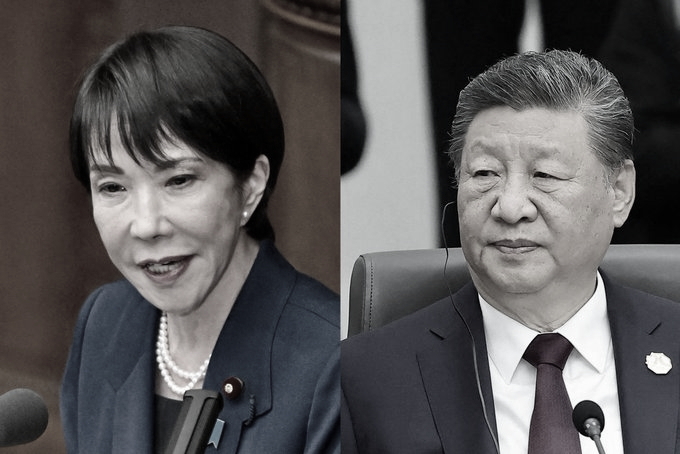
Although the increase has coincided with Prime Minister Sanae Takaichi’s tenure, the policy shift predates her leadership. Japan’s defence expansion was formally launched in 2022 with the adoption of a new national security strategy identifying China as the country’s primary strategic challenge and calling for a more proactive role for the Self-Defence Forces .Takaichi’s government has accelerated implementation and adopted sharper rhetoric, particularly after she said in November that Japan could intervene if China acted against Taiwan, the self-governing island claimed by Beijing.
The fiscal 2026 budget nearly doubles Japan’s defence spending from early 2020s levels, when annual allocations were roughly 5 to 5.4 trillion yen, keeping outlays around 1 per cent of GDP for decades . With projected spending rising to around 10 trillion yen by the end of the five-year plan, Japan’s military budget has increased roughly 70-80 per cent in nominal terms, and will effectively double once the plan is completed, both in yen and as a share of the economy.
The budget prioritises counterstrike and standoff capabilities, a departure from Japan’s traditional self-defence-only posture. Nearly 1 trillion yen is allocated for long-range missile development and procurement, including upgraded Type-12 surface-to-ship cruise missiles with ranges of about 1,000 kilometres. The first batch is scheduled for deployment in southwestern Japan a year earlier than planned, reinforcing defences near Taiwan and key sea lanes.
Japan is also investing heavily in unmanned systems to compensate for manpower shortages caused by an aging population. Around 100 billion yen is earmarked for aerial, surface, and underwater drones under a coastal surveillance network called SHIELD, expected to be operational by March 2028. Japan plans to rely initially on imported systems from countries like Turkiye and Israel, while continuing domestic development.
The budget also covers missile defence, intelligence, surveillance, reconnaissance, cyber and space security, hypersonic weapons research, and satellite monitoring to counter interference. Japan plans to establish a dedicated office to analyse China’s military operations and strategic intentions in the Pacific.
China has reacted strongly to Japan’s expanding budget, accusing Tokyo of reviving militarism and using the China threat as a pretext for rearmament. Chinese state media portray Japan’s counterstrike capabilities as destabilising, and Beijing has increased naval and air activity near Japan, including carrier operations, drills near the Ryukyu islands, and joint patrols with Russia. Earlier this year, two Chinese aircraft carriers operated simultaneously near Iwo Jima for the first time, heightening Japanese concerns.
Alongside capability upgrades, Japan is strengthening its defence industry. The budget includes over 160 billion yen for joint development of a next-generation fighter jet with Britain and Italy, aimed for 2035 deployment, and research into AI-operated drones. Australia recently selected Mitsubishi Heavy Industries to upgrade Mogami-class frigates, and nearly 10 billion yen is allocated to support domestic production and arms exports.
The budget requires parliamentary approval by March. Once implemented, Japan’s five-year defence buildup will solidify its position as the third-largest military spender in Asia and the sixth globally. To fund the expansion, the government plans c orporate and tobacco tax increases and an income tax rise from 2027. Despite public debt exceeding twice the size of the economy, Japan is embarking on its most ambitious military expansion in decades amid an increasingly contested regional environment.