
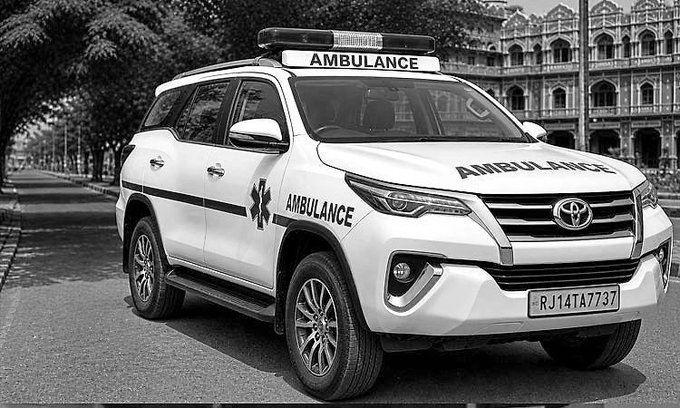
Jaipur Tax Consultant Turns SUV Into Ambulance, Saves Over 35 Lives In 20 Years
A Jaipur-based tax consultant has quietly built a reputation as a lifesaver, using his personal SUV as an improvised ambulance for more than two decades to assist accident victims across the city.
Sandeep Gupta , a resident of Malviya Nagar and a practising tax consultant , has so far transported over 120 injured persons to hospitals, with at least 35 lives saved due to his timely intervention. Despite maintaining a stable and comfortable financial background through his professional work, Gupta has dedicated his time, vehicle, and resources to emergency response without charging any fee.
Gupta recalls that his mission began nearly 22 years ago after he witnessed a critically injured accident victim die while bystanders waited for an ambulance near the state assembly area. “That incident deeply affected me. I decided no injured person should have to wait for help,” he said.
Since then, Gupta has made it a practice to stop whenever he spots an accident victim, rushing them to the nearest hospital without waiting for formal emergency services. His SUV is equipped with basic first-aid supplies, sheets, emergency signage, and even a siren , enabling him to act swiftly in critical situations.
His efforts have also received official support . In 2016, the Jaipur traffic police issued a facilitation letter granting him right of way during emergencies , acknowledging his contribution to public safety.
Several survivors have credited Gupta with saving their lives. Mridul Gautam, who was injured along with his younger brother in a 2017 road accident, said, “Doctors told us that timely help made the difference.” Similarly, Yogita Sharma recalled being rescued by Gupta in 2009 after she was left severely injured following an accident.
Gupta’s humanitarian service has earned him recognition from senior police officials, multiple organisations, and former President Pratibha Patil , highlighting the impact of his sustained grassroots initiative.
His work continues to stand as a reminder of how individual action can bridge critical gaps in emergency response systems.