
Jaipur Hindu Outfit Bars Non-Hindus from Garba Events, Deploys 27 Monitoring Teams
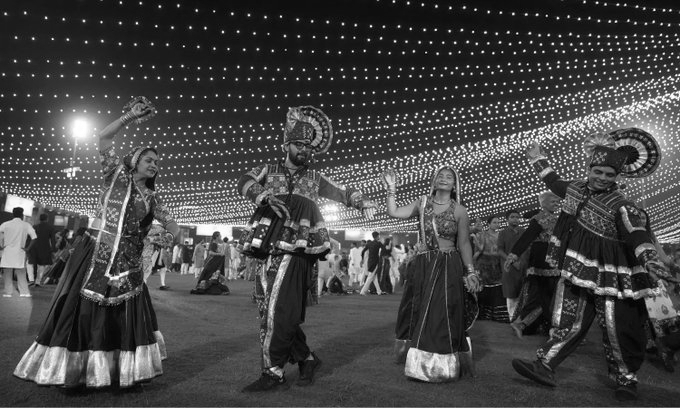
The Hindu organisation Sanatan Suraksha Dal has put up banners at several Garba venues across Jaipur, declaring that non-Hindus would not be allowed to participate in the celebrations during Navratri. The organisation has also deployed 27 teams across different areas of the city to monitor the events and maintain contact with Garba organisers.
The banners, displayed at various venues hosting the traditional dance celebrations, carry the message: “Entry of non-Hindus prohibited in Garba pandals.” The campaign was launched ahead of Navratri, with the organisation urging event organisers to uphold religious traditions and cultural practices during the festivities.
Ravi Gautam, founder of Sanatan Suraksha Dal, said the organisation had appealed to organisers through social media to ensure that the celebrations maintained their religious and cultural significance. According to him, the 27 teams have been assigned different areas of Jaipur and tasked with coordinating with organisers and keeping watch on the events.
Gautam also urged organisers to introduce additional checks at entry points. These include verifying participants’ identity cards and making arrangements to apply tilak on their foreheads and tie kalava, a sacred thread traditionally worn around the wrist.
Explaining the organisation’s position, Gautam said Garba should not be viewed merely as a dance event, emphasising that it is closely associated with religious faith and cultural traditions. He stressed that its sanctity should be preserved during the Navratri celebrations.
The initiative places the spotlight on participation rules at public Garba events in Jaipur, where the organisation is seeking stricter entry procedures based on religious identity. The banners and monitoring teams form part of its broader campaign to encourage organisers to follow the practices it considers essential to maintaining the traditional character of the festivities.
The reported campaign has brought renewed attention to questions surrounding religious participation, cultural traditions and access to community celebrations during the festival season.