
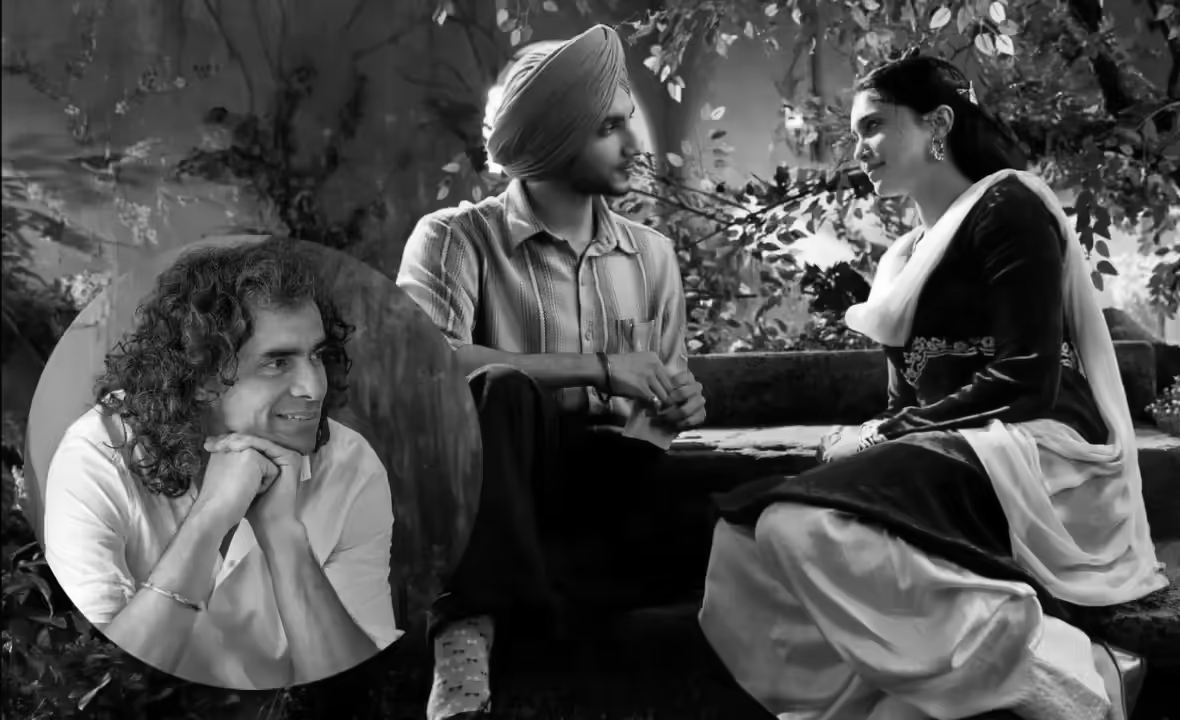
‘I’ve Never Seen a Theatre This Silent’: Imtiaz Ali on the Powerful Impact of ‘Main Vaapas Aaunga’
For filmmaker Imtiaz Ali , the greatest reward following the release of Main Vaapas Aaunga has not been box-office numbers or critical acclaim, but the sight of young audiences sitting in complete silence, absorbed in a story that explores the wounds of Partition , the pain of displacement, and the enduring power of love.
The acclaimed director, who celebrated his 55th birthday on Tuesday, said he was deeply moved by the way viewers, especially younger generations, have responded to the film. According to Ali, he has rarely witnessed audiences watching a movie with such unwavering attention.
“I have never seen an audience watching a film so quietly,” he said, describing the reaction as a sign that the emotions and ideas he wanted to convey had truly connected with people.
Starring Naseeruddin Shah , Diljit Dosanjh , Vedang Raina , and Sharvari , the film follows the memories of a 95-year-old man reflecting on a love he left behind during the Partition of India. Through conversations with his grandson, the narrative gradually uncovers the trauma, longing, and resilience that shaped an entire generation.
Ali revealed that the idea for the film was influenced by contemporary headlines about wars, destruction, and refugee crises around the world. As he followed stories of displaced families and shattered communities, he found himself repeatedly drawing parallels with the experiences of millions uprooted during the Partition in 1947.
That connection becomes most evident in the film’s final sequence, where archival and contemporary visuals of conflict, migration, and survival are woven together. Accompanied by the poignant song “Kya Kamaal Hai” , composed by A R Rahman and sung by Diljit Dosanjh , the montage links historical tragedy with present-day human suffering while also offering a glimpse of hope through images of children smiling amid adversity.
The filmmaker credited lyricist Irshad Kamil and Dosanjh for encouraging him to create the ambitious closing sequence. Despite limited resources and no dedicated budget, the team diverted funds from the film’s publicity campaign to bring the vision to life.
At its heart, however, Ali insists the film is not merely about history. It is about understanding how the past continues to shape the present. He believes younger generations often feel disconnected from enduring relationships and emotional roots, making the film’s themes of lasting love and intergenerational memory particularly relevant.
The director also consciously avoided excessive melodrama, choosing instead to let the emotions emerge naturally. He felt the story’s inherent strength did not require dramatic amplification, allowing audiences to experience its impact on their own terms.
Ultimately, Ali hopes Main Vaapas Aaunga encourages viewers to look beyond divisions and reconnect with their shared humanity. Through a deeply personal story rooted in Partition, he seeks to remind audiences that compassion, empathy, and change begin not with governments or grand movements, but with individuals willing to confront the person in the mirror.