
ISRO’s G20 satellite to track climate, pollution, launch planned for 2027
The Indian Space Research Organisation (ISRO) is working on a G20 satellite aimed at advancing global climate and atmospheric research, with its launch expected around 2027 , ISRO Chairman V Narayanan said on Saturday.
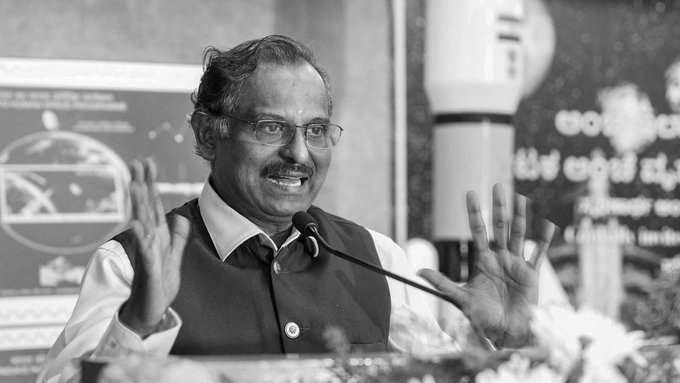
Speaking at an event attended by scientists from DRDO, ISRO, and the Aeronautical Society of India at the Engineering Staff College of India, Narayanan said India is taking a leading role in developing the satellite for G20 member countries.
The proposed G20 satellite is designed to monitor climate change indicators, air pollution levels, atmospheric conditions, and weather patterns . It will help in collecting high-resolution Earth observation data, which can be used for disaster prediction, environmental monitoring, and climate research . The mission is expected to strengthen international cooperation in addressing global environmental challenges through shared scientific data.
“Right now we are working on a G20 satellite for G20 countries. India is taking the lead role, and we are going to have the launch by the 2027 timeframe,” Narayanan said.
Highlighting India’s space achievements, he noted that the country became the first to successfully deploy 104 satellites in a single rocket launch without collision , marking a major milestone in space engineering and mission planning.
Narayanan also said ISRO has been actively engaged in commercial space operations, having launched 433 satellites belonging to 34 countries , and has also placed its heaviest commercial satellite into orbit from Indian soil.
On future ambitions, he stated that ISRO is working towards a human mission to the Moon by 2040 , which would place India on par with leading spacefaring nations in terms of launch systems, satellite technology, applications, and human spaceflight capability .
He further added that ISRO is developing advanced systems under the Deep Ocean Mission’s Samudrayaan project , including a 2.2-metre diameter titanium vessel with 100 mm thickness designed for deep-sea exploration.
The announcements underline India’s expanding footprint in both space exploration and Earth system science , with increased focus on global collaboration and advanced scientific infrastructure.