

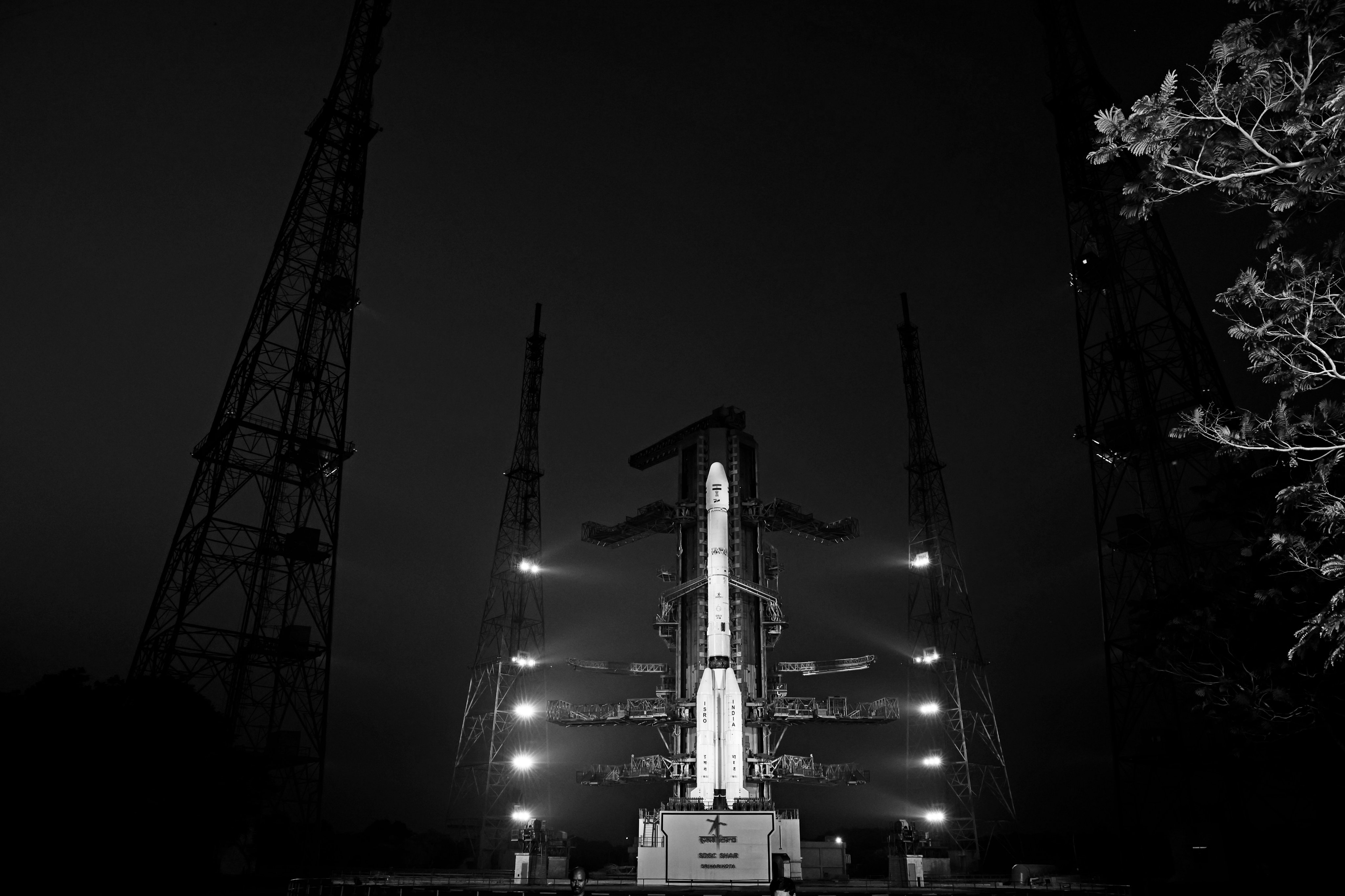
ISRO Successfully Places Navigation Satellite NVS-03 into Designated Orbit
The Indian Space Research Organisation (ISRO) successfully launched its next-generation navigation satellite NVS-03 aboard the GSLV-F18 rocket, giving a significant boost to India's indigenous satellite navigation system, Navigation with Indian Constellation (NavIC).
The 50-metre-tall, three-stage Geosynchronous Satellite Launch Vehicle lifted off from the Second Launch Pad at the Satish Dhawan Space Centre in Sriharikota at 11.51 pm on Friday, following a 24-hour countdown. After approximately 18 minutes of flight, the rocket successfully injected the 2,232-kg satellite into its designated Geosynchronous Transfer Orbit (GTO).
ISRO confirmed that all three stages, including the complex cryogenic upper stage, performed successfully. The targeted transfer orbit has a perigee (closest point to Earth) of 170 km and an apogee (farthest point) of 37,023 km.
The satellite will subsequently use its onboard propulsion system to reach its final geosynchronous orbital position at 32.5 degrees East. In an unprecedented safety measure, ISRO kept the satellite's pyrotechnic valves open before launch to ensure the reliability of its propulsion system.
NVS-03 is the third satellite in ISRO's next-generation navigation series and will complement existing operational satellites, strengthening NavIC's positioning, navigation and timing (PNT) services.
The satellite carries an indigenously developed Rubidium atomic clock alongside procured atomic clocks. It will transmit navigation signals through the L1, L5 and S bands, with the additional L1 frequency expected to improve compatibility with modern civilian navigation receivers, including smartphones.
NavIC, India's independent regional navigation system and an alternative to the US Global Positioning System (GPS), provides coverage across the Indian mainland and a region extending approximately 1,500 km beyond the country's boundaries.
The mission is also significant for strengthening India's precise timekeeping infrastructure. With the government recently notifying the Legal Metrology (Indian Standard Time) Rules, 2026, the enhanced satellite navigation network is expected to support efforts towards establishing a robust Indian Standard Time (IST) system.
The successful mission marks another important milestone in India's efforts to strengthen its independent space-based navigation capabilities.