
Isro successfully launches CMS-03, marking a new chapter in India’s space story
The Indian Space Research Organisation (ISRO) marked another milestone on Sunday evening with the successful launch of CMS-03 (GSAT-7R), the heaviest fully indigenous communication satellite ever launched from Indian soil, aboard the LVM3 rocket, the same launch vehicle that carried Chandrayaan-3.
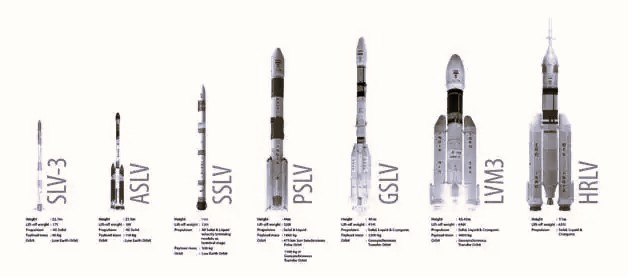
The liftoff took place at 5:26 pm from the Satish Dhawan Space Centre in Sriharikota, using ISRO’s most powerful rocket, the LVM3-M5, popularly called Bahubali for its strength and reliability. The rocket, standing 43.5 metres tall and weighing around 640 tonnes, thundered into the sky carrying a 4,400 kg payload. Once in orbit, CMS-03 successfully entered a geosynchronous transfer orbit (GTO) and will move into its final operational slot about 36,000 km above Earth.
How heavy is heavy: India’s own record
CMS-03 is India’s heaviest communication satellite ever launched from Indian soil, but not the heaviest Indian satellite overall. That title still belongs to GSAT-11 , which weighed 5,854 kg and was launched aboard a European Ariane-5 rocket in 2018 from French Guiana.
Here’s how CMS-03 compares among India’s giants:
This distinction matters. While GSAT-11 proved India’s design and engineering maturity, CMS-03 showcases India’s ability to build and launch such massive satellites entirely within the country , without relying on foreign rockets.
Global comparison: how CMS-03 stacks up
In the global communications satellite class, CMS-03’s 4.4-tonne mass is impressive but not the heaviest. Satellites like Telstar-19V (7,075 kg, USA) and TerreStar-1 (6,910 kg, Europe/USA) hold those records. However, India’s feat is unique, unlike the US or Europe, CMS-03 was built, integrated, and launched domestically , marking India’s rise as a self-reliant space power.
While SpaceX’s Starship dwarfs all in raw lifting power, it’s important to note that its 100-150 tonne figure represents launch capacity, not the weight of a single satellite.
What CMS-03 does, and what it doesn’t
CMS-03 is designed primarily for defence and maritime communications. It operates in C, extended-C, and Ku bands, enabling secure data, voice, and video links between ships, aircraft, submarines, and command centres, even deep in the Indian Ocean.
ISRO officials also highlighted its civilian uses, saying it will help provide connectivity to remote regions like Lakshadweep and the Andaman Islands, where laying fibre-optic cables is challenging. However, it’s essential to note that this does not mean universal broadband access across the Himalayas, highways, or isolated villages.
CMS-03 will act as a strategic communication backbone, not a consumer internet provider. Its main role lies in secure and high-speed transmission for defence, disaster management, and critical government communications, not in mass broadband delivery to civilians.
Starlink and India’s cautious space-internet policy
Globally, Starlink has become synonymous with high-speed satellite internet, now operating in over 100 countries, including smaller neighbours like Nepal. Yet in India, its entry has been gradual and tightly regulated.
Industry observers note that India’s telecom and space departments have taken a strategic approach, focusing on spectrum control, security, and local partnerships before allowing full-scale commercial operations. Some analysts suggest that the government may prefer collaborative frameworks with Indian telecom players such as Jio, before granting Starlink a free run, ensuring both national security and economic synergy.
It’s a cautious, policy-driven balance: encouraging connectivity through indigenous systems like CMS-03, while setting clear terms for foreign satellite internet providers.
Beyond the numbers
In simple terms, CMS-03 is India’s “Wi-Fi in the sky” for strategic communication, connecting ocean fleets, island territories, and command systems under one secure network. But its real significance lies in what it represents, India’s growing capability to design, build, and launch massive, world-class satellites entirely on home soil.
As the global race in space connectivity intensifies, CMS-03 positions India among the nations capable of doing it all, designing, building, and launching heavy communication infrastructure, independent and sovereign.