
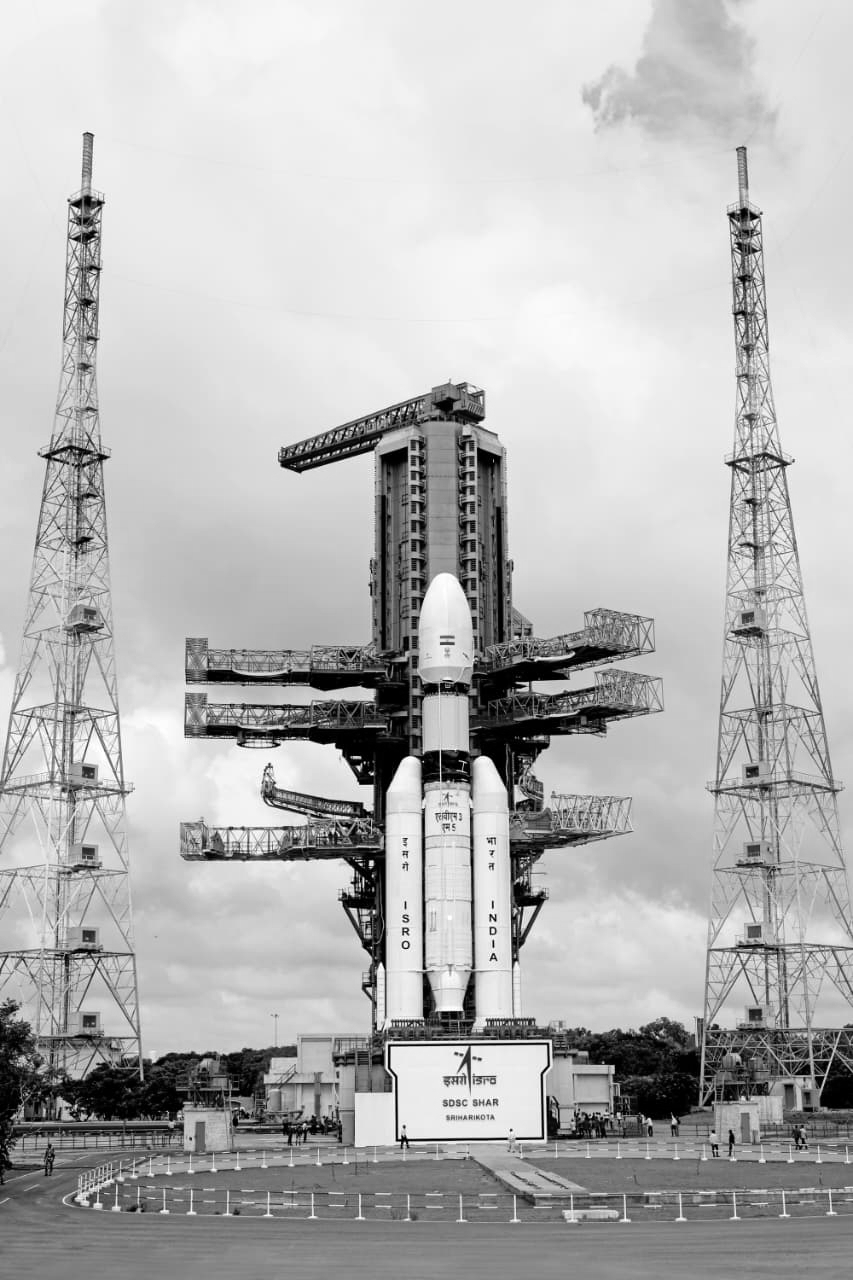
ISRO all set to launch heaviest communication satellite onboard ‘Bahubali’ rocket
India is preparing for a major milestone in its space journey as the Indian Space Research Organisation (ISRO) readies to launch its heaviest communication satellite, CMS-03, from the Satish Dhawan Space Centre in Sriharikota on Sunday, November 2. The satellite, weighing about 4,410 kilograms, will be lifted into orbit aboard the LVM3-M5 rocket, popularly known as ‘Bahubali’ for its remarkable heavy-lift capability.
Standing 43.5 metres tall, the Launch Vehicle Mark-3 (LVM3) is ISRO’s most powerful rocket and the same vehicle that carried Chandrayaan-3 to the Moon in 2023. The upcoming mission, scheduled for 5:26 pm, marks the fifth operational flight of the LVM3 series and will place CMS-03 into a Geosynchronous Transfer Orbit (GTO). Once operational, the satellite will provide multi-band communication services across India and its adjoining oceanic regions.
Why CMS-03 is so heavy
The satellite’s record-breaking mass comes from its advanced communication payloads, large deployable antennas, and high-capacity power systems. It carries several transponders operating in multiple frequency bands to ensure high data throughput and wide coverage. CMS-03 also includes large solar panels and powerful batteries to sustain round-the-clock operations for over a decade. Nearly half of its weight comes from fuel (propellant), used to maneuver from transfer orbit to its final geostationary slot 36,000 km above Earth.
What it will do, and how it will help people
Once in orbit, CMS-03 will act as a space-based communication hub, enhancing telecom, internet, and broadcast services across India. For instance, a remote fishing village in Lakshadweep or the Andaman Islands, where laying fiber-optic cables is difficult, will be able to access high-speed internet and reliable mobile connectivity powered by CMS-03’s satellite signals.
Similarly, aircraft and ships operating deep in the Indian Ocean will stay connected to mainland systems through real-time communication links. During natural disasters like cyclones or floods, when ground networks are damaged, CMS-03 will serve as a lifeline, maintaining communication for rescue teams and authorities.
Beyond civil use, the satellite will strengthen secure communication channels for defence, weather forecasting, e-governance, telemedicine, and education services, ensuring that no region of India remains digitally isolated.
A fully Indian-made satellite
Built by ISRO’s U R Rao Satellite Centre (URSC) in Bengaluru, CMS-03 is a proud example of Made-in-India space technology. Every major subsystem, from its structure and transponders to its propulsion system and onboard software, has been designed and developed indigenously. The S200 solid boosters come from the Vikram Sarabhai Space Centre in Thiruvananthapuram, while the Vikas engines powering the L110 stage were built at the Liquid Propulsion Systems Centre.
Though a few specialized materials are imported, the entire mission, satellite, rocket, and launch, is essentially Indian, marking a strong step toward Atmanirbhar Bharat (self-reliant India) in space technology.
Global context and significance
Several spacefaring nations, including the United States, Russia, China, Japan, and the European Union, already operate heavy communication satellites. But what makes CMS-03 historic is that it is the heaviest satellite ever launched from Indian soil using an Indian rocket. Until 2018, India’s heaviest satellite, GSAT-11 (5,854 kg), had to be launched aboard a European Ariane-5 rocket from French Guiana. With the LVM3, ISRO can now launch heavy payloads independently, reducing costs, strengthening national security, and demonstrating full technological maturity.
With this mission, India joins the elite group of nations capable of designing, building, and launching large-scale communication satellites entirely on their own.
As the countdown begins at Sriharikota, the Bahubali rocket stands ready, carrying not just India’s heaviest satellite, but also the weight of the nation’s growing confidence in its space technology and global leadership in the new space era.