
Israel’s Somaliland Recognition Sparks International Protests, UN Emergency Session Today
Somaliland, a self-governing region in the Horn of Africa, has come into sharp global focus following Israel’s decision to officially recognise it as an independent country. The move, announced earlier this week, has sparked strong protests from Somalia and drawn criticism from several Arab and African nations. The issue has escalated to the United Nations, with an emergency meeting of the UN Security Council scheduled for today to discuss the potential regional and international implications.
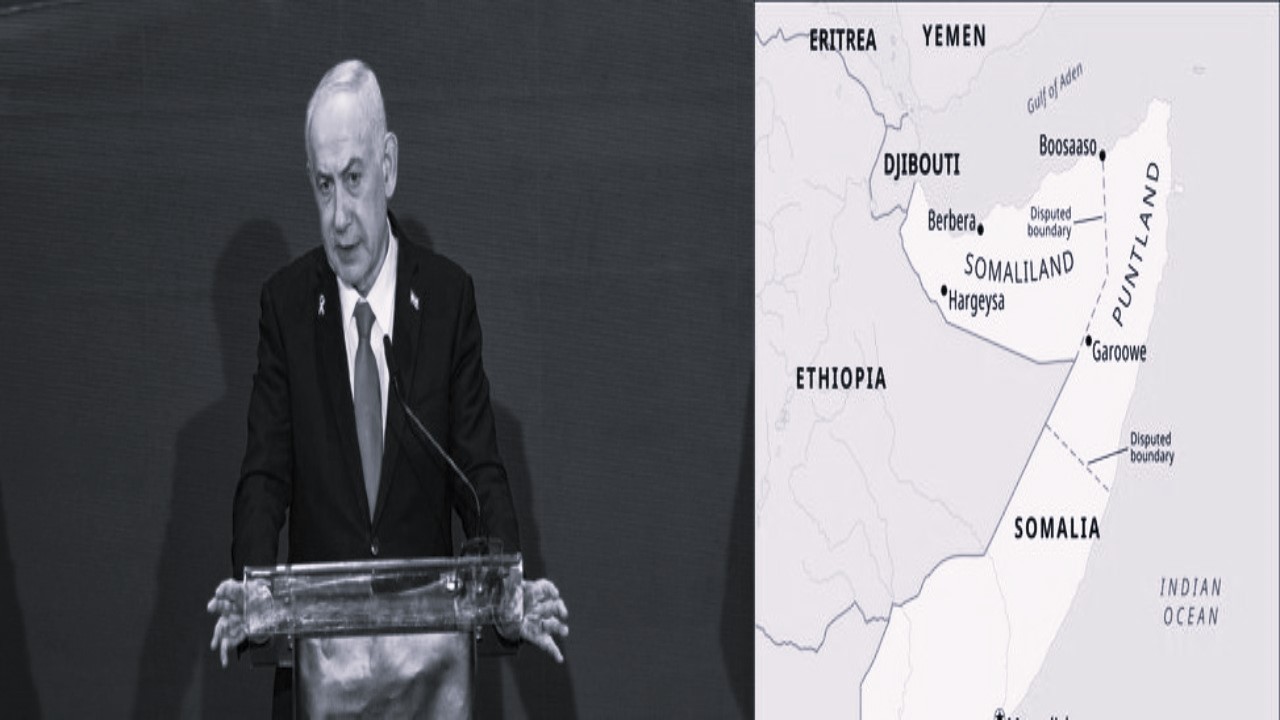
Somaliland is located in the northwestern part of Somalia, along the coast of the Gulf of Aden. It lies opposite Yemen and shares a land border with Djibouti. The region occupies a strategically vital position along the Red Sea–Gulf of Aden maritime corridor, one of the busiest shipping routes in the world. Every day, a significant share of global trade and energy supplies passes through this route, giving Somaliland immense geopolitical importance despite its lack of international recognition.
Although Somaliland has functioned as a de facto independent entity for more than three decades, it has never been formally recognised by the international community. The region declared independence from Somalia in 1991 following the collapse of the Somali central government. Since then, it has maintained its own government, constitution, currency, and security forces, and has held multiple elections. Compared to Somalia, Somaliland has enjoyed relative political stability and democratic governance, which its leaders frequently cite as justification for statehood.
Israel’s recognition marks the first formal acknowledgment of Somaliland as an independent state by any country since 1991. Israeli Prime Minister Benjamin Netanyahu, Foreign Minister Gideon Sa’ar, and Somaliland President Abdirahman Mohamed Abdullahi signed a mutual recognition declaration. Netanyahu said the move aligns with the principles of the Abraham Accords and reflects Israel’s broader strategy of expanding diplomatic partnerships beyond the Middle East. He also indicated that the development would be discussed with US President Donald Trump.
Somalia reacted sharply to Israel’s decision, calling it a direct violation of its sovereignty and territorial integrity. The Somali government demanded that Israel immediately reverse its recognition and warned of serious diplomatic consequences. The timing of the announcement has further intensified tensions, as Somalia is set to assume the presidency of the UN Security Council, placing the issue squarely on the international agenda.
The international response has been largely critical. More than 20 countries, along with the Organisation of Islamic Cooperation (OIC), have jointly rejected Israel’s move. They warned that recognising Somaliland could destabilise the Horn of Africa and the Red Sea region and set a dangerous precedent for separatist movements elsewhere. The African Union has also reiterated its firm support for Somalia’s territorial integrity, stressing its long-standing principle of preserving colonial-era borders to prevent regional fragmentation. Syria has issued a separate statement condemning the decision.
The United States has so far refrained from supporting Israel’s recognition of Somaliland. Washington has reiterated that it does not recognise Somaliland as an independent state and remains committed to Somalia’s unity and territorial integrity. The US State Department clarified that despite recent disagreements with Somalia on certain security matters at the UN, its position on Somaliland remains unchanged.
Historically, Somaliland briefly existed as an independent country in 1960 after gaining freedom from British colonial rule. It was recognised at the time by Israel and 35 other countries before voluntarily uniting with Somalia. However, following the outbreak of civil war in Somalia in 1991, Somaliland once again declared independence. Despite lacking formal recognition, it has maintained unofficial ties with countries such as the United Kingdom, Turkey, the United Arab Emirates, Denmark, and Taiwan.
With Israel’s recognition, Somaliland has now become a focal point in global geopolitics. Analysts believe the move reflects Israel’s growing interest in Africa and the Red Sea region, driven by concerns over maritime security, trade routes, and regional influence. Many experts argue that while Israel’s decision carries symbolic and strategic weight, real change will depend on whether other nations follow suit or whether the international community continues to prioritise Somalia’s territorial integrity over Somaliland’s self-determination claims.