
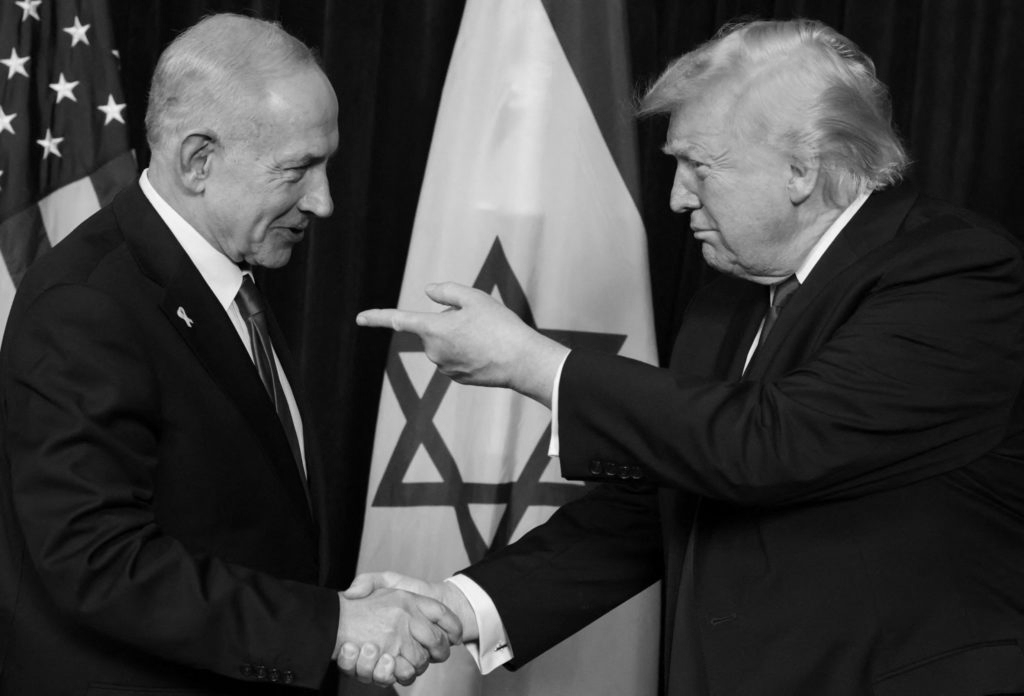
Israeli PM to meet Trump amid US–Iran nuclear talks
Israeli Prime Minister Benjamin Netanyahu will meet US President Donald Trump in Washington on Wednesday to discuss ongoing US talks with Iran, as fears of a wider regional conflict continue to mount, Netanyahu’s office said on Saturday.
In a brief statement, Netanyahu’s office said the prime minister believes any negotiations with Tehran must include curbs on Iran’s ballistic missile programme and an end to its support for allied militant groups across the region, often described by Israel as the “Iranian axis”.
The meeting comes a day after the United States and Iran held indirect talks in Oman , which appeared to make limited progress on how to proceed with negotiations over Tehran’s nuclear programme . While Trump described the discussions as “very good” and said further talks were planned early next week, Iranian officials indicated that the current round had concluded.
Diplomats say the issue of Iran’s regional influence is unlikely to be resolved in a single negotiation and will instead be addressed through parallel diplomatic tracks. The United States is expected to raise concerns over Iran’s support for allied militant groups in separate talks with Tehran, often through mediators such as Oman and Qatar, while coordinating closely with Israel. Any progress would likely involve gradual de-escalation by Iran — including limits on weapons transfers and proxy activity — in exchange for sanctions relief and security assurances, rather than an immediate end to its regional network.
The US delegation in Oman included Middle East special envoy Steve Witkoff and Jared Kushner, President Trump’s son-in-law. For the first time in talks with Iran, Washington also involved its top military commander in the region. US Navy Admiral Brad Cooper, head of Central Command, later visited the aircraft carrier USS Abraham Lincoln along with Witkoff and Kushner, according to a US military statement.
Trump has repeatedly warned that the United States could use force to compel Iran to reach a nuclear agreement. Earlier, Washington deployed the USS Abraham Lincoln and other warships to the region amid heightened tensions following Tehran’s violent crackdown on nationwide protests.
Gulf Arab states have expressed concern that any military confrontation could escalate into a broader regional war, drawing them in. Those fears remain fresh following Israel’s 12-day war with Iran last June.
Iranian Foreign Minister Abbas Araghchi said on Friday that nuclear talks must take place “in a calm atmosphere, without tension and without threats,” adding that diplomats would return to their capitals, signalling the end of the current round of negotiations. He reiterated that Iran was willing to discuss only its nuclear programme, leaving uncertainty over what concessions Tehran might consider.
However, Al Jazeera reported that diplomats from Egypt, Turkiye and Qatar had presented Iran with a proposal under which Tehran would halt uranium enrichment for three years, export its highly enriched uranium and pledge not to initiate the use of ballistic missiles.
US Secretary of State Marco Rubio has said any agreement with Iran must address not only its nuclear activities but also its missile programme and regional actions.