
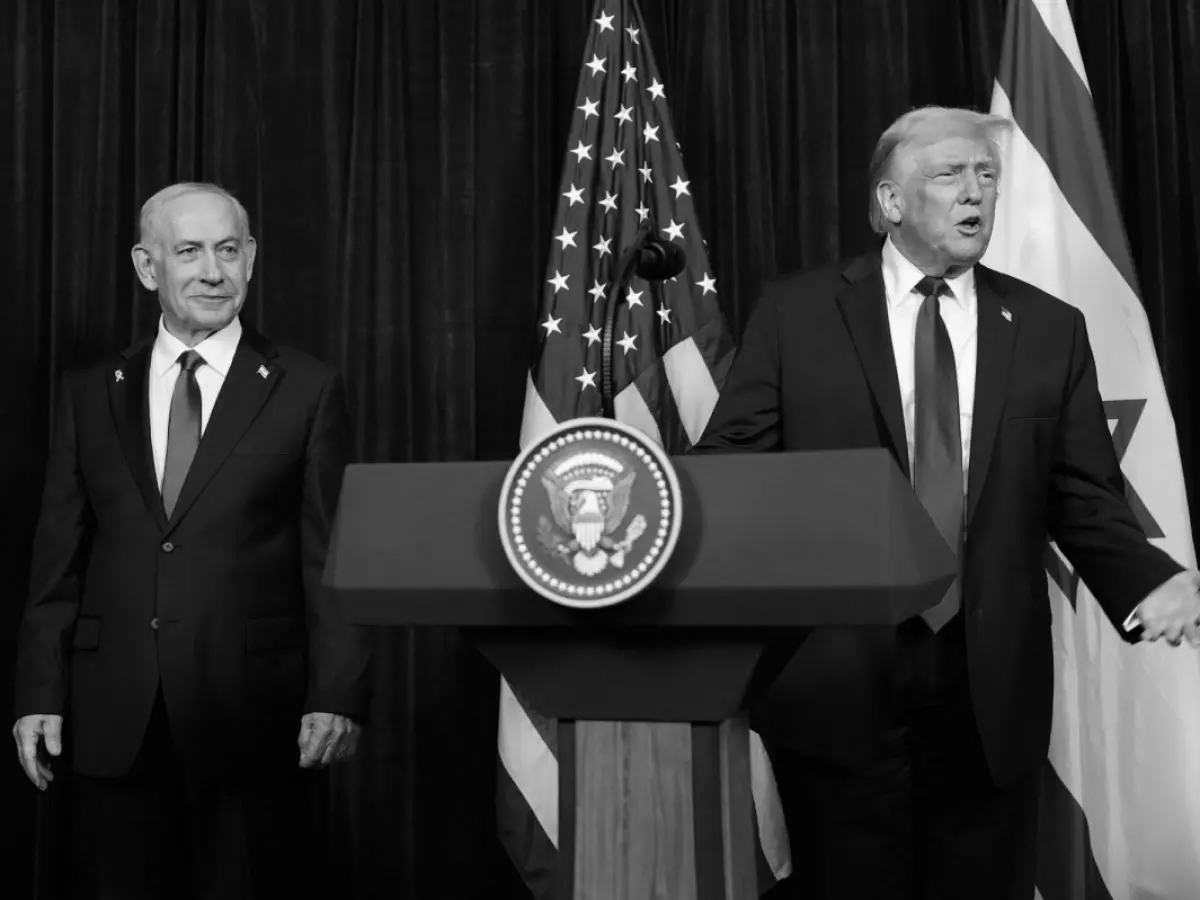
Israeli PM Netanyahu seeks stronger U.S. action against Iran’s missiles and militants
Israeli Prime Minister Benjamin Netanyahu left for Washington on Tuesday for high-level talks with President Donald Trump , focusing on the U.S. -Iran negotiations, Gaza, and regional security . The visit comes amid renewed indirect U.S.-Iran talks in Oman and a 60-day timeline set by Trump , supported by a U.S. naval buildup in the region.
Netanyahu is expected to clearly outline Israel’s red lines on Iran’s nuclear program , ballistic missiles , and backing of militant proxies such as Hamas and Hezbollah . Israel is concerned that a narrow nuclear deal could leave other threats unresolved, potentially forcing unilateral military action if regional security is not guaranteed.
U.S. officials, including Ambassador Mike Huckabee , emphasized the strong alignment between Washington and Jerusalem on Iran and regional security matters. The two allies continue to coordinate closely amid tensions in the Middle East, while Trump’s administration signals willingness to consider a deal primarily focused on Iran’s nuclear activities.
Iran, however, has issued warnings against external pressure and emphasized its right to continue uranium enrichment for civilian purposes. Some military analysts, including a retired U.S. colonel, have expressed skepticism that current diplomatic efforts can fully bridge the gaps between Iran and Israel’s security demands.
While no new U.S. loan for Israeli weapons has been announced in connection with this visit, Israel continues to benefit from longstanding Foreign Military Financing (FMF) grants, allowing the purchase of advanced U.S. defense equipment. Recent packages include helicopters, tactical vehicles, and other weapons systems, underscoring Israel’s preparedness amid heightened regional tensions.
Netanyahu’s trip also serves a domestic political purpose. With elections approaching later this year, the prime minister is emphasizing his close ties to Trump, presenting himself as the leader capable of influencing critical security decisions and protecting Israeli interests.
Analysts note that the timing of the visit, ahead of previously scheduled U.S. events, allows Netanyahu to assert influence over the U.S.-Iran talks and signal Israel’s priorities clearly. As discussions continue, the region watches closely to see whether diplomacy can prevent further escalation or if tensions may spill over into military confrontation.