
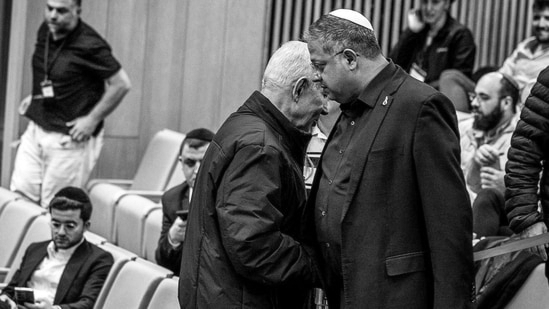
Israeli parliament passes budget, allowing Netanyahu to avoid early elections
Israel’s parliament on Monday approved the country’s 2026 state budget after a marathon overnight session, allowing Prime Minister Benjamin Netanyahu to avoid early elections and strengthening the chances that his government will remain in office until the end of its term later this year.
Israel was required to pass the budget before the end-March deadline to prevent the automatic dissolution of the Knesset and the triggering of snap elections within about 90 days. The spending plan passed narrowly by 62 votes to 55 , giving Netanyahu’s coalition crucial political breathing space.
Under Israeli law, parliamentary elections must take place no later than October 27, 2026 , roughly four years after the previous vote in 2022. The successful passage of the budget significantly reduces the risk of an early election and puts Netanyahu on track to potentially complete one of the rare full four-year terms in Israel’s often unstable coalition politics.
However, the prime minister still retains the authority to dissolve parliament and call elections earlier if political conditions favour his bloc. Some officials have suggested the vote could even be held in September , depending on developments in the war and the political climate.
The new budget totals about 699 billion shekels (around USD 270 billion) , making it the largest in Israel’s history . A major feature is a 20 per cent increase in defence spending , raising the defence budget to roughly USD 45 billion as Israel continues its war with Iran and faces escalating tensions with Hezbollah militants in Lebanon.
Officials estimate the conflict is costing Israel’s economy around USD 1.6 billion per week , pushing the government to raise the budget deficit target to about 5 per cent of GDP and raising concerns among economists about inflation and fiscal pressures.
The tense parliamentary debate itself reflected the wartime environment. Discussions were interrupted several times by missile warning sirens triggered by launches from Iran toward Jerusalem , forcing lawmakers to continue the session in the Knesset auditorium located closer to a bomb shelter.
Opposition leaders sharply criticised the budget. Opposition chief Yair Lapid called it “the greatest theft in the state’s history,” accusing the government of diverting funds to political allies. Former prime minister Naftali Bennett , widely expected to challenge Netanyahu in the coming elections, described the vote as a “nocturnal heist.”
Much of the criticism centred on a last-minute allocation of about USD 250 million to ultra-Orthodox schools and broader coalition funding directed to religious institutions. The decision has intensified debate over the ultra-Orthodox community’s exemption from mandatory military service , even as Israel’s military seeks additional recruits during wartime.
Finance Minister Bezalel Smotrich defended the spending plan, saying it “takes care of all Israeli citizens, without exception.”
At the same time, lawmakers have begun debating a separate and highly controversial bill that would make the death penalty the default punishment for West Bank Palestinians convicted of murdering Israelis .
The proposal has been championed by far-right National Security Minister Itamar Ben-Gvir , whose party introduced the legislation. The bill would require military courts to impose the death penalty for killings classified as acts of terrorism , although judges could replace the sentence with life imprisonment in exceptional circumstances.
Critics, including Israeli and Palestinian rights groups, the United Nations and legal experts, argue that the measure is discriminatory because it would primarily apply to Palestinians tried in military courts rather than Israeli citizens.
Israel technically retains the death penalty for exceptional crimes such as genocide and wartime treason, but the country has carried out only one execution since its founding, that of Nazi war criminal Adolf Eichmann in 1962.
The bill would not apply retroactively to militants held for the October 7 attack , though another proposal dealing with punishment for those attackers is also under discussion.