
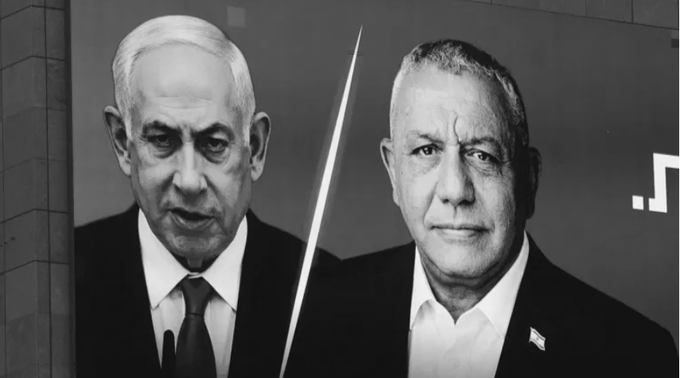
Israel Political Deadlock Deepens As Yair Golan’s Democrats Freeze Talks With Gadi Eisenkot
Efforts to form a new government in Israel have hit fresh obstacles after Yair Golan's Democrats party suspended coalition negotiations with Gadi Eisenkot's Yashar party over its parallel discussions with Prime Minister Benjamin Netanyahu's Likud.
The decision has exposed divisions within the opposition camp, which is attempting to form an alternative government following the October 27 election.
The Democrats said negotiations had reached a deadlock amid signs that Yashar was moving towards a possible unity government with Netanyahu. The party also objected to reported discussions between Yashar and Likud over establishing a consensus committee to address Israel's controversial judicial overhaul.
The rift emerged a day before another round of negotiations between Likud and Yashar. The two parties are preparing for their fourth round of talks, with discussions expected to cover coalition partners, a possible rotation agreement for the prime minister's post and a state commission of inquiry into the failures surrounding Hamas's October 7, 2023, attack.
Meanwhile, Yashar announced a coalition agreement with Avigdor Liberman's Yisrael Beytenu, marking the first such agreement between two parties since Eisenkot was tasked with forming a government. Neither party disclosed details of the deal.
The potential coalition faces disagreements over several possible partners. One option involves bringing ultra-Orthodox parties into the government, while another is a minority administration supported by Arab-led factions, including Ra'am and the Joint List.
These alternatives have divided opposition leaders. Liberman has favoured including ultra-Orthodox parties, while Golan has advocated cooperation with Arab-led groups.
Eisenkot has also indicated that he could attempt to form a minority government if he fails to secure support from all his potential partners, hoping opponents would abstain rather than vote against it.
The judicial overhaul remains another major obstacle. Eisenkot's bloc wants the legislation repealed, while differences with Netanyahu's Likud remain unresolved.