
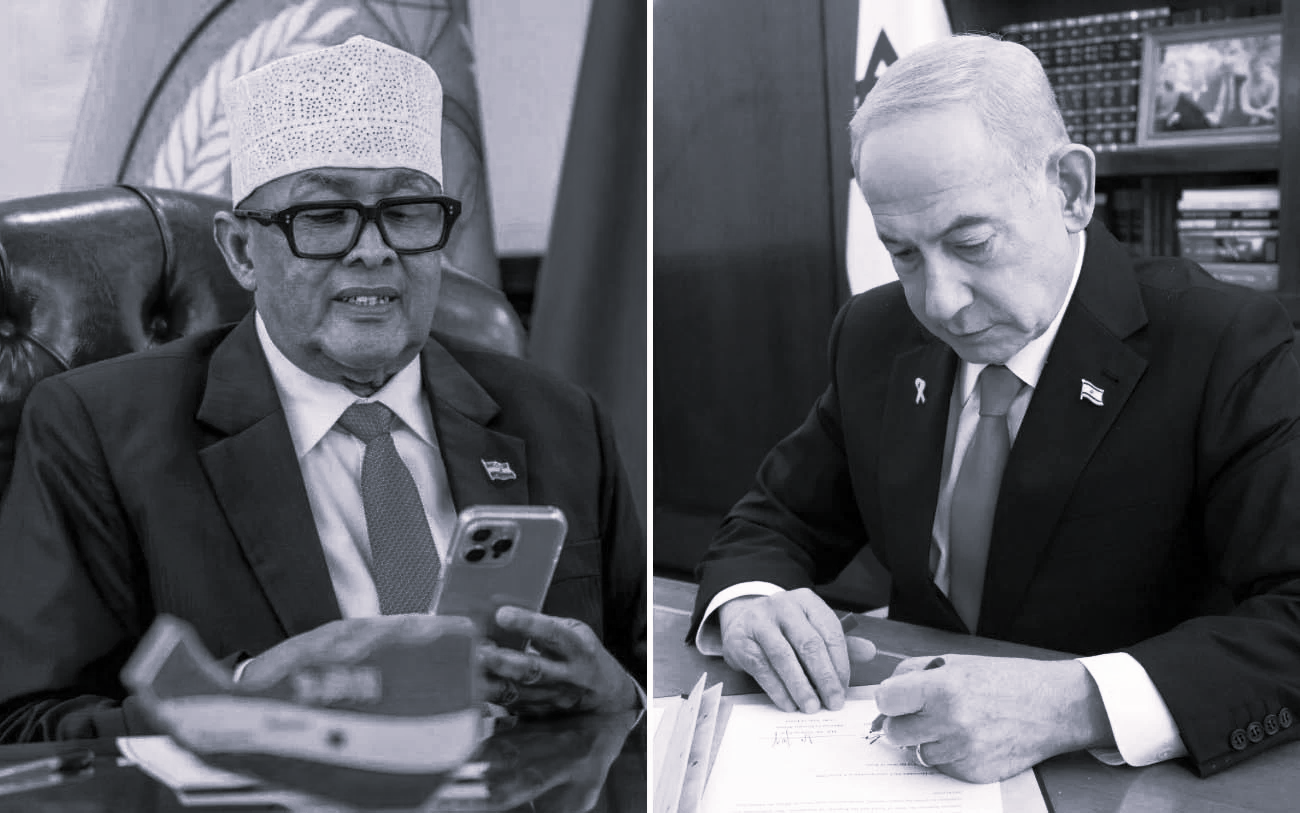
Israel grants historic recognition to Somaliland after 34 years of self-rule
Israel has become the first country in the world to formally recognise Somaliland as a sovereign state , marking a historic diplomatic breakthrough for the self-governing territory that has sought international recognition for more than three decades.
The declaration was signed on December 26, 2025 , by Israeli Prime Minister Benjamin Netanyahu , Foreign Minister Gideon Sa’ar , and Somaliland President Abdirahman Mohamed Abdullahi Irro . Israeli leaders described the move as a landmark step aligned with the spirit of the Abraham Accords and framed it as support for democracy, stability, and self-determination in the Horn of Africa.
Somaliland has governed itself independently since 1991, following the collapse of Somalia’s central government. Over the past three decades, the territory has maintained relative peace, built functioning state institutions, and conducted multiple competitive elections resulting in peaceful transfers of power. Its leaders argue that its consistent democratic record and internal stability set it apart from conflict-ridden Somalia and justify international recognition as the Republic of Somaliland.
Israel said it intends to deepen cooperation with Somaliland in agriculture, healthcare, technology, water management, and economic development, praising the region’s security and governance model in a volatile region.
Supporters of the move have described Israel’s recognition as long overdue. British politician Nigel Farage, among others, said Somaliland has functioned as a democracy in practice for years and should no longer be treated as a legal fiction by the international community.
However, the decision has drawn sharp opposition from several countries and regional organisations.
Somalia strongly condemned the recognition, calling it a violation of its sovereignty and territorial integrity. Mogadishu maintains that Somaliland remains an integral part of Somalia under international law and warned that the move could destabilise the region.
The African Union (AU) also opposed Israel’s decision, reiterating its long-standing position that Africa’s colonial borders should remain unchanged to prevent separatist conflicts across the continent.
Saudi Arabia and other Arab states criticised the move, citing concerns over regional stability and adherence to international norms. Some Middle Eastern countries fear that recognising Somaliland could encourage separatist movements elsewhere and undermine existing state borders.
Despite the backlash, Somaliland officials hailed Israel’s recognition as a breakthrough moment and expressed hope that other democracies would follow suit.
Analysts say Israel’s move could reopen global debate over whether long-standing, stable, and democratic de facto states like Somaliland should be judged by political realities on the ground rather than strict legal interpretations of borders drawn decades ago.