
Is Trump Pushing UAE Into a Proxy War With Iran Over Lavan Island?
The oldest playbook in geopolitics is remarkably simple: when you cannot afford to bleed yourself, find someone else who will. America did it in Vietnam. The Soviet Union did it across Africa and the Middle East. And now, the Trump administration may be running that very same script again, this time nudging the United Arab Emirates into a direct military confrontation with Iran , even as Yemen's Houthis are humiliating Washington by turning its most expensive drones into burning wreckage.
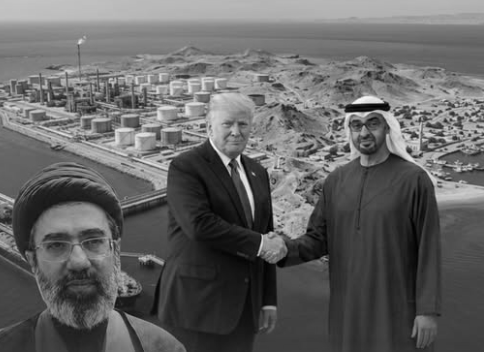
The target Washington has fixed its eyes on is breathtaking in its audacity. Lavan Island , a strategic Iranian-controlled island sitting at the throat of the Strait of Hormuz . A former senior Trump security official reportedly summed up Washington's position in five chilling words: "Go take them." Not diplomacy. Not sanctions. Not back-channel negotiations. UAE boots on Iranian soil.
This is not entirely out of character for Trump. He has cast covetous eyes at Greenland , rattled Canada, circled Latin America, and earlier in this very conflict floated the idea of seizing Iran's Kharg Island . The pattern is unmistakable, Trump sees geography as negotiable and sovereignty as leverage. But this time, crucially, he wants someone else to do the seizing.
And Lavan Island has no arbitrary prize. Once romantically known as the Hidden Pearl Island , it today functions as a nerve center of Iran's oil economy . It hosts oil processing units, massive storage tanks, export jetties, and maintenance facilities. It is the gateway for Iran's premium Lavan Blend crude , a high-quality export that pumps serious revenue into Tehran's treasury. The island is directly connected to three major offshore oil fields, Salman, Rasalad, and Rashad , the largest of which ranks among the biggest offshore complexes in the entire Persian Gulf. Control Lavan, and you do not merely disrupt Iran's oil, you disrupt its maritime logistics, its military positioning, and its very economic lifeline . You hold a gun to the head of the Islamic Republic's economy.
Now, the question is whether the UAE is willing to pull that trigger. Since the United States and Israel began striking Iran in late February, the Emirates has absorbed punishment relentlessly , over 2,800 missiles and drones allegedly fired by Iran have targeted the country. Abu Dhabi reportedly reached out to Saudi Arabia and Qatar early in the conflict, asking them to join counterattacks. Both declined. Left largely alone, the UAE began drawing its circle of alliances tighter, closer to Israel, closer to Washington. Israeli Iron Dome batteries are now reportedly deployed on Emirati soil, confirmed by the US Ambassador to Israel himself. Netanyahu reportedly made a secret visit to the UAE in March, which Abu Dhabi officially denies. Iran has called the UAE an "active partner in aggression", though interestingly, Tehran has since dialled down that rhetoric, insisting it harbours no hostility toward its Gulf neighbours. A calculated diplomatic hedge, perhaps, while the pressure quietly and dangerously builds.
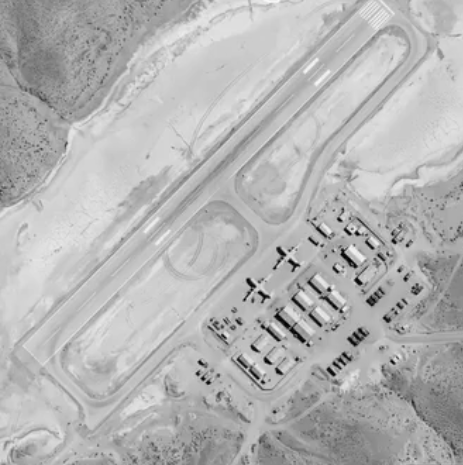
Meanwhile, adding yet another explosive layer to this already volatile picture, a report by the New York Times revealed that Israel secretly constructed two covert military outposts inside Iraq's western desert ahead of its war with Iran. Satellite images reportedly showed a one-and-a-half kilometre artificial runway carved into a dried-out lake bed roughly 250 kilometres southwest of Baghdad, long enough for military aircraft operations. One installation reportedly housed Israeli special forces serving as a full logistical hub, with search-and-rescue teams stationed to recover downed pilots. Iraq filed a formal complaint at the United Nations , with officials furiously denying they ever authorised any foreign military presence on their soil. The message is stark, the battlefield has silently spread into empty deserts , far beyond what public headlines have revealed.
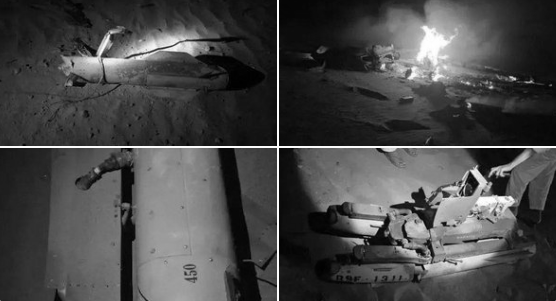
And then there is the story that perhaps most embarrassingly undercuts Washington's show of strength. While the Trump administration wages an air campaign against Yemen's Houthis, conducting near-daily strikes since March 15 and hitting over 800 targets, Iran's rebel allies have been shooting America's most advanced drones out of the sky with startling ease and frequency. The Houthis shot down seven US MQ-9 Reaper drones in a span of less than six weeks, costing the Pentagon over $200 million . Each MQ-9 Reaper costs approximately $30 million , according to the Congressional Research Service. The Houthis claim to have brought down these aircraft using locally manufactured surface-to-air missiles , a remarkable boast from a group the US has been relentlessly pounding from the air. The drones were involved in both strike and surveillance missions when they were shot down, with losses occurring both over land and at sea. Trump declared the Houthis had "been decimated," yet the wreckage of $30 million aircraft burning in Yemeni desert tells a rather different story.