
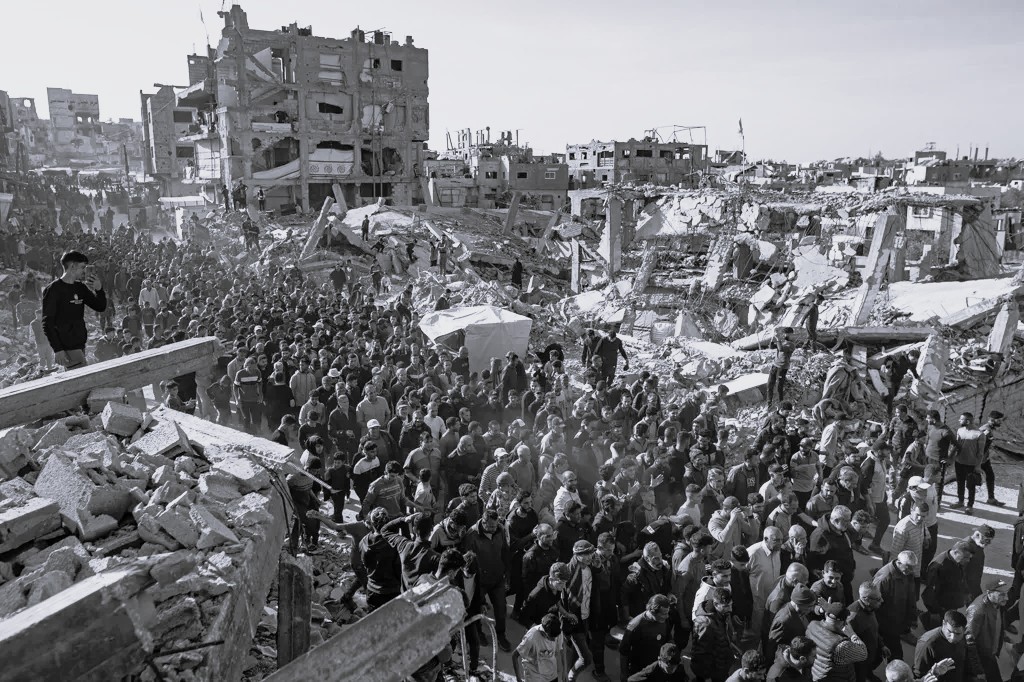
Is Hamas losing its grip on Gaza?
Hamas is under mounting pressure from within Gaza as rival clans and militias increasingly defy its authority, raising the possibility that its rule may be coming undone. Among its challengers, the Abu Shabab clan in Rafah under Yasser Abu Shabab has emerged as the most organized and potentially decisive force. Operating even in areas under Israeli military control, the clan has enlisted hundreds of fighters, prompting accusations from Hamas that it is collaborating with Israel, which Abu Shabab staunchly denies. Many observers now believe that if the clan fully mobilizes, it could substantially weaken Hamas’s grip, especially in southern Gaza.
Other clans such as Doghmosh in Gaza City and Al-Majayda in Khan Younis have clashed with Hamas over security raids and local disputes, while the Hellis clan in Shejaia has begun organizing independent armed cells in zones still contested. In response, Hamas has reportedly staged crackdowns, executing suspected dissidents, in attempts to reassert dominance. These internal fissures are reshaping the power dynamics in Gaza, invoking fear of fragmentation within Hamas’s ranks.
Meanwhile Israeli troops opened fire near the “yellow line” in northern Gaza, killing six Palestinians in two separate incidents. Israel claimed it targeted “suspects” attempting to cross a boundary tied to a U.S.-brokered pullback. The victims were simply trying to return to homes they had evacuated, unaware of shifting military demarcations. It is difficult for an ordinary Palestinian to understand these boundary markers or know when they have crossed them many are simply trying to go back to where their houses once stood. Labeling such returnees as terrorists and firing into returning civilians appears to be an unjust and disproportionate action.
On the diplomatic front, a recent Gaza peace summit in Egypt saw U.S. President Donald Trump spearheaded a ceasefire declaration, which includes a plan for Gaza to be managed by a transitional Palestinian committee under international oversight, a role Trump aims to lead. Former President Bill Clinton publicly praised Trump’s efforts, saying he “deserves great credit” for bringing warring parties to the table. Trump responded graciously, calling Clinton’s praise “very nice” and asserting he was “telling the truth.”
When asked about the concept of a two-state solution, Trump avoided firm commitment, telling reporters that he “didn’t have a view” on it. Meanwhile, in Hamas circles, the party has long said it would not disarm unless an independent Palestinian state is guaranteed. Between growing internal revolt, lethal enforcement of contested lines, and external diplomatic recalibrations, Hamas may be navigating its most precarious hour.