
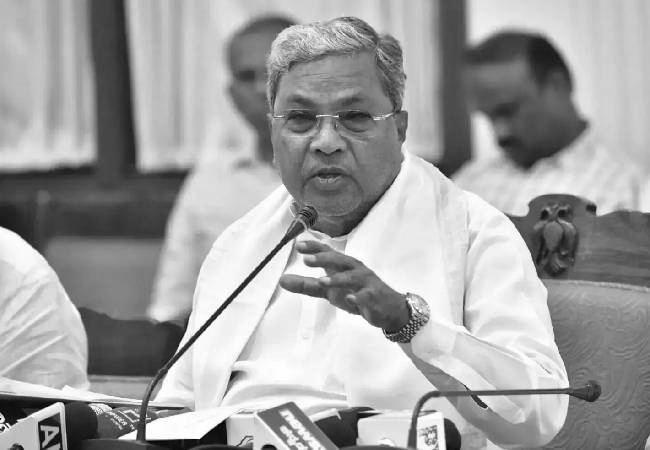
Irrigation, jobs, secretariat: K’taka’s big plan unveiled
Karnataka Chief Minister Siddaramaiah unveiled an ambitious development blueprint for Kalyana Karnataka on the region’s Liberation Day, promising to reshape its economic and social landscape. With investments totaling over Rs 70,000 crore over the next three years, the plan combines irrigation, employment, and governance reforms to lift the historically underserved region.
Siddaramaiah’s announcement comes on a day that not only celebrates freedom from Nizam’s rule but also underscores the promise of modern development. “While India marked in dependence on August 15, 1947, Kalyana Karnataka was still under the shadow of the Razakars. Today, our mission is to ensure freedom from economic and social constraints,” he said, paying homage to local freedom fighters whose sacrifices laid the foundation for this transformation.
At the heart of the plan is irrigation expansion. The government has approved land acquisition for Phase III of the Krishna Upper Canal Project and will raise the height of the Almatti Dam. This will bring water to over 15 lakh acres across Raichur, Yadgir, Kalaburagi, and Koppal. Such large-scale water infrastructure is not just about farming; it’s about transforming livelihoods, stabilizing crop yields, and creating economic security for millions of farmers in a region long challenged by erratic rainfall.
Equally significant is the focus on employment and social welfare. Since Article 371-J’s introduction in 2013, over 1.19 lakh posts were earmarked for direct recruitment in the region, with nearly 85,000 already filled. The remaining vacancies will be systematically addressed, creating thousands of jobs. Flagship schemes like Shakti, Gruha Lakshmi, Anna Bhagya, and Yuva Nidhi have already impacted millions, providing free bus travel for women, financial support to household heads, food security, and assistance to unemployed graduates. Siddaramaiah emphasized that these schemes are integral to a broader vision of inclusive growth.
Adding a layer of administrative focus, a Kalyana Karnataka Secretariat will be established in Kalaburagi. This will centralize planning, improve governance, and ensure that development reaches the grassroots efficiently. By combining infrastructure, jobs, and governance, the government is attempting a holistic approach rather than piecemeal solutions.
Critically, the scale of investment,over Rs 70,000 crore,is eye-catching, but the real challenge lies in execution. Historical underdevelopment in Kalyana Karnataka has often stemmed from bureaucratic delays, land acquisition hurdles, and resource misallocation. If managed well, this plan could redefine the region’s trajectory, but missteps could undermine its transformative potential.
In conclusion, Siddaramaiah’s blueprint reflects both ambition and pragmatism. By linking irrigation, employment, and governance, it attempts to address long-standing inequities in Kalyana Karnataka. Success would not only uplift the region economically but also symbolically complete Karnataka’s development journey, turning a historically overlooked corner of the state into a model of growth and opportunity.