
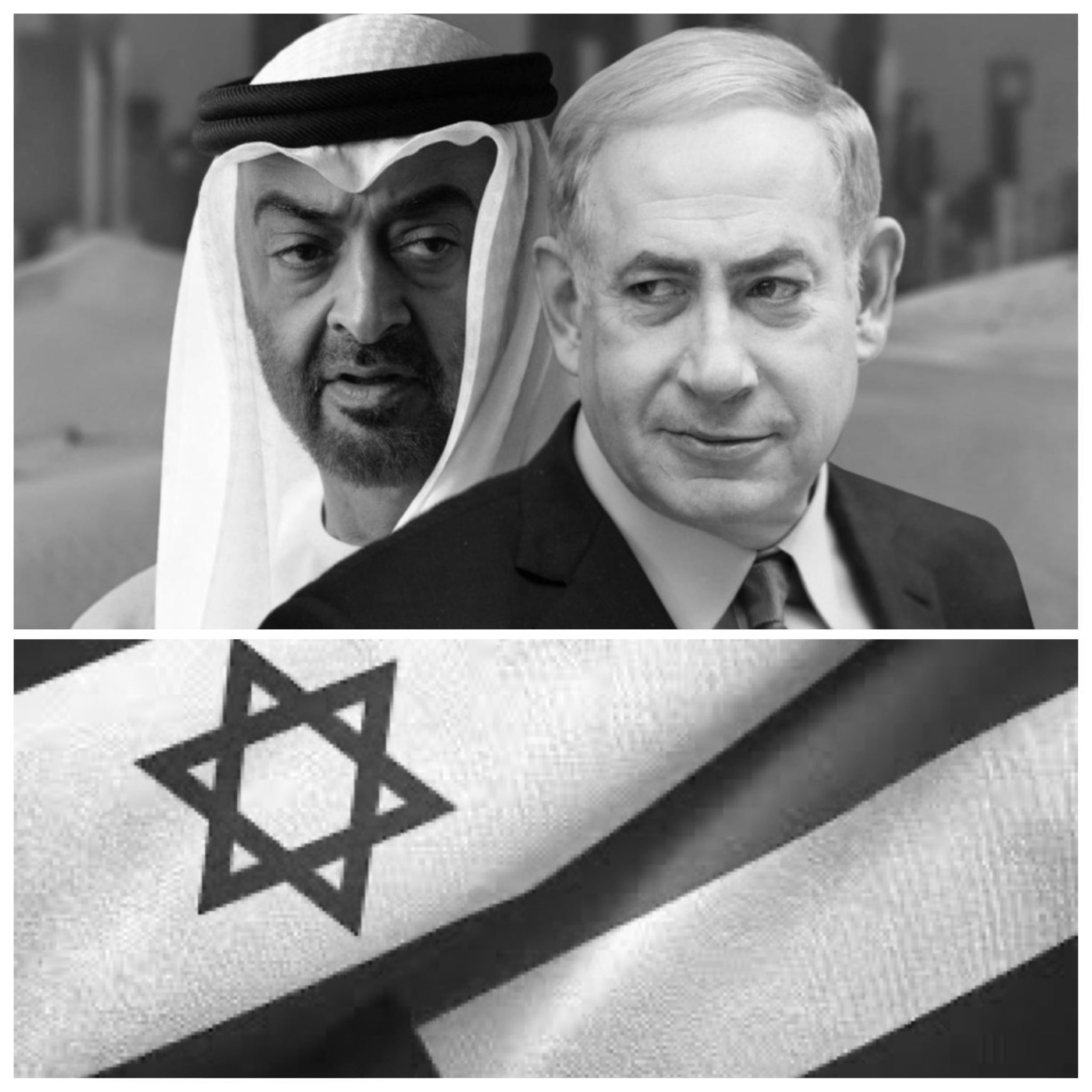
Iron Dome in the Gulf: Netanyahu’s Secret UAE Visit During West Asia War
There is an old saying in diplomacy: the meetings that matter most are the ones that never officially happened. In the middle of a raging war in West Asia, that principle is being tested like never before and the cracks are beginning to show.
Benjamin Netanyahu's office has done something unusual, perhaps even reckless by the standards of wartime statecraft. It has voluntarily revealed a secret. Israeli officials disclosed that Netanyahu held a clandestine wartime meeting with UAE President Mohammed bin Zayed Al Nahyan, widely known as MBZ , in the Emirati city of Al Ain on March 26th. That date matters enormously. It was nearly a month after the United States and Israel launched their war against Iran on February 28th, and almost two weeks before the fragile temporary ceasefire was announced on April 8th. In other words, at the height of the conflict, with missiles flying and the region on fire, the leaders of Israel and the UAE were sitting across a table from each other for several hours, discussing regional security and strategic coordination.
Israel called the meeting historic. The UAE called it fictional.
Within hours of the reports surfacing, Abu Dhabi issued a flat denial, insisting that its relationship with Tel Aviv is public, transparent, and not built on backroom, non-official arrangements. It was a firm statement, but it contained one very deliberate gap. The UAE never directly said Netanyahu was not in the country during the war. It rejected the characterisation of the meeting, but stopped well short of denying his presence on Emirati soil. In the world of diplomatic denials, that omission speaks volumes.
And the reason it speaks volumes is because of everything else that has been quietly accumulating around this story. According to separate reports, Mossad's chief, the head of Israel's foreign intelligence agency, traveled to the UAE at least twice during the conflict, specifically to coordinate military matters. The head of Shin Bet, Israel's domestic security and counterintelligence service, also reportedly made visits to the Emirates in recent weeks. Neither Israel nor the UAE has confirmed any of these meetings. But intelligence chiefs do not fly to foreign capitals during an active war for sightseeing.
Then came the confirmation that made all the denials harder to sustain. The United States Ambassador to Israel, Mike Huckabee, publicly confirmed this week that Israel had deployed an Iron Dome battery to the UAE , upon the UAE's own request. This is not a small detail. This is the first ever overseas deployment of Iron Dome , Israel's most celebrated and sophisticated short-range air defence system, the very technology designed to intercept rockets, artillery shells, and drones mid-flight before they reach their targets. The system uses radar to detect incoming projectiles, calculates within seconds whether they threaten populated areas, and fires interceptor missiles to destroy them in the air. Each interception costs between $20,000 and $100,000. Huckabee was not merely confirming a weapons transfer, he was publicly celebrating it, calling the UAE "an example" and crediting the Abraham Accords as the foundation of what he described as an extraordinary relationship between the two nations.
The reason the UAE needed that Iron Dome is not difficult to understand. Iran has launched wave after wave of retaliatory strikes on the Gulf following the initial US-Israeli military action, and the UAE has borne the brunt of it. Over 550 ballistic and cruise missiles and more than 2,200 drones have been fired at the UAE, according to the Emirati Defence Ministry, making it the most heavily targeted country in the entire region. Tehran's logic is not irrational from its own perspective: the UAE hosts American military bases, supports US security operations, and normalised ties with Israel. In Iran's eyes, the UAE chose its side long ago.
Iran's Foreign Minister Araghchi did not name the UAE directly, but his warning was unmistakable. He said that Netanyahu had "publicly revealed what Iran's security services long ago conveyed to our leadership" , meaning Tehran already knew, or believed it knew, about this partnership. His conclusion was equally pointed: "Enmity with the great people of Iran is a foolish gamble."
That warning lands with particular weight when you understand the tightrope the UAE has been attempting to walk for nearly six years. On September 15th, 2020 , the UAE's Foreign Minister put pen to paper in Washington and signed the Abraham Accords , becoming the first Gulf state to formally normalise relations with Israel. Palestinians called it a stab in the back. The deal was presented to the world as being contingent on Israel freezing its annexation of the West Bank. That freeze never materialised, and the promise quietly dissolved. Yet the UAE pressed on, deepening economic ties, intelligence cooperation, and now, evidently, active military coordination with Tel Aviv — all while publicly positioning itself as a voice for de-escalation and dialogue in the region.
It is, by any measure, an act of extraordinary geopolitical gymnastics. For years, Abu Dhabi managed to hold the balance, ally of Israel and America in private, advocate of Arab dignity and Palestinian rights in public. The war in Iran has made that balance almost impossible to maintain. Secret meetings are being disclosed. Intelligence chiefs are being spotted. An Iron Dome, Israeli-made, Israeli-operated, now sits on UAE soil. The architecture of plausible deniability is crumbling, piece by piece.
But perhaps the most important point is this: the story of whether one specific meeting happened or did not happen is ultimately a sideshow. What this entire episode reveals is something far larger, what West Asia is becoming. It is becoming a theatre of competing narratives, of public denials and private coordination, of wars that multiple parties are fighting but none will fully own. Countries are choosing sides while pretending they have not. Alliances that dare not speak their name are shaping the outcome of a conflict that will define the region for a generation.