
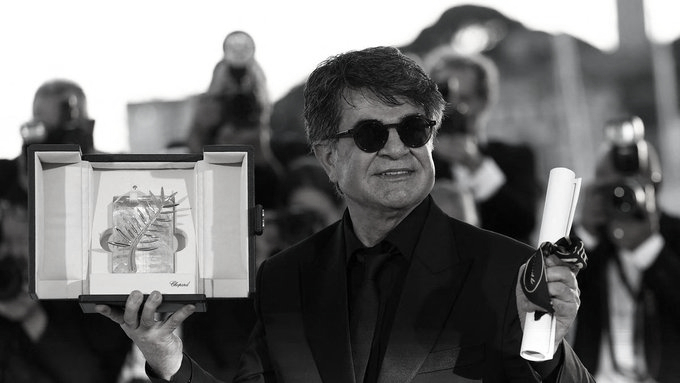
Iranian filmmaker Jafar Panahi sentenced to one year in prison and two-year travel ban
Jafar Panahi, the internationally acclaimed Iranian filmmaker known for challenging state censorship, has once again been targeted by Iranian authorities. He has been handed a one-year prison sentence and a two-year travel ban over what officials call “propaganda activities” against the government. The conviction comes in connection with his latest film It Was Just an Accident , a project that has drawn global attention not only for its content but for the extraordinary circumstances in which it was made.
Panahi has long been a central figure in Iran’s cinematic resistance. He previously faced a six-year prison sentence and a 20-year ban on filmmaking, travelling, and speaking to the media, imposed in 2010 after he supported the Green Movement protests. Although he served part of the sentence, international pressure and his deteriorating health eventually led to his release on furlough. Yet the bans technically remained in place, making any filmmaking activity a violation of state orders. His persistence in creating films despite these restrictions strained his relationship with the authorities for over a decade.
Despite being formally barred from directing, writing, or producing movies, Panahi continued to create films inside Iran using inventive and covert methods. His works such as This Is Not a Film and Taxi were shot in confined spaces, small crews, or semi-documentary styles, then smuggled out of Iran on flash drives for international festivals. To Panahi, filmmaking was not just a profession but a means of survival, and he repeatedly expressed that no law could stop him from observing and documenting the world around him.
His latest film, It Was Just an Accident , is at the center of the new verdict. The film examines the fragility of truth in authoritarian systems and the way everyday mishaps become politically charged. Early festival reactions praised it for blending personal narrative with social critique, continuing Panahi’s tradition of blurring fiction and reality to expose the mechanisms of power. What makes this project particularly daring is that it was filmed entirely inside Iran under restrictions that technically forbid him from making movies at all. Panahi reportedly worked with an extremely small and trusted team, using discreet equipment to avoid drawing attention. The very act of making the film, rather than the film’s content, appears to be the main reason it triggered the new charges.
Just days before the verdict, Panahi gave a rare public interview about It Was Just an Accident , fully aware that speaking might provoke consequences. When asked why he continues to make films despite the danger, he responded with characteristic clarity: filmmaking is all he knows how to do, and he cannot imagine doing anything else. He said that stopping would mean surrendering both his identity and his voice, something he refuses to accept even under threat of imprisonment.
Panahi was outside Iran when the sentence was handed down, his case underscores the continuing struggle of artists in Iran who are caught between state suppression and the need to express their realities. Even after decades of surveillance, bans, and arrests, Panahi remains one of the most resilient voices in world cinema. His latest punishment is a reminder of the risks he takes for every frame he captures, and the cost of telling stories in a place where filmmaking itself can be treated as a crime.