
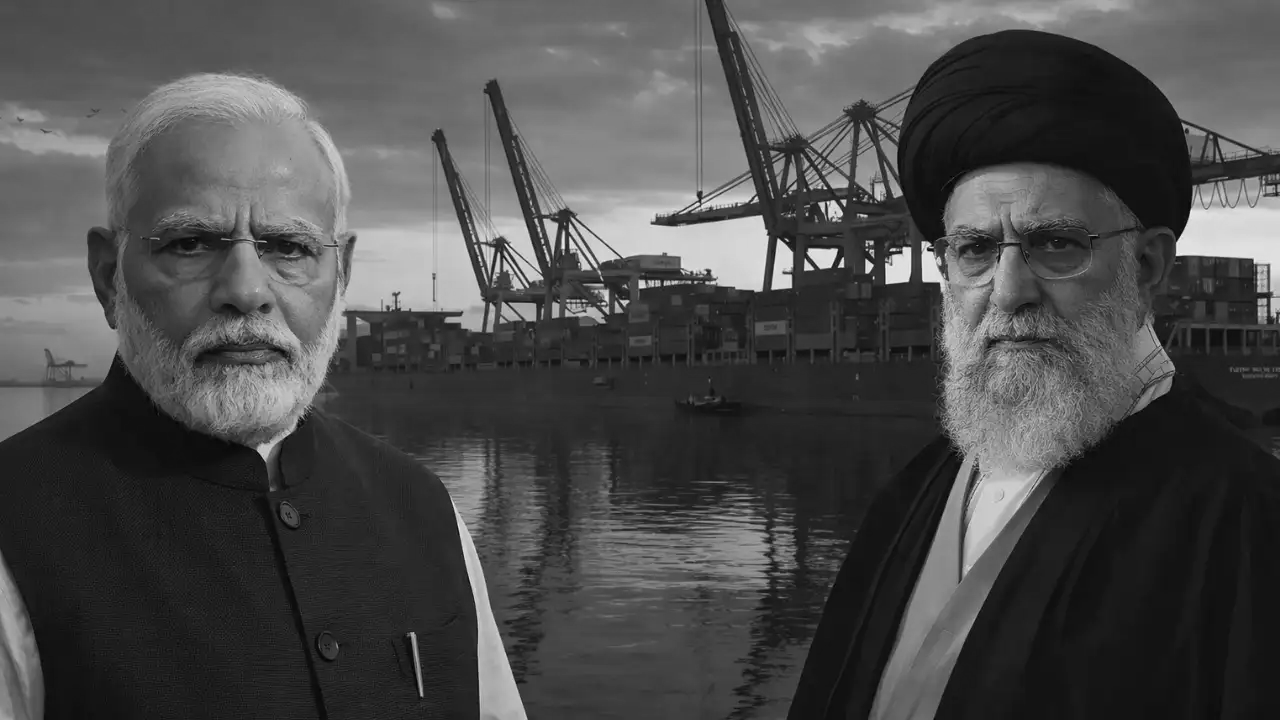
Iran calls Chabahar ‘vital’ as India navigates sanctions and budget freeze
Iran has reiterated the strategic importance of its Chabahar Port , underscoring its role as a crucial hub for regional trade, energy security, and connectivity, even as changing United States sanctions and India’s budgetary adjustments pose uncertainties.
Located on Iran’s southeastern coast along the Gulf of Oman , Chabahar is the only maritime gateway through which India can import oil bypassing Pakistan , making it a critical element of New Delhi’s energy strategy. The port also connects India to Afghanistan , other landlocked Central Asian countries , and Middle Eastern markets , offering an alternative trade route that avoids Pakistan’s territory.
At a press conference in Delhi, Iranian Ambassador Mohammad Fathali highlighted the port’s strategic role: “About the port of Chabahar, you know that the port of Chabahar is vital. And it can play a good role for accessing Afghanistan, and Central Asia. We have a good relation with some countries, particularly India. And, we believe that we should boost, expand our relation on this issue.”
He added, “Chabahar can serve as a corridor not just for Afghanistan but also for landlocked countries of Central Asia and the Middle East. It is strategically important for connectivity and economic development.”
Since 2018, India has participated in developing and operating Chabahar’s Shahid Beheshti Terminal through India Ports Global Limited (IPGL) and its subsidiary, under a 10-year agreement signed in May 2024 , committing USD 120 million toward port infrastructure and equipment. Chabahar is also a key part of the International North-South Transport Corridor (INSTC) , linking India with Central Asia, Russia, and Europe via Iran.
The project has faced challenges after the U.S. State Department revoked a sanctions waiver in September 2025, which had previously protected India’s involvement under the Iran Freedom and Counter-Proliferation Act. Following diplomatic engagement, Washington extended a conditional waiver until April 26, 2026 , but uncertainty remains about the port’s status thereafter.
Domestically, the Union Budget for 2026–27 did not allocate funds for Chabahar, sparking speculation about India’s commitment. Officials clarified that India has fulfilled all financial obligations and remains strategically committed to the port. Ambassador Fathali remarked, “We respect India’s decision regarding budget allocations, but it does not change the importance of Chabahar for regional trade and our partnership.”
Operationally, some Indian personnel at IPGL have scaled back direct involvement due to sanctions risk, though contractual commitments remain intact. Tehran continues to stress its openness to cooperation , noting Chabahar’s capacity to handle container traffic from India, the Middle East, Afghanistan, and Central Asia. Planned expansions aim to increase capacity from 100,000 TEUs to 500,000 TEUs and connect the port via rail to Zahedan and the Iranian national network.
Chabahar has also played a pivotal role in India’s humanitarian shipments, including wheat and medical supplies to Afghanistan. As Fathali emphasized, “The port is more than a commercial facility; it is a lifeline for regional economic development and connectivity.”