
Iran Attacks UAE for First Time Since Ceasefire Hours After Trump Launches Project Freedom
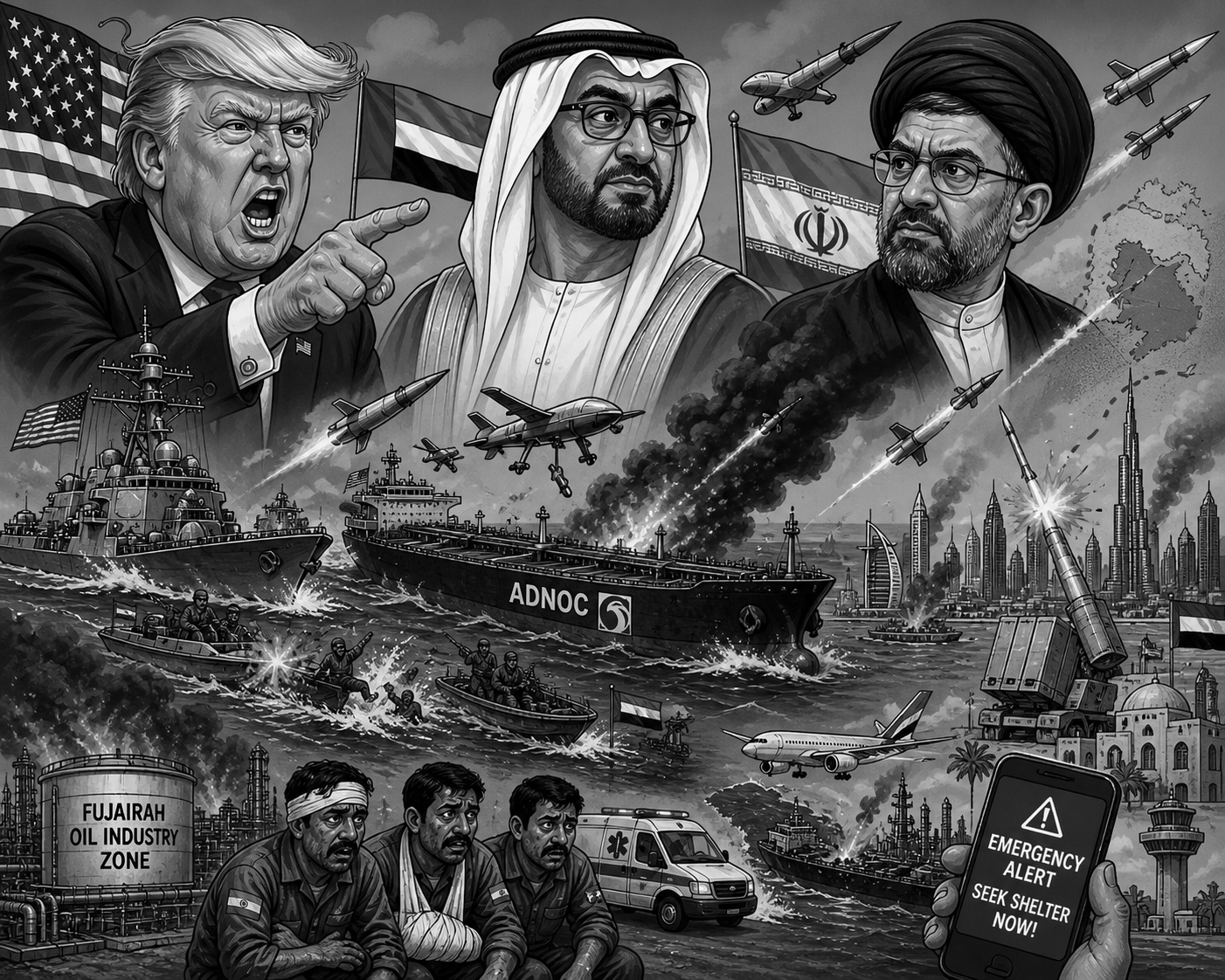
Monday was not a day of diplomacy. It was a day of missiles, burning tankers, sinking boats, and an American president threatening to erase a nation from the map. Whatever remained of the April 8th ceasefire between the United States and Iran did not survive the day intact. What unfolded across the Gulf in the space of a few hours was not an escalation, it was a cascade , each act triggering the next, each hour more dangerous than the last.
It began with Donald Trump. In the morning, he announced Project Freedom , a unilateral American mission to escort stranded commercial vessels through the blockaded Strait of Hormuz. More than 900 ships had been trapped in the Gulf, their crews running low on food and water, caught in a war they had no part in. Trump called it humanitarian. Tehran called it an act of war. The gap between those two descriptions is where Monday's violence was born.
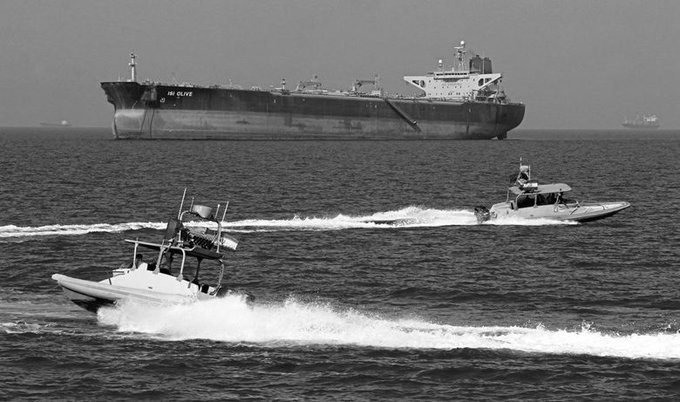
Iran had been explicit. Its military command warned that any foreign force entering the Strait would be targeted. The warning was not a bluff. As US destroyers crossed into the waterway, Iran's navy fired cruise missiles near American warships. Hours later, US CENTCOM confirmed that American forces had sunk six small Iranian boats attempting to interfere with commercial shipping. Tehran denied it. But the Strait, already a minefield of politics and sea mines, had now drawn blood.
And then came the ADNOC tanker. Iran launched drone strikes on a vessel owned by Abu Dhabi National Oil Company as it transited through the Strait of Hormuz. The UAE's foreign ministry called it a terrorist attack , a flagrant violation of UN Security Council Resolution 2817 on freedom of maritime navigation. No injuries were reported, but the symbolism was devastating, Iran had struck the UAE's own state oil company in its own waters. Abu Dhabi did not mince words. It called the strikes "acts of piracy" and demanded Iran stop weaponising the Strait as a tool of economic blackmail.
The worst was still to come. In the afternoon, the UAE's defence ministry announced that its air defences were responding to ballistic missiles, cruise missiles, and armed drones launched from Iranian territory, the first such attack on the Emirates since the ceasefire began. Three were intercepted over the country's territorial waters. A fourth fell into the sea. Emergency alerts lit up phones across Dubai and Abu Dhabi, warning residents to seek shelter immediately. Less than an hour later, a second wave of attacks followed . The ministry confirmed it was responding to a fresh barrage. Two distinct salvos in a single afternoon, a city that had grown accustomed to an uneasy peace was suddenly, violently reminded of what this war looks like up close.
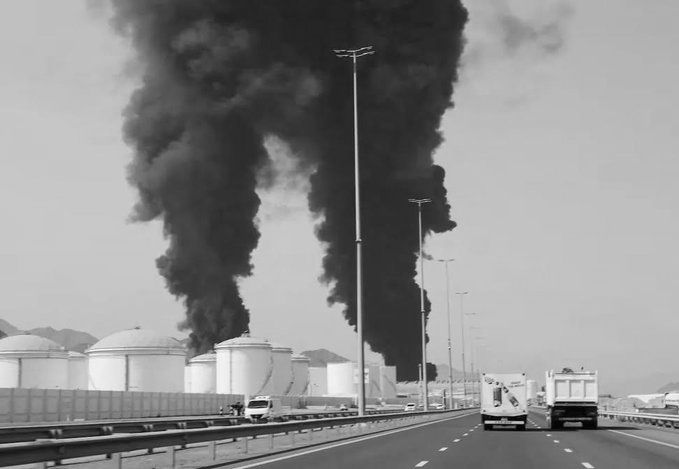
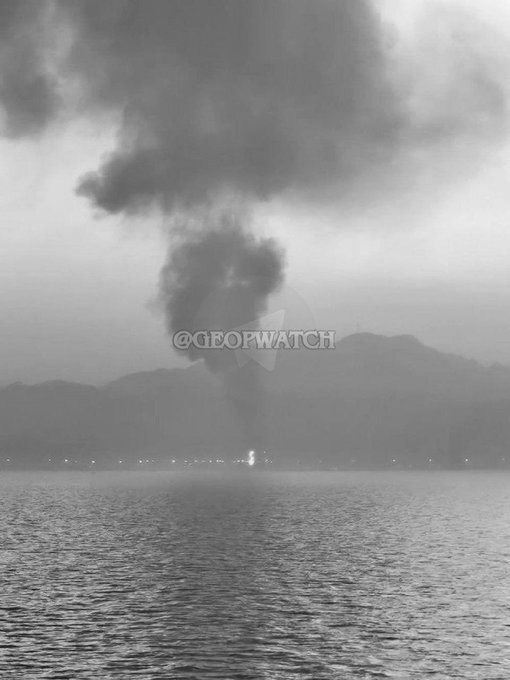
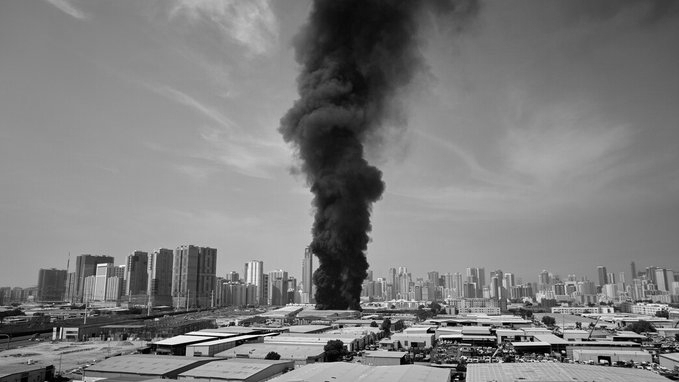
In Fujairah, an Iranian drone struck the Fujairah Oil Industry Zone , sparking a fire that injured three Indian nationals, all hospitalized with moderate injuries. Fujairah is not an incidental geography. It hosts the terminus of the Abu Dhabi Crude Oil Pipeline, the very infrastructure the UAE has relied upon to export oil to global markets while the Strait remains closed. Iran did not hit Fujairah by accident. It hit the bypass. A social media account linked to the Islamic Revolutionary Guard Corps later appeared to confirm the attacks, posting visuals of what it claimed were drone and missile strikes, including footage purporting to show the port of Fujairah ablaze.
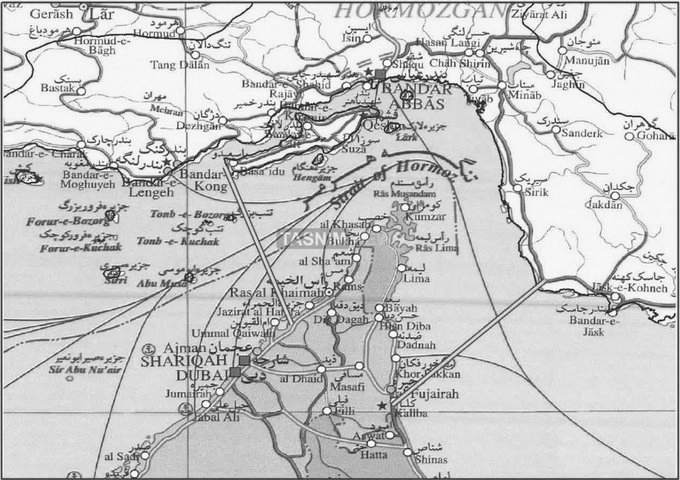
Iran also released a new map Monday, one that should alarm every Gulf state. The IRGC's expanded maritime control zone now encompasses the UAE ports of Fujairah and Khorfakkan , as well as the coastline of Umm Al Quwain. Tehran is not merely blocking the Strait anymore. It is drawing new borders in someone else's waters and daring the world to contest them.
Washington's response came swiftly and in two forms. The first was military, the United States approved an $8.6 billion arms sales package to the UAE, Qatar, Israel, and Kuwait. The message was unmistakable: America is arming its allies for what may come next. The second response was Trump himself. In a Fox News interview, the president warned that if Iran targets American ships protecting commercial vessels, Iran will be "blown off the face of the earth." It was the kind of language that leaves little room for diplomatic retreat, the kind of statement that negotiators spend weeks trying to walk back and that adversaries spend minutes deciding how to answer.
Meanwhile, the economic shockwaves were immediate. Brent crude surged more than five percent. West Texas Intermediate rose three percent. Stock markets fell. Flights into Dubai and Sharjah were halted and diverted. Off the coast of Dubai, a cargo vessel reported a fire in its engine room. A second vessel was reported ablaze off the UAE coast. In Oman, two people were injured after a residential building was struck. The Gulf, already described by analysts as a powder keg, was detonating in slow motion across every front simultaneously.
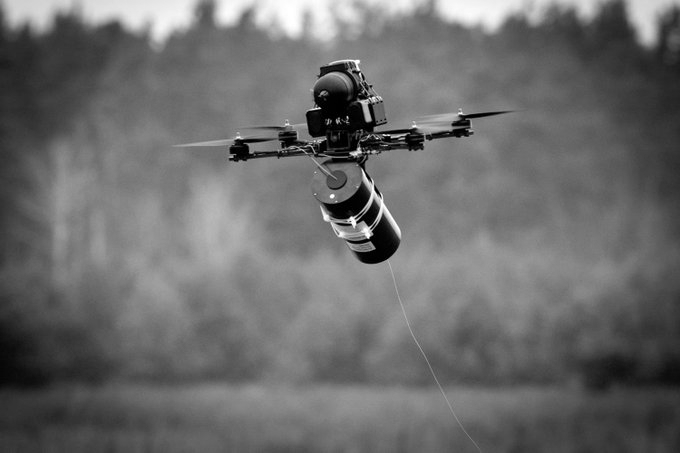
On the Lebanon front, a quieter but equally consequential battle is unfolding. Hezbollah has been deploying fibre-optic guided FPV drones with deadly accuracy against Israeli forces in southern Lebanon, small, explosive-laden quadcopters hardwired to their operators via cable, invisible to electronic jamming and nearly impossible to detect. In the town of Taybeh, one such drone slammed into an Israeli tank crew, killing 19-year-old Sergeant Idan Fooks and wounding six others. As a helicopter arrived to evacuate the wounded, Hezbollah launched two more drones at the exposed troops. A senior Israeli officer described the threat as "a very significant challenge," acknowledging a "clear gap between recognising the threat and effectively responding to it." Israel's answer so far is net-launching interceptor drones , an improvised solution to a problem that multibillion-dollar defence systems cannot solve. The world's most sophisticated military is being outmanoeuvred by a spool of cable and a cheap quadcopter. The drone is the great equaliser of this war , and Hezbollah has mastered it.
Iran's official position remained, absurdly, one of denial. A senior military official stated on state television that Iran had "no plans to target the UAE." The fires in Fujairah suggested otherwise. The IRGC's own Telegram posts suggested otherwise. The intercepted missiles over Dubai and Abu Dhabi suggested otherwise.