
Internet suspended as violence erupts in Ukhrul: Manipur
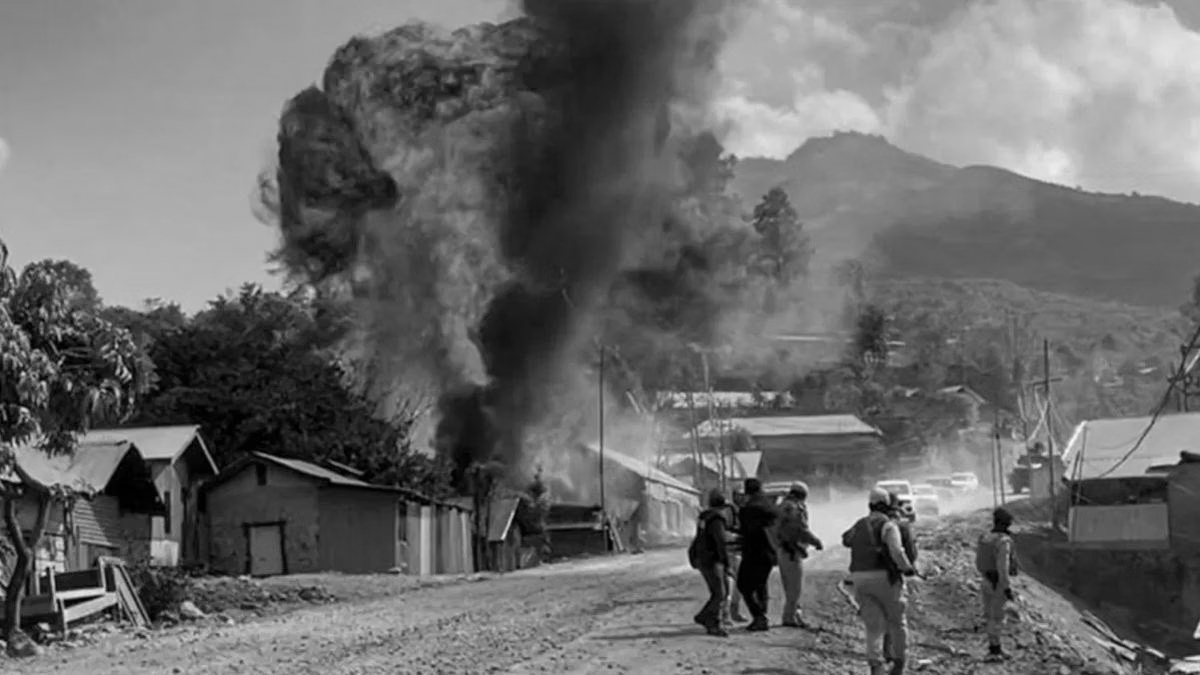
Fresh violence broke out in Ukhrul district on Tuesday morning following the alleged assault of a Tangkhul Naga community member, with several abandoned houses set ablaze and gunfire reported in the Litan Sareikhong area. The unrest prompted the Manipur government to suspend internet services in the district for five days.
Armed men reportedly targeted abandoned houses, firing multiple rounds of bullets, escalating tensions. “The situation remains tense, and security forces are trying to bring it under control,” said a senior police officer.
The violence comes a day after two Tangkhul Naga organisations, Katho Long and Katho Katamnao Long, restricted the movement of Kukis in Ukhrul and Kamjong districts.
Hundreds of villagers, primarily women, children, and the elderly, have fled their homes, seeking refuge in safer locations in Kangpokpi and Ukhrul districts. “Several villagers have taken shelter at Motbung and parts of Saikul in Kuki-majority Kangpokpi district,” said a police official.
Manipur Minister Govindas Konthoujam confirmed that at least 21 houses were burnt and additional security forces had been deployed to contain the situation. Meanwhile, two truck drivers stranded in Lamlai Chingphei Kuki village due to vehicle breakdowns were rescued on Monday.
The internet suspension , including broadband, VPN, and VSAT services, was ordered by the Manipur government as a preventive measure under the Temporary Suspension of Telecom Services (Public Emergency or Public Safety) Rules, 2017 , framed under the Indian Telegraph Act of 1885 , which empowers state authorities to temporarily block telecom and internet services in areas facing threats to public safety or public order.
Observers note that the new government’s actions appear similar to previous administrations , relying on reactive law-and-order measures like internet bans and deployment of security forces, even as the Chief Minister has promised the “restoration of peace.” This gap between political statements and ground realities has fueled public frustration, highlighting the need for long-term conflict resolution strategies rather than short-term containment.