
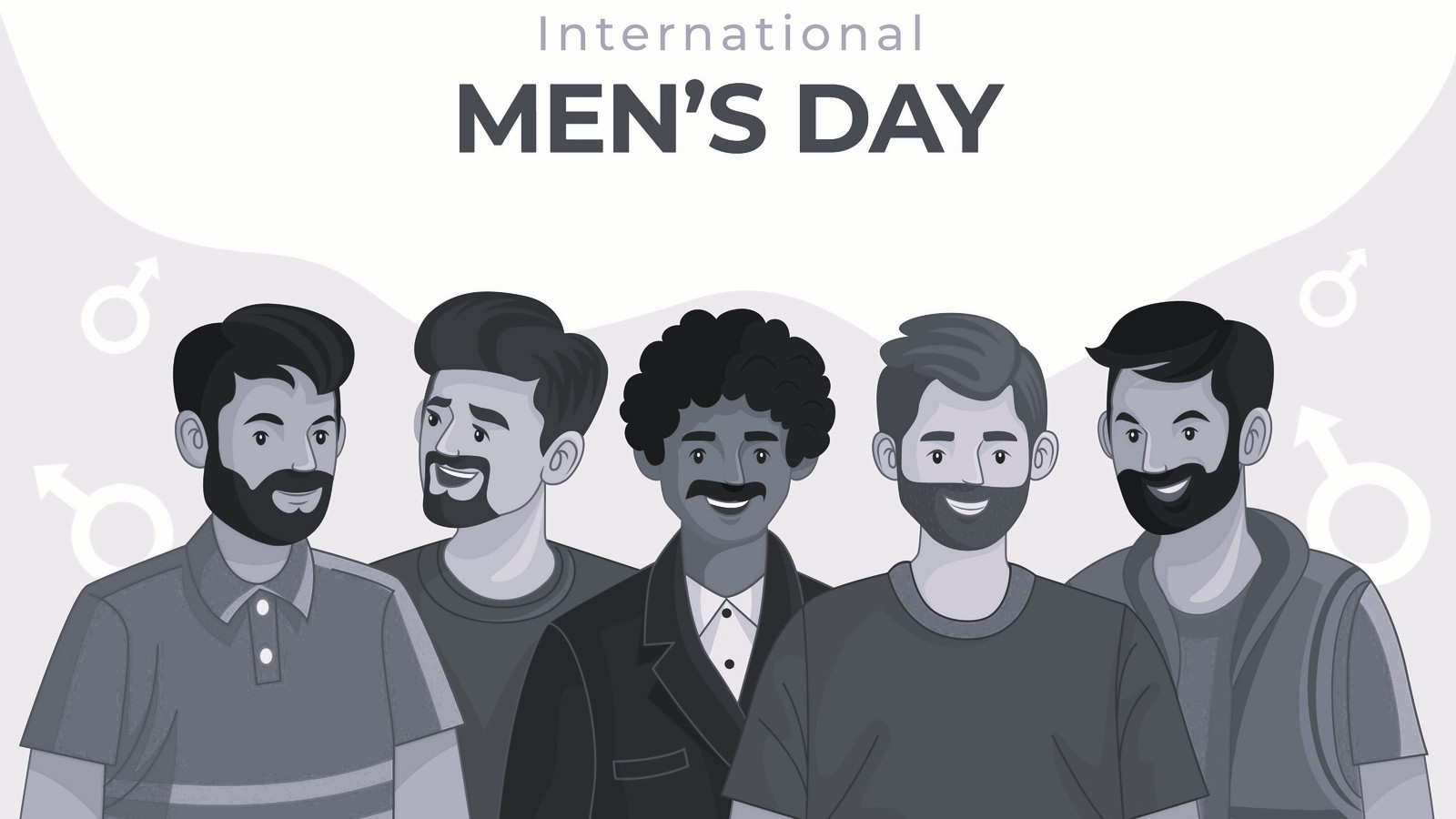
International Men’s day: A gentle reminder to see the men we often overlook
Every year, International Men’s Day comes and goes with little noise, almost slipping through the calendar like a quiet breeze. There are no grand celebrations, no trending hashtags, no public holidays, and no long social campaigns. Yet, in its silence lies a powerful message: a reminder to pause for a moment and acknowledge the men who keep families, communities and the nation running with a quiet strength that often goes unnoticed.
Across India whether it is the farmer looking at the sky for the year's first rain, the father who rushes to catch the early morning bus to work, the brother who quietly sacrifices his wishes so others can fulfil theirs, or the young man chasing dreams while battling fears he never speaks about men are the invisible threads holding countless lives together. Their lives are not just defined by what they provide financially but by the stability, love, mentorship, resilience and courage they bring into their families. Men shape the values children grow up with, the security households feel, and the emotional backbone of communities. They are often the first ones we call when there is a crisis, the ones who pretend everything is fine even when it is not, the ones who push ahead despite exhaustion. Sadly, they are also the last ones to be asked, “Are you okay?”
Behind the mask of strength: The silent storms men carry
Despite their contributions, the truth remains: being a man in India is not easy. It never has been. From childhood, boys hear the same lines repeated across generations—don’t cry, don’t show fear, don’t look weak, don’t complain. These instructions become emotional barriers, quietly shaping the adult man. By the time he grows up, he has trained himself to bury his sadness, silence his anxiety, and hide his insecurities.
India’s data reflects this reality painfully. Men make up a very high proportion of suicides in the country. The reasons are layered: job losses, societal pressure to be a provider, relationship stress, loneliness, academic failures, workplace toxicity, and, increasingly, the inability to speak openly about their struggles. Most men drink their pain, swallow their tears, laugh off their stress, or drown themselves in work just to keep moving. Society expects them to be stoic machines who never break down. But inside, many are carrying battles that would overwhelm anyone. The world sees their strength but rarely their exhaustion.
Changing times, Changing roles: The transformation in Men–Women relationships
One of the most powerful, sensitive and complex changes unfolding in India today is the transformation in relationships between men and women. This shift is happening everywhere—in marriages, in dating cultures, in workplaces, in cities and villages, in friendships, and in the expectations families place on both genders. Women today are entering universities in greater numbers, building careers, demanding fairness, refusing silence, and stepping into spaces that were once closed to them. Their rise is not just welcome—it is essential, overdue and empowering. But as women evolve, the roles of men are evolving too. And this is where confusion, friction and emotional turbulence often appear.
For centuries, men were told their worth came from being the “protector,” the “decision maker,” the “breadwinner.” This identity was passed down like inheritance. But today, women stand shoulder to shoulder with men. Relationships have become more equal, and expectations have changed. Many men feel unsure where they now fit. Should they be strong or sensitive? Should they lead or collaborate? Should they express emotion or hold back? Should they earn more or is equality acceptable? Should they be traditional or modern?
Nobody is guiding men through this transformation not parents, not schools, not society. And so they try to adapt on their own. Some succeed beautifully, growing into partners who share responsibilities, communicate better, understand boundaries and treat women as equals. Others struggle, feeling insecure, lost or overwhelmed by change. This is not a conflict between genders. It is a transition—messy, emotional, complicated, but necessary. When both men and women understand each other’s transformations, relationships become healthier, kinder and more fulfilling.
The Weight of duty: How expectations crush men slowly
Beyond emotional challenges, Indian men carry enormous practical pressures. Most households still see men as the primary earners. Even in dual-income families, the man is expected to be financially “stronger.” When he loses a job or doesn’t earn enough, he faces not only financial stress but emotional guilt, societal judgment, and personal shame.
In blue-collar work, men face dangerous conditions and long hours, often without healthcare or security. In white-collar jobs, the competition is fierce, the deadlines brutal. In villages, droughts, debts and crop failures push men into despair. In cities, rising costs, EMIs, and job automation create new fears. On top of this, men rarely prioritise their physical health. They skip check-ups, ignore symptoms, drink and smoke to cope with stress, and delay treatment until conditions worsen. Heart attacks, hypertension, diabetes, liver problems all strike men earlier and harder. They push themselves past breaking points because they were raised to believe that their worth depends solely on how much they can provide.
Fathers, Sons, Brothers: The roles are changing, and so must society
India is witnessing a quiet evolution in how men perceive family roles. Many young fathers today change diapers, cook meals, attend school meetings, and share emotional responsibilities. Men are slowly discovering that parenthood is not only about providing money but about being physically and emotionally present.
Sons today speak more openly with their parents, question old norms, and build more balanced friendships with girls and women. Brothers encourage their sisters’ ambitions. Husbands are learning the language of partnership. These changes may appear small, but they signal a deeper cultural rebirth. Modern Indian masculinity is not disappearing it is being rewritten.
6. The Way Forward: Healing Indian Masculinity Without Shame or Guilt
For India to grow emotionally and socially, it must help its men grow as well. Boys must be allowed to express their feelings without being mocked. Schools must teach them empathy, communication and emotional literacy. Workplaces must recognise men’s mental health concerns with the same seriousness they give to productivity. Families should encourage sons and husbands to seek counselling when needed. Society must stop shaming men for vulnerability. Media must celebrate men who are gentle, responsible, emotionally mature and respectful not only the ones who are aggressive or dominant.
India needs legal reforms that ensure fairness in matrimonial disputes, promote shared parenting, and encourage mediation over hostility. Paternity leave should become mainstream, so caregiving becomes normal for men. Above all, we must redefine strength. Strength is not silence. It is the courage to grow.
The New Man: Balanced, Compassionate, Purpose-Driven
The men of today are not the men of fifty years ago, and that is a beautiful thing. They are learning to speak, to share, to unlearn old burdens and embrace new possibilities. They are discovering that masculinity is not a cage, it can be a garden where resilience and tenderness coexist. Men are not opposites of women. They are partners in progress. When men heal, society becomes peaceful. When men feel valued, families become happier. When men evolve, the nation becomes stronger.
On this International Men’s Day, let us honour not just the achievements of men but their journeys, their silent battles, their shifting identities, their hopes, their fears, and their efforts to adapt to a rapidly changing world. Let us celebrate the father who keeps going despite exhaustion. The son who listens patiently. The husband who learns emotional maturity. The brother who stands by his sister’s dreams. The friend who always shows up. The worker who builds India with his sweat. The young man is trying to become the best version of himself. Men deserve appreciation. Men deserve understanding. Men deserve space to grow.
Because strength is not about hiding pain.
it is about embracing humanity.