
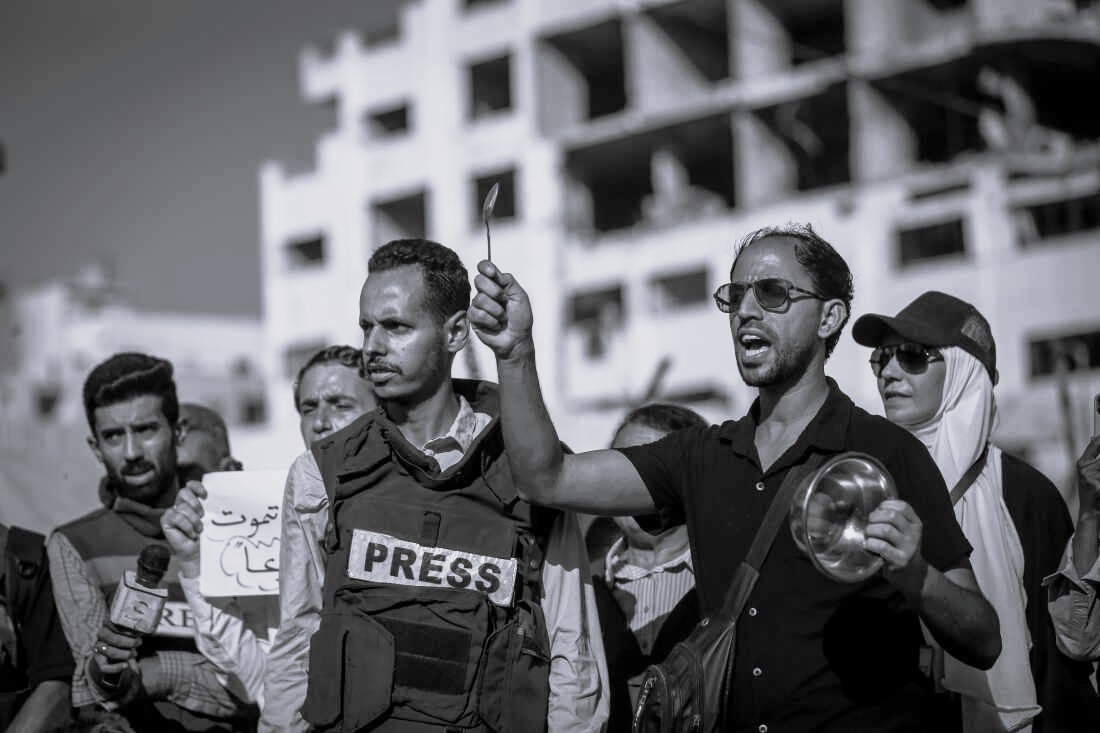
International Journalists tour Gaza city under Israeli military escort
For the first time in months, international journalists were escorted through Gaza City under the close supervision of the Israeli military, offering a rare glimpse into the devastated territory where nearly two years of war have left tens of thousands dead and entire neighborhoods reduced to rubble.
An armored personnel carrier rolled through empty streets, passing crumbled buildings and destroyed infrastructure. At one point, soldiers pointed to a shattered hospital complex once run by Jordan, claiming a Hamas-built tunnel had been discovered adjacent to it. A senior Israeli official, speaking anonymously under military rules, said the tunnel stretched 1.5 kilometers and included rooms containing explosives. Drone footage shown to reporters depicted the narrow underground passage.
The Jordanian government, however, denied that its facility was ever used by Hamas. The Associated Press could not independently verify the Israeli claims. The hospital, already struggling under severe shortages, shut down two weeks ago amid intensifying air and ground assaults. According to the World Health Organization, 22 of Gaza’s 36 hospitals are no longer operational, while the remaining 14 are functioning only partially.
City under siege
The journey into Gaza City followed the Netzarim corridor, a militarized zone separating northern and southern Gaza. The path was lined with collapsed structures and debris. Signs of life were few. At one abandoned home in the Sabra neighborhood, soldiers warned journalists not to stand near windows, citing the risk of sniper fire.
Once home to nearly one million people, Gaza City has endured relentless bombardments since the October 7, 2023 Hamas attack on Israel that killed around 1,200 people and led to the abduction of 251 hostages. Israel’s offensive, launched in response, has since killed more than 67,000 Palestinians, according to Gaza’s Hamas-run Health Ministry. The UN and international observers consider its figures broadly credible, though Israel disputes them and does not distinguish between civilian and militant casualties.
Large swathes of the city have been emptied. Hundreds of thousands fled south under Israeli evacuation orders early in the war. Some later returned during brief ceasefires, but Israel’s latest campaign has again urged civilians to move out. Defense Minister Israel Katz recently warned that those remaining would be regarded as Hamas supporters. Still, many residents remain, unable or unwilling to leave due to financial hardship, age, illness, or fear of permanent displacement.
War’s political dimension
On Friday’s tour, Israeli officers described their military approach as both precise and necessary aimed at dismantling Hamas while minimizing civilian casualties. They acknowledged, however, that Hamas fighters remain active, entrenched, and still holding 48 hostages.
Meanwhile, diplomatic efforts are underway. Israel announced it is preparing to shift toward the first stage of a U.S.-brokered deal proposed by former President Donald Trump to end the war and secure the hostages’ release. Hamas has said it accepts parts of the plan but insists other terms remain unresolved.
Despite those talks, Gaza City continues to be designated a “dangerous combat zone.” On Saturday, the Israeli military again warned displaced Palestinians not to return, underscoring the uncertainty facing residents in a city that once bustled with life but is now marked by silence, destruction, and fear of what lies ahead.