
Integrated Resource Management Vital for Food Security and Farmer Welfare: Experts
As climate change, shrinking landholdings and rising input costs challenge agricultural productivity, experts are increasingly advocating integrated farming systems that can raise farmer incomes without expanding cultivated land. The need for such sustainable models was highlighted during a special lecture series delivered by Dr. M. Muruganandam , Head of the Fisheries Science Division at ICAR–Central Island Agricultural Research Institute (ICAR-CIARI) , to officer trainees at ICAR–Indian Institute of Soil and Water Conservation (ICAR-IISWC), Dehradun .
Addressing participants of the 131st Regular Officer Training Programme on May 29, Dr. Muruganandam emphasized the growing importance of linking watershed management, fisheries, livestock development and natural resource management to create resilient and profitable rural production systems. He noted that agriculture's future lies not in bringing more land under cultivation but in generating greater value from existing resources through integration and efficient resource use.
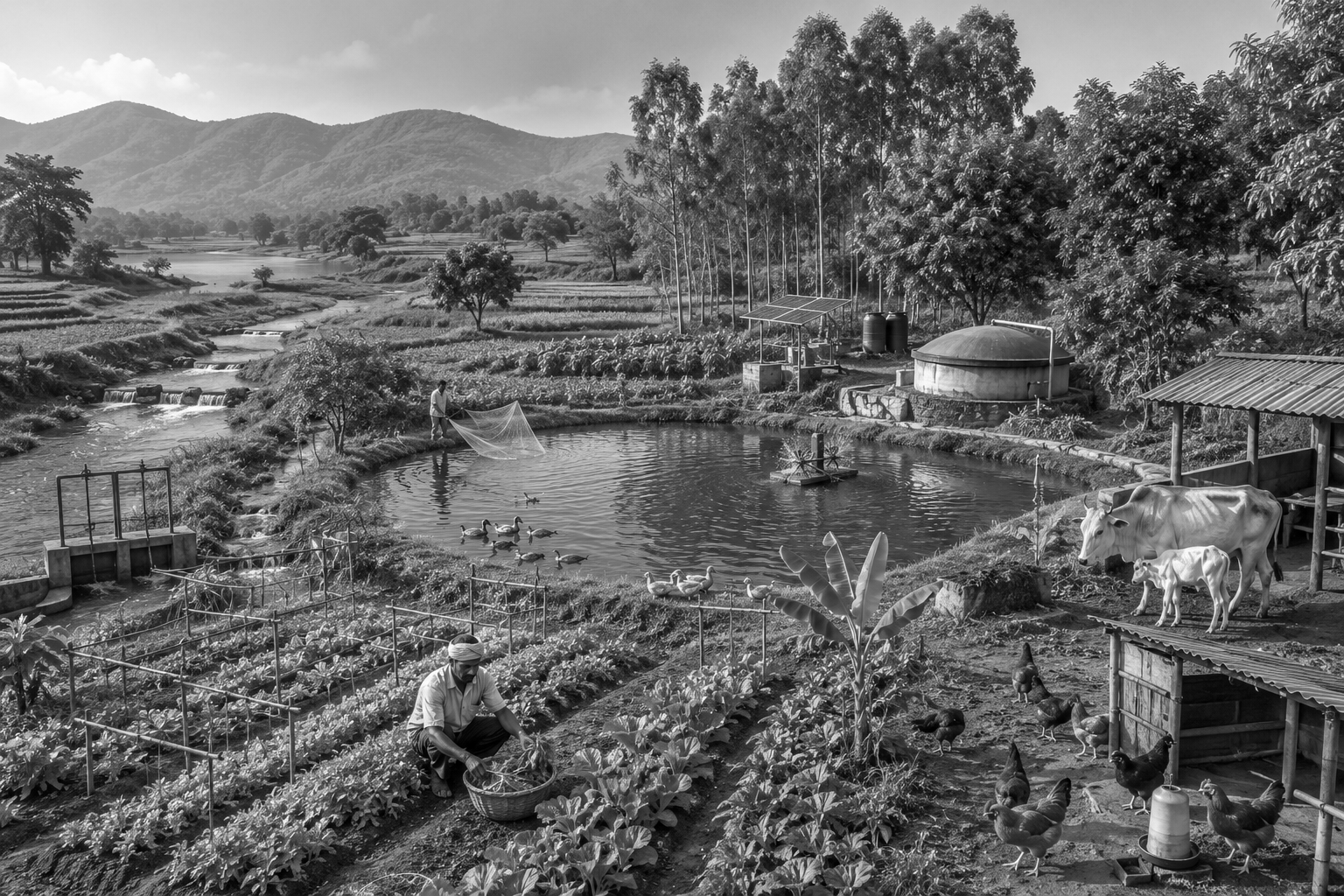
During the sessions, Dr. Muruganandam explained the various components of integrated watershed management, including drainage lines, rivers, water harvesting structures, farm ponds, wastelands, rangelands, aquatic resources and livestock systems. He highlighted opportunities arising from their interconnectedness, such as water harvesting, river management, fodder development, upstream-downstream linkages and integrated fish farming .
The scientist also discussed emerging concepts such as the "Mountain to Ocean (M2O)" source-to-sink approach and the river continuum concept , which helps explain fish distribution across river ecosystems and supports better conservation planning. He further examined runoff concentration, environmental pollution risks and the design considerations involved in developing effective water harvesting infrastructure.
His observations align with a growing body of research showing that Integrated Farming Systems (IFS) can significantly improve farm profitability. By combining crops, livestock, fisheries, horticulture and agroforestry, farmers can create circular production systems in which waste from one activity becomes an input for another. Such models reduce production costs, diversify income sources and improve resilience against climate and market shocks.
Dr. Muruganandam also highlighted advanced fish farming technologies, water quality management and resource-efficient production systems. He stressed the importance of balancing water harvesting potential with livelihood opportunities while promoting responsible grazing and sustainable rangeland management.
Experts increasingly view agroforestry, crop diversification, precision agriculture and regenerative farming practices as complementary approaches that can further enhance productivity, improve soil health and strengthen climate resilience. Combined with watershed-based planning, these models can help farmers increase returns without placing additional pressure on land and water resources.
The training programme, coordinated by Dr. Charan Singh and his team, brought together around 20 officer trainees from Uttar Pradesh and Chhattisgarh . The sessions concluded with an interactive discussion on integrated natural resource management , underscoring the growing consensus that sustainable and diversified farming systems will play a crucial role in ensuring future food security, nutritional well-being and rural prosperity .