
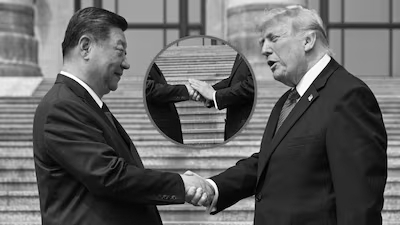
Inside the Handshake Psychology of Trump and Xi: Who Controls the Room?
Donald Trump has spent a lifetime controlling rooms. He controls them with his handshake, his posture, his voice, his sheer refusal to let anyone else occupy more space than him. He has reduced seasoned politicians to nervous wrecks, made allies visibly flinch, and turned diplomatic protocol into a personal dominance display. But fly him to Beijing, put him in front of Xi Jinping, and something nobody quite expected keeps happening, Trump becomes the one who is trying .
Watch the body language from the Great Hall of the People this week and the story tells itself. Trump strides forward, chest out, arm extended, performing his usual ritual of physical control. Xi barely moves. He stands balanced, composed, expression unreadable, and simply receives whatever Trump brings, absorbing it entirely without reaction, without resistance, without giving a single thing back. Body language experts have a term for this: controlled authority . In the psychology of dominance, the person who reacts loses. Xi never reacts.
This is not new. Since their first meetings in 2017, Trump has spoken about Xi in terms he reserves for almost nobody else. He has privately called him the greatest Chinese leader of all time, possibly the greatest since Mao. The man who built his entire public brand on belittling others cannot stop finding superlatives for one man. Xi, in turn, has never once appeared to need Trump's admiration back and that, paradoxically, is precisely why he has it.
What is also striking is the contrast with how Trump handles other world leaders. With Macron, who came to Washington armed with charm and warmth, Trump grabbed his hand so hard the knuckles whitened on camera, an almost reflexive need to remind an eager ally who the senior partner is. Zelensky walked into the Oval Office in February 2025 extending goodwill and left humiliated on live television. The leaders who want Trump's approval the most get crushed by it. Xi has never wanted it, and so Trump has never had the opportunity.
Trump's inner hierarchy of leaders, Modi, Putin, Xi at the top, is defined by one common thread: self-possession . Men who do not need validation. Modi gets the bear hugs because the warmth is mutual and genuine. Putin commands a darker fascination. But Xi occupies a unique category because he is the one leader with whom Trump is in direct, daily, systemic competition and yet the one Trump seems least able to approach with coldness.
After formal talks in Beijing, when reporters pressed Trump on Taiwan and the substance of discussions, he produced three adjectives - "Great. Incredible. Beautiful." and nothing more. For a man who commentates endlessly on everything, that silence was deafening.
Psychology does not stay out of policy. When Xi warned Trump privately that mishandling Taiwan risked conflict between the world's two largest powers, it landed in a room where Trump already, instinctively, respects the man delivering it. That is not a small thing. That may, in fact, be the most important thing.